A small Austrian grande sonnerie travel clock, circa 1850.
€ 4500 $ 5164 £ 3893 ¥ 822825 DKK 33627 CHF 4065 NOK 50216 CA$ 7077 HK$ 40422
Ships from The Netherlands
€ 12000 $ 13771 £ 10380 ¥ 2194200 DKK 89671 CHF 10841 NOK 133908 CA$ 18871 HK$ 107792
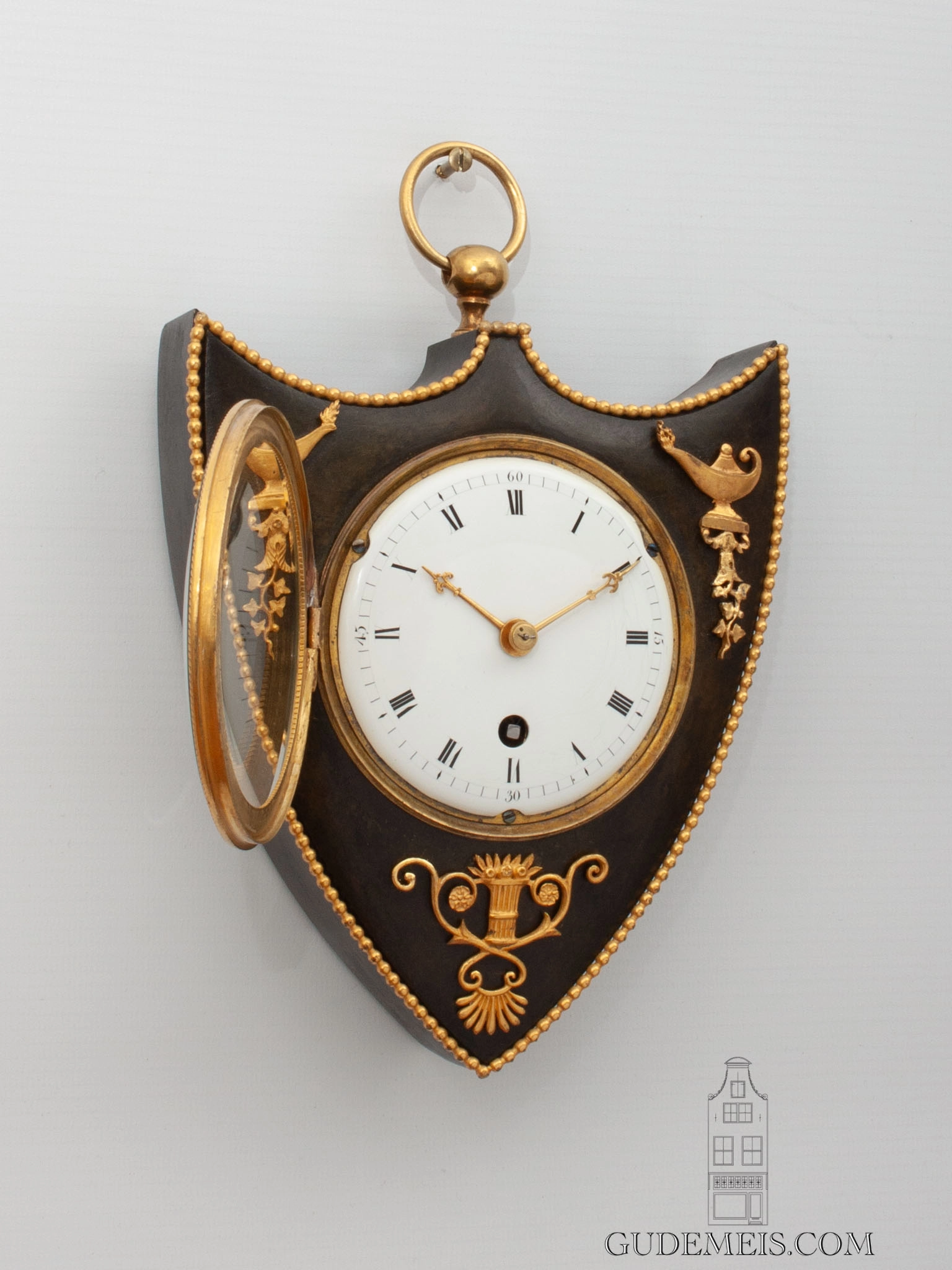
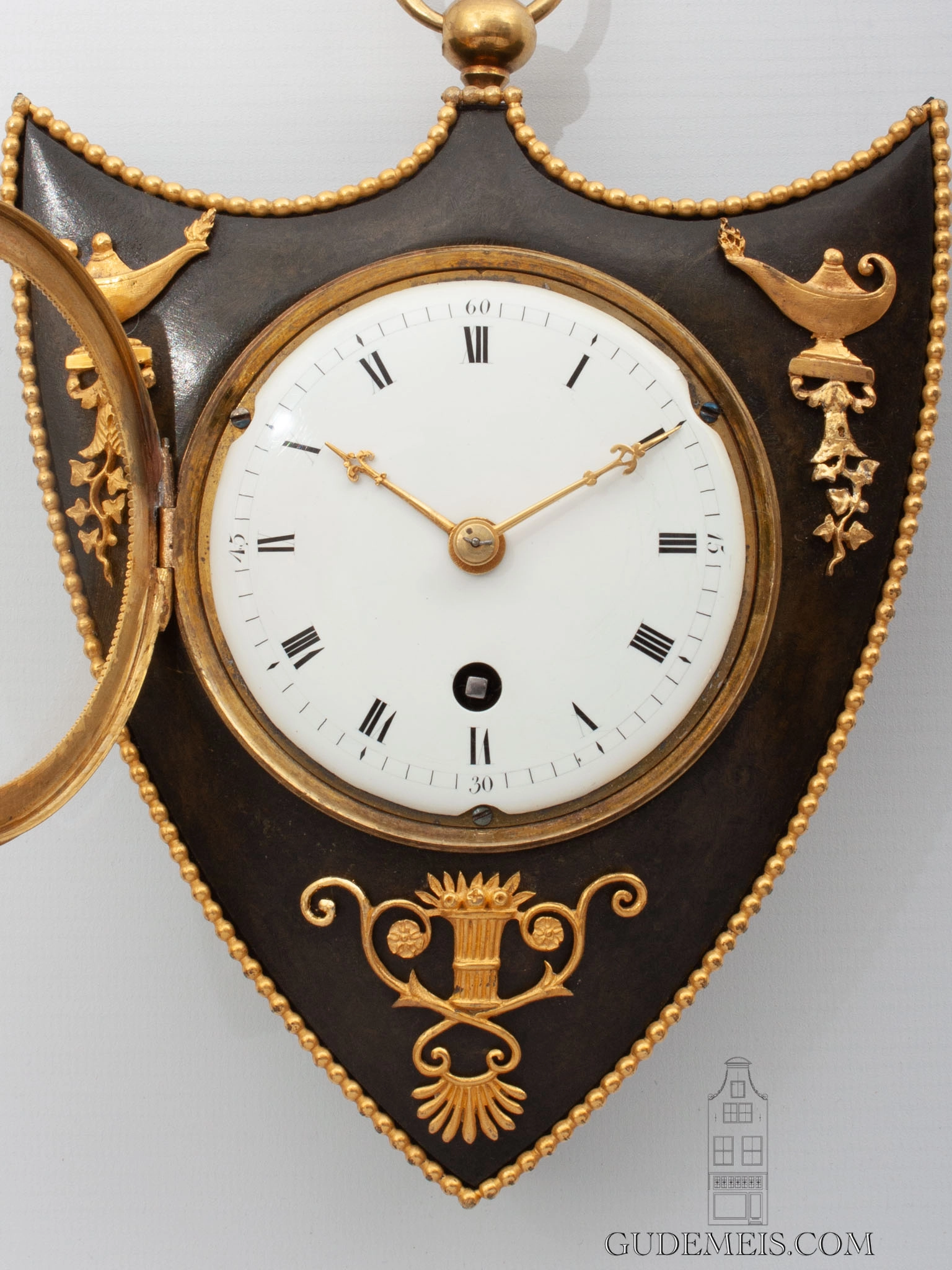
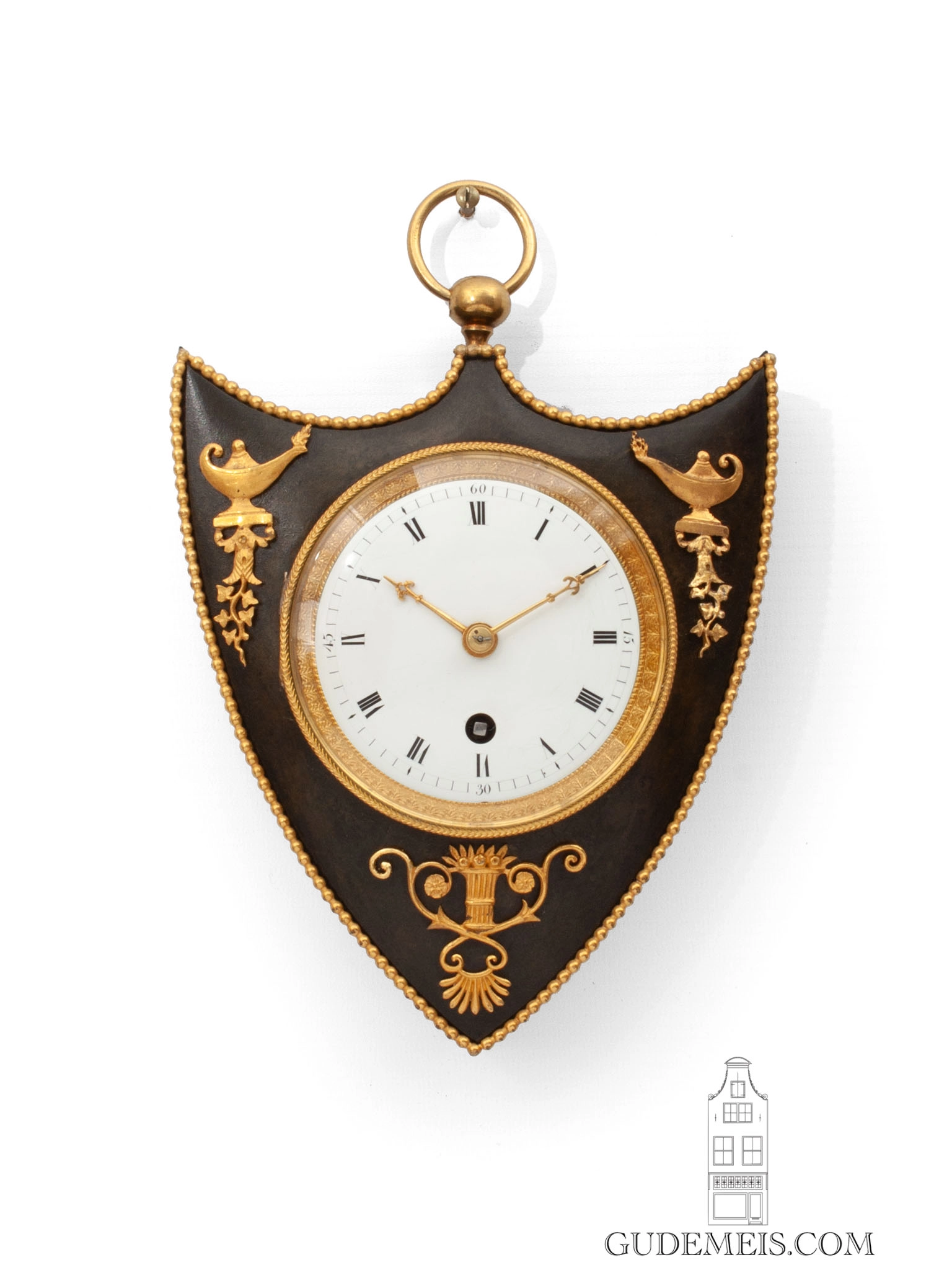
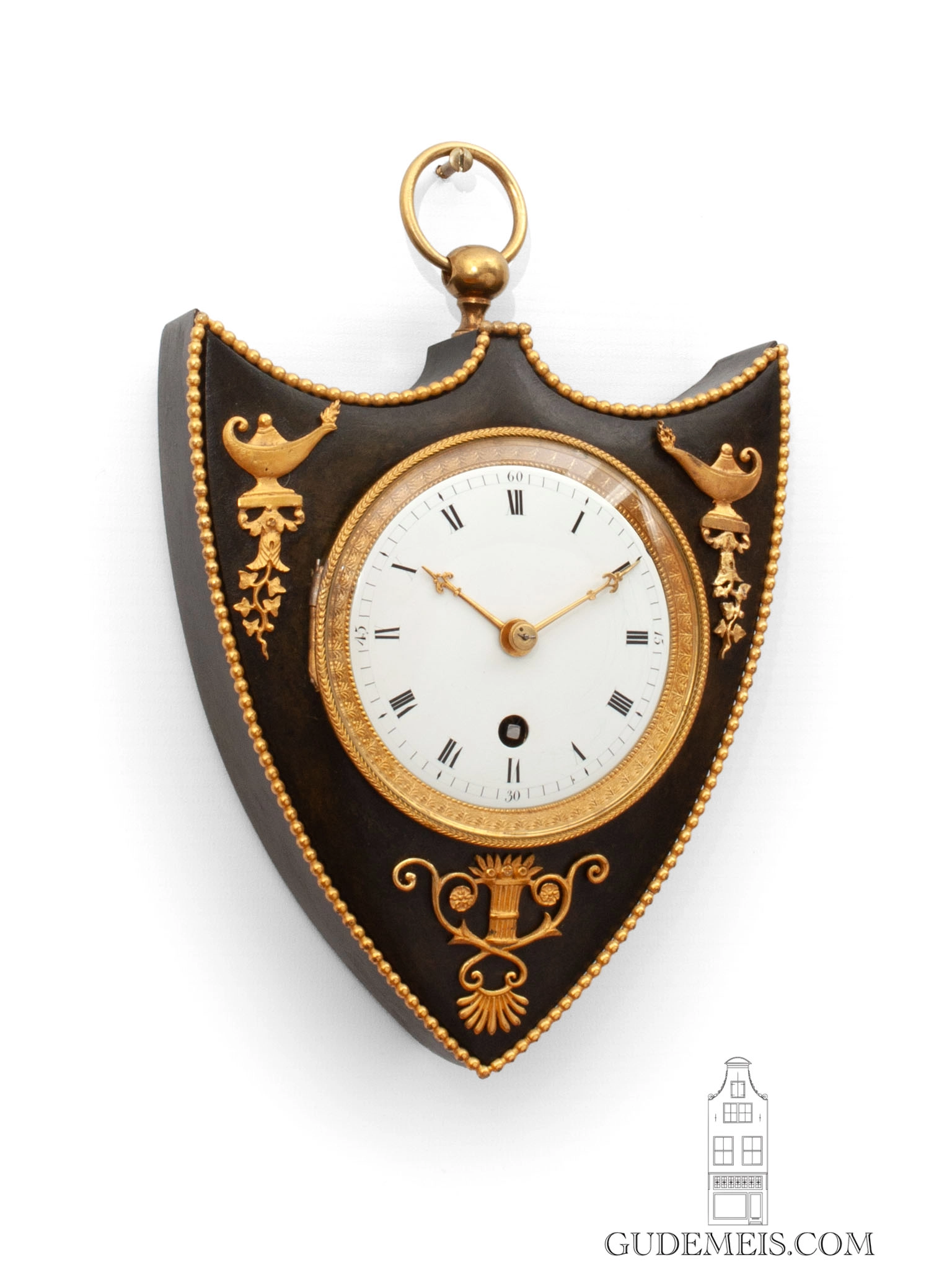
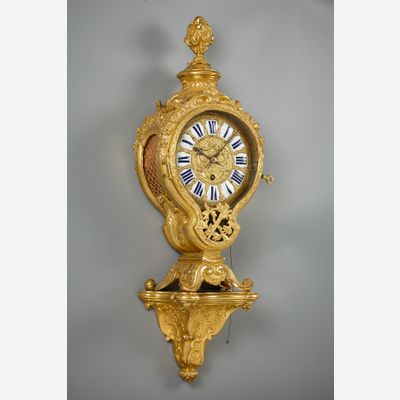
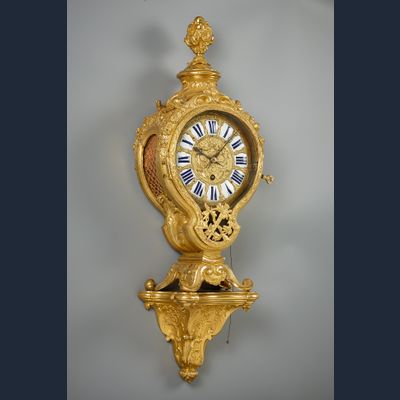
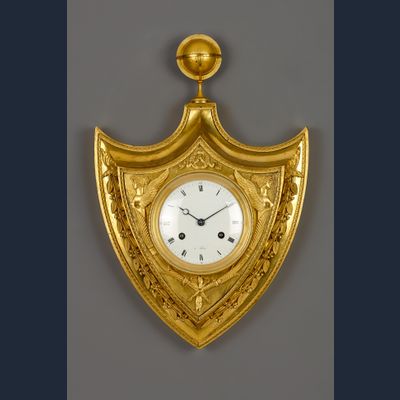
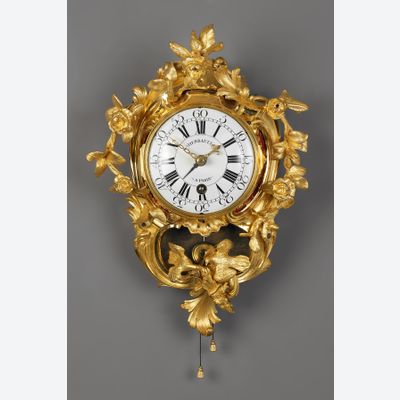
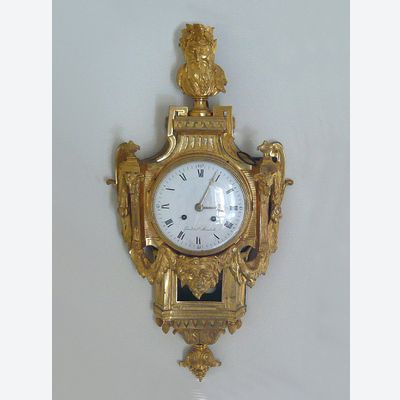
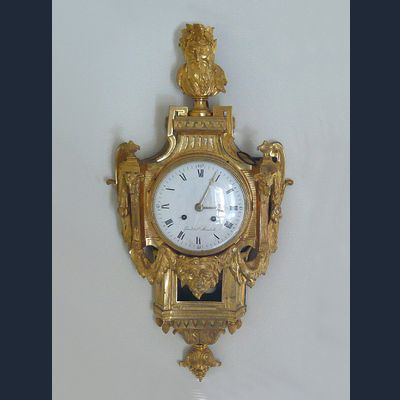
French wall clocks that are more or less an ornament are called ‘cartel’. In the Louis XV or rococo period these clocks have C- and S- scrolls. In the subsequent Louis XVI period this type of clock is often adorned with classical elements like the ‘urn’, ‘garland’ and ‘lion mask’. In the Empire period this type of wall clock is much less common. Most cartels of this period are annular shaped and are also called ‘Oeuil du Boeuf’ or Bulls’eye. Only very few have this elegant ‘shield shape’. Therefore this small clock isn’t only attractive but also very rare.
The 8-cm enamel dial has Roman numerals and Arabic numerals for the quarter indication. The engraved and pierced hands are made of gilt brass.
The typical French movement is driven by a spring barrel and a duration of eight days. This means that the clock needs to be wound once a week. It is being regulated by anchor escapement in combination with a silk suspended pendulum. It is likely that this clock was meant for the sleeping quarters because of its small dimensions and the omission of striking work. These bedroom clocks are called ‘cartel d’alcove’.
The shield shaped case is made of patinated bronze and is surmounted by a suspension ring. It is lined with a gilt pearl rim and the case itself has classical gilt mounts.
Located in Amsterdam
The Netherlands
A small Austrian grande sonnerie travel clock, circa 1850.
€ 4500 $ 5164 £ 3893 ¥ 822825 DKK 33627 CHF 4065 NOK 50216 CA$ 7077 HK$ 40422
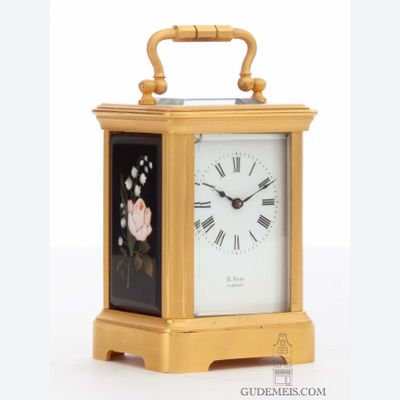
A rare and small French pietra dura mounted carriage clock, circa 1870
€ 9000 $ 10328 £ 7785 ¥ 1645650 DKK 67253 CHF 8131 NOK 100431 CA$ 14153 HK$ 80844
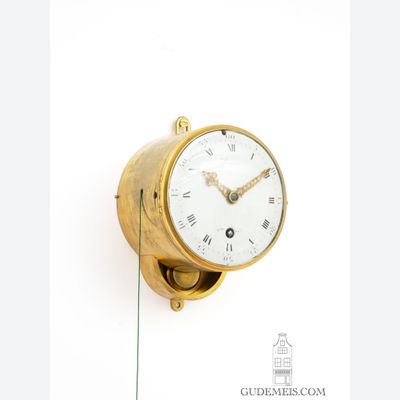
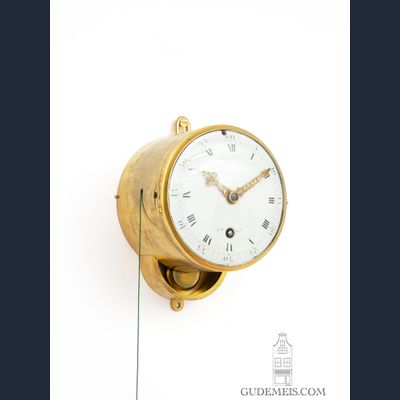
A rare French Louis XVI quarter repeating wall timepiece, Lepaute, circa 1783.
€ 16000 $ 18362 £ 13840 ¥ 2925600 DKK 119562 CHF 14454 NOK 178544 CA$ 25162 HK$ 143723
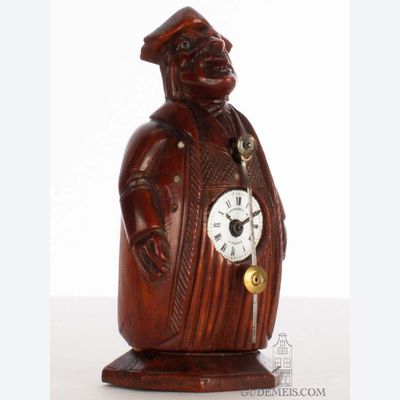
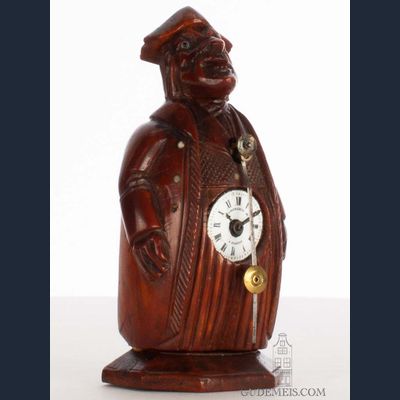
A rare small French walnut sculptural ‘zappler’ table clock, Neuburger & Cie, circa 1840
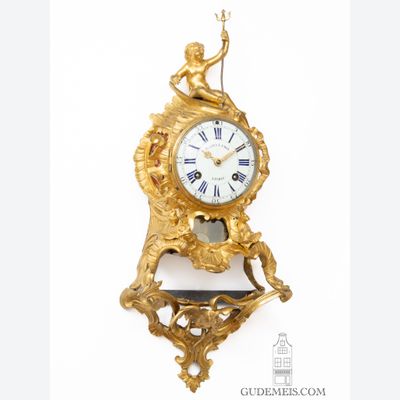
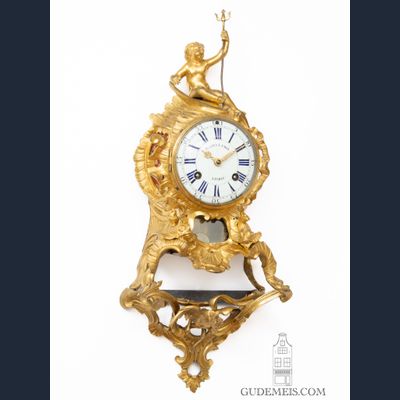
A very rare small French Louis XV ormolu bracket clock, Leroy A Paris, circa 1745
€ 32000 $ 36723 £ 27681 ¥ 5851200 DKK 239123 CHF 28909 NOK 357088 CA$ 50323 HK$ 287446
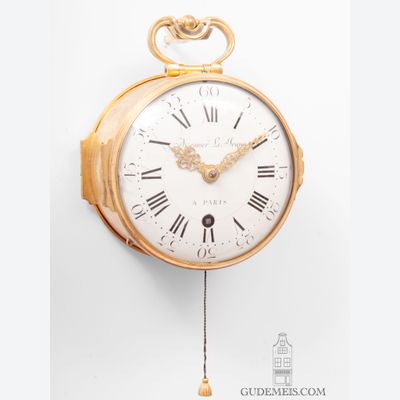
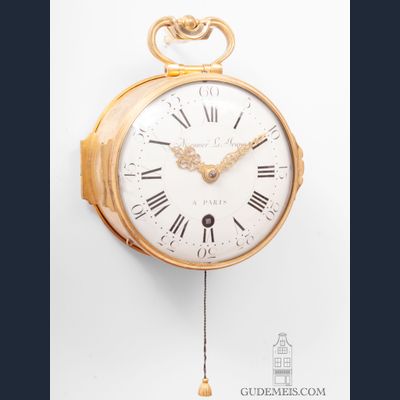
A rare French Louis XVI quarter repeating wall clock, Meunier Le Jeune, circa 1770.
€ 15000 $ 17214 £ 12975 ¥ 2742750 DKK 112089 CHF 13551 NOK 167385 CA$ 23589 HK$ 134740
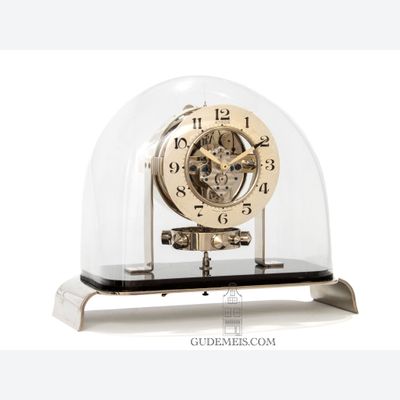
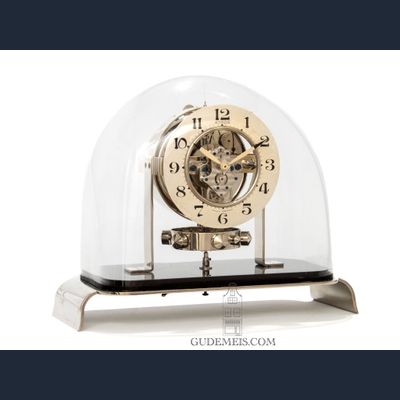
A rare French Art Deco Reutter patent atmos clock, model P01, circa 1935
€ 24000 $ 27542 £ 20761 ¥ 4388400 DKK 179342 CHF 21682 NOK 267816 CA$ 37742 HK$ 215585
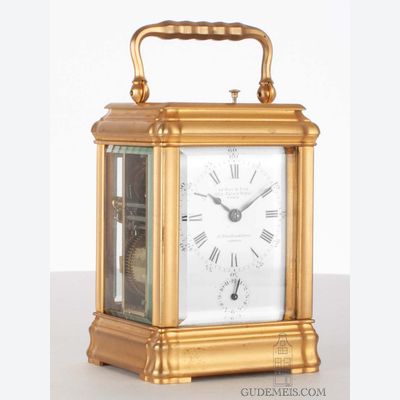
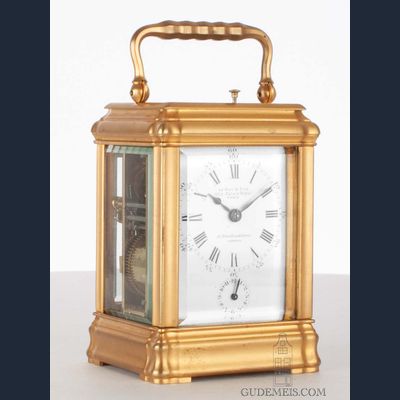
A small French gorge case carriage clock striking ship's bells, circa 1880
€ 7800 $ 8951 £ 6747 ¥ 1426230 DKK 58286 CHF 7047 NOK 87040 CA$ 12266 HK$ 70065
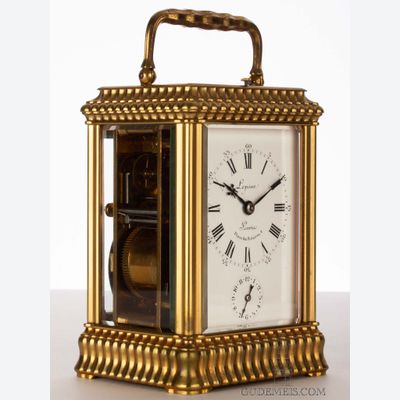
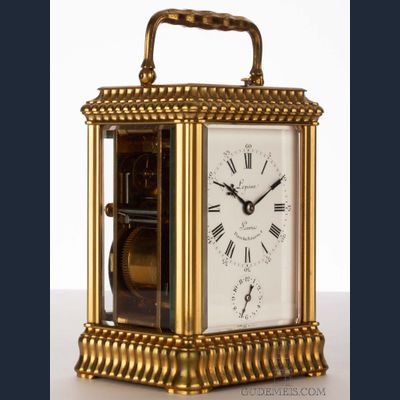
A French gilt gadrooned gorge case carriage clock by Lepine, circa 1880
€ 5500 $ 6312 £ 4758 ¥ 1005675 DKK 41099 CHF 4969 NOK 61375 CA$ 8649 HK$ 49405
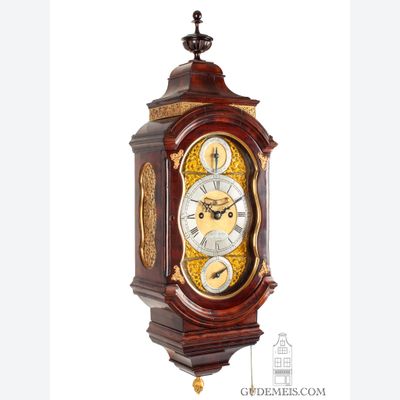
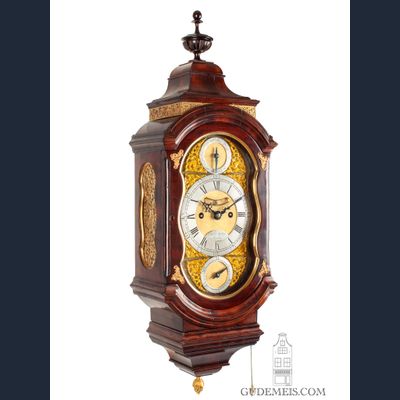
A very unusual English mahogany bracket wall clock, Chater & Sons.
€ 23000 $ 26395 £ 19896 ¥ 4205550 DKK 171870 CHF 20778 NOK 256657 CA$ 36170 HK$ 206602
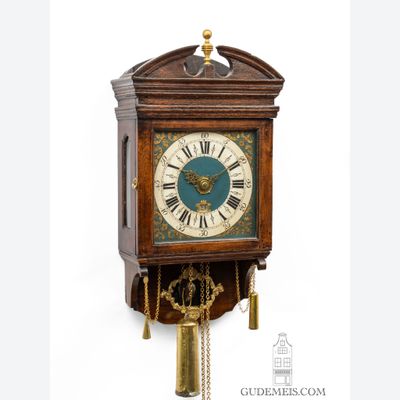
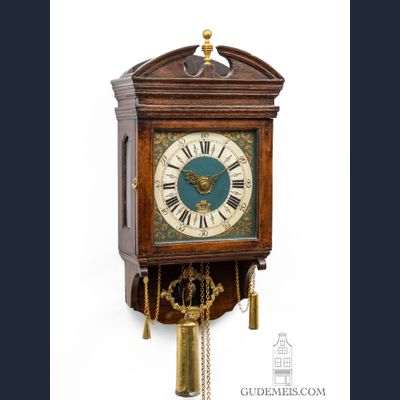
A rare Dutch Frisian stained oak hood clock, circa 1780.
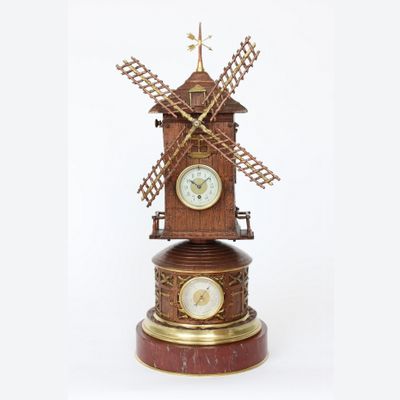
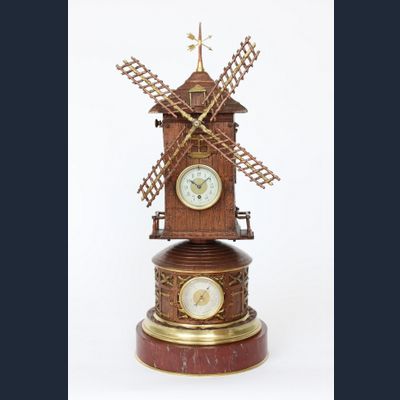
A rare French industrial mantel clock, windmill, circa 1880
€ 13500 $ 15493 £ 11678 ¥ 2468475 DKK 100880 CHF 12196 NOK 150646 CA$ 21230 HK$ 121266
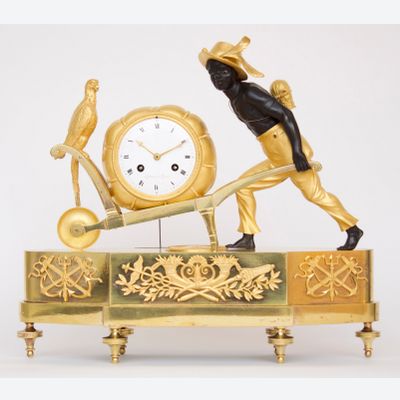
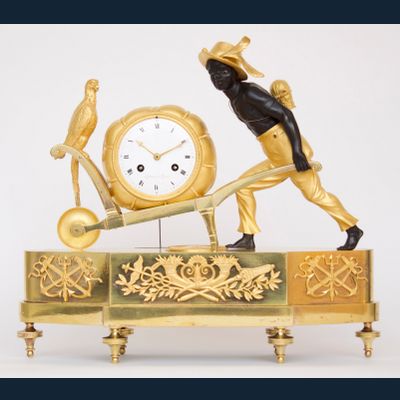
A rare French Empire ormolu and bronze ‘au bon sauvage’ mantel clock Lesieur à Paris, circa 1800
€ 45000 $ 51642 £ 38926 ¥ 8228250 DKK 336267 CHF 40653 NOK 502155 CA$ 70767 HK$ 404222
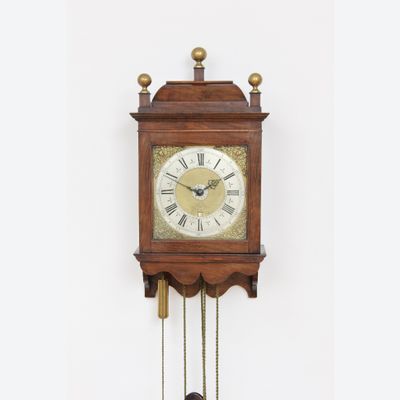
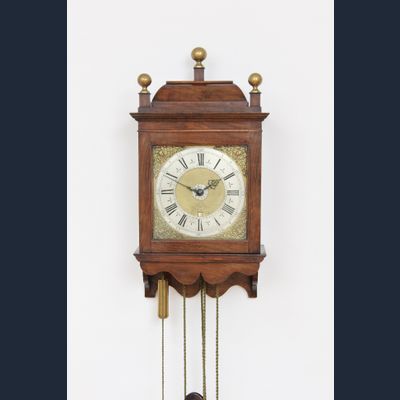
A rare Dutch walnut Amsterdam wall clock, Jacob Hasius, circa 1725
€ 17500 $ 20083 £ 15138 ¥ 3199875 DKK 130770 CHF 15810 NOK 195282 CA$ 27520 HK$ 157197
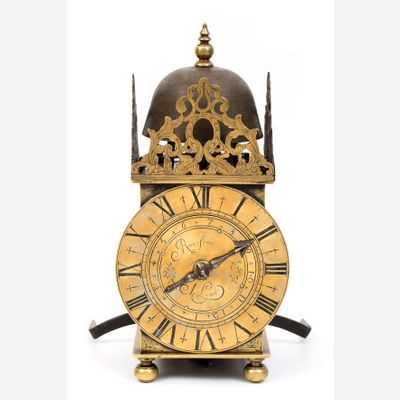
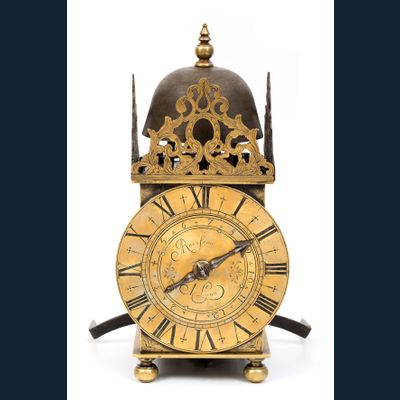
A rare early French brass lantern alarm timepiece,Rousseau A Lyon, circa 1665
€ 22500 $ 25821 £ 19463 ¥ 4114125 DKK 168134 CHF 20326 NOK 251078 CA$ 35384 HK$ 202111
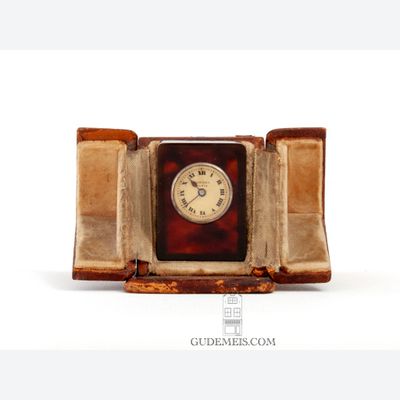
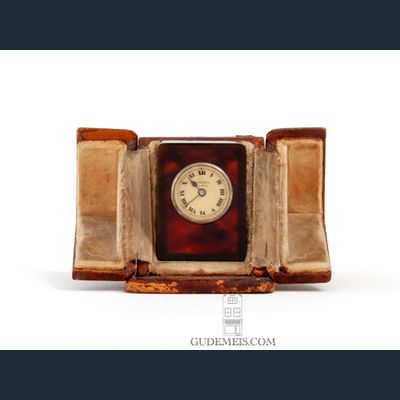
A sub miniature French Art Deco travel clock, circa 1920
€ 4250 $ 4877 £ 3676 ¥ 777112 DKK 31759 CHF 3839 NOK 47426 CA$ 6684 HK$ 38176
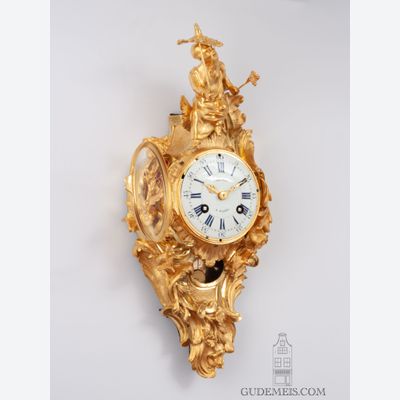
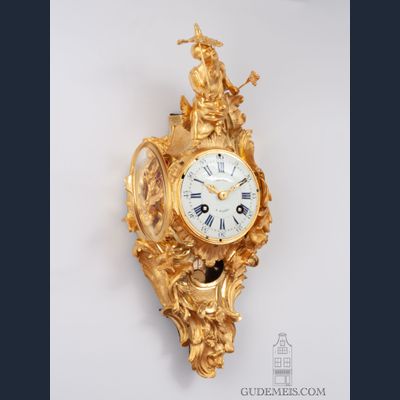
A fine French Louis XV ormolu cartel wall clock, Décle A Paris, 1754
€ 24000 $ 27542 £ 20761 ¥ 4388400 DKK 179342 CHF 21682 NOK 267816 CA$ 37742 HK$ 215585
A rare French Louis XVI quarter repeating wall clock, Meunier Le Jeune, circa 1770.
€ 15000 $ 17214 £ 12975 ¥ 2742750 DKK 112089 CHF 13551 NOK 167385 CA$ 23589 HK$ 134740
A very rare small French Louis XV ormolu bracket clock, Leroy A Paris, circa 1745
€ 32000 $ 36723 £ 27681 ¥ 5851200 DKK 239123 CHF 28909 NOK 357088 CA$ 50323 HK$ 287446
A rare French Louis XVI quarter repeating wall timepiece, Lepaute, circa 1783.
€ 16000 $ 18362 £ 13840 ¥ 2925600 DKK 119562 CHF 14454 NOK 178544 CA$ 25162 HK$ 143723
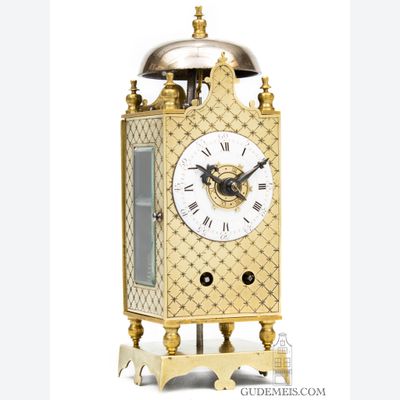
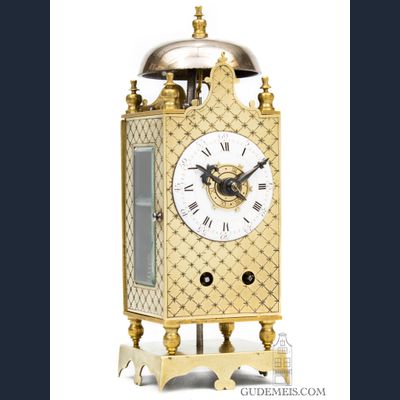
A miniature Northern French brass table lantern clock, circa 1780
€ 7800 $ 8951 £ 6747 ¥ 1426230 DKK 58286 CHF 7047 NOK 87040 CA$ 12266 HK$ 70065
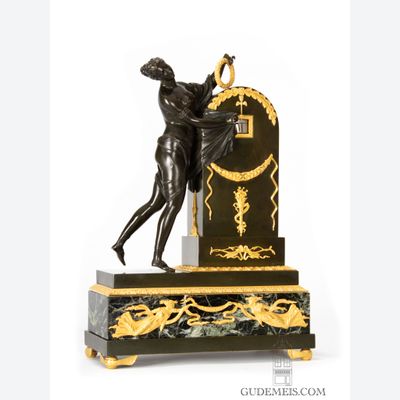
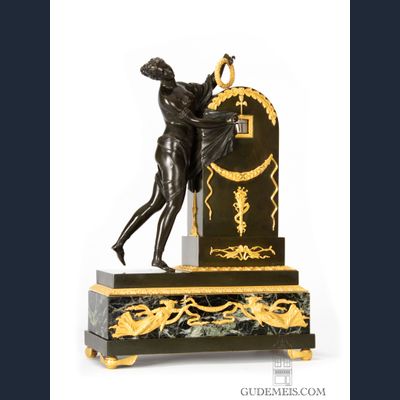
A fine French Empire mantel clock oubli du temps by Galle, circa 1810.
€ 21000 $ 24100 £ 18166 ¥ 3839850 DKK 156925 CHF 18971 NOK 234339 CA$ 33025 HK$ 188637
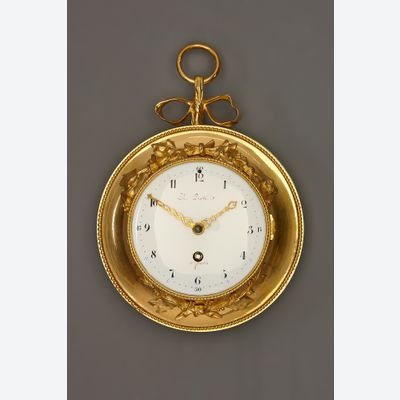
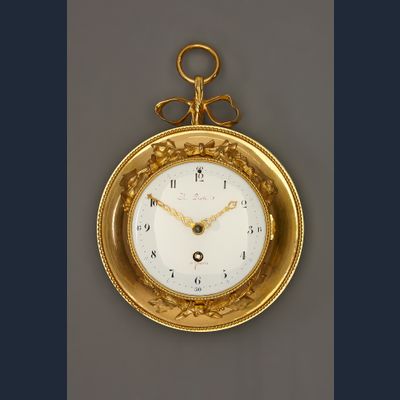
French Louis XVI oeil de boeuf cartel
Price on request Price on request Price on request Price on request Price on request Price on request Price on request Price on request Price on request
Price on request Price on request Price on request Price on request Price on request Price on request Price on request Price on request Price on request

French Empire Cartel d’Applique
Price on request Price on request Price on request Price on request Price on request Price on request Price on request Price on request Price on request
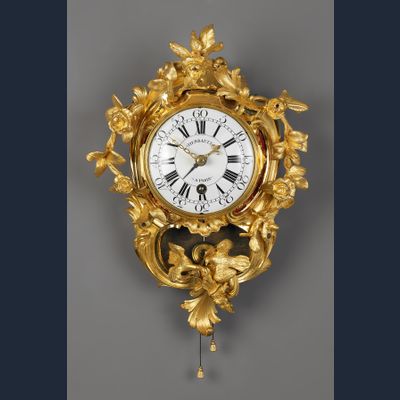
French Louis XV Cartel d'Alcove
Price on request Price on request Price on request Price on request Price on request Price on request Price on request Price on request Price on request
€ 4500 $ 5164 £ 3893 ¥ 822825 DKK 33627 CHF 4065 NOK 50216 CA$ 7077 HK$ 40422
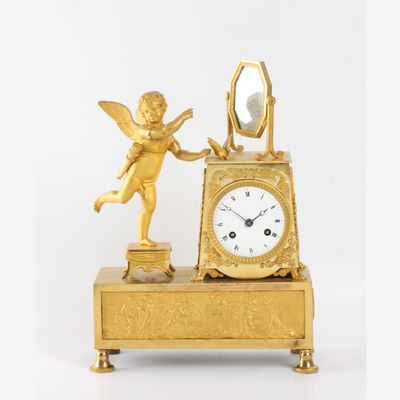
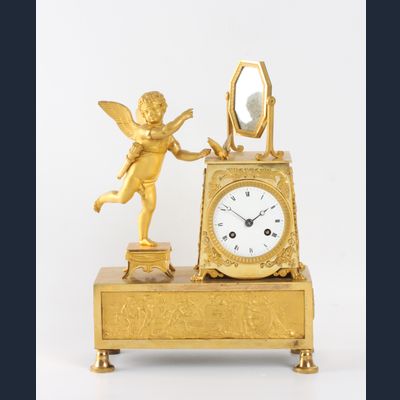
A French Empire ormolu sculptural mantel clock, circa 1810
€ 7500 $ 8607 £ 6488 ¥ 1371375 DKK 56044 CHF 6776 NOK 83692 CA$ 11794 HK$ 67370
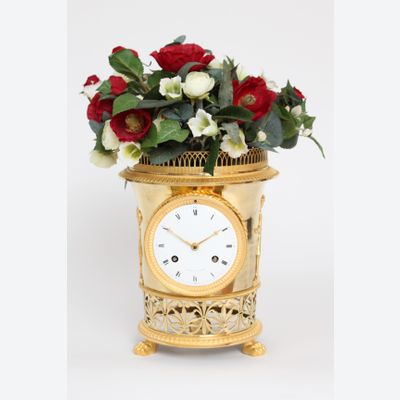
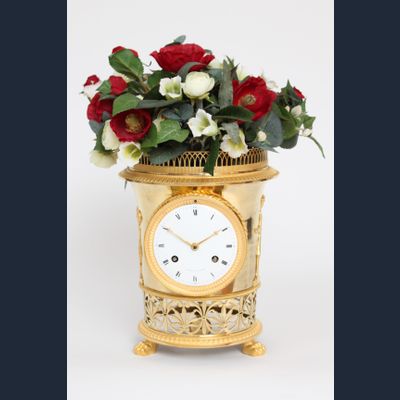
A fine French Empire ormolu urn mantel clock, Angevin A Paris, circa 1800
€ 12500 $ 14345 £ 10813 ¥ 2285625 DKK 93408 CHF 11292 NOK 139488 CA$ 19658 HK$ 112284
A rare French Empire ormolu and bronze ‘au bon sauvage’ mantel clock Lesieur à Paris, circa 1800
€ 45000 $ 51642 £ 38926 ¥ 8228250 DKK 336267 CHF 40653 NOK 502155 CA$ 70767 HK$ 404222