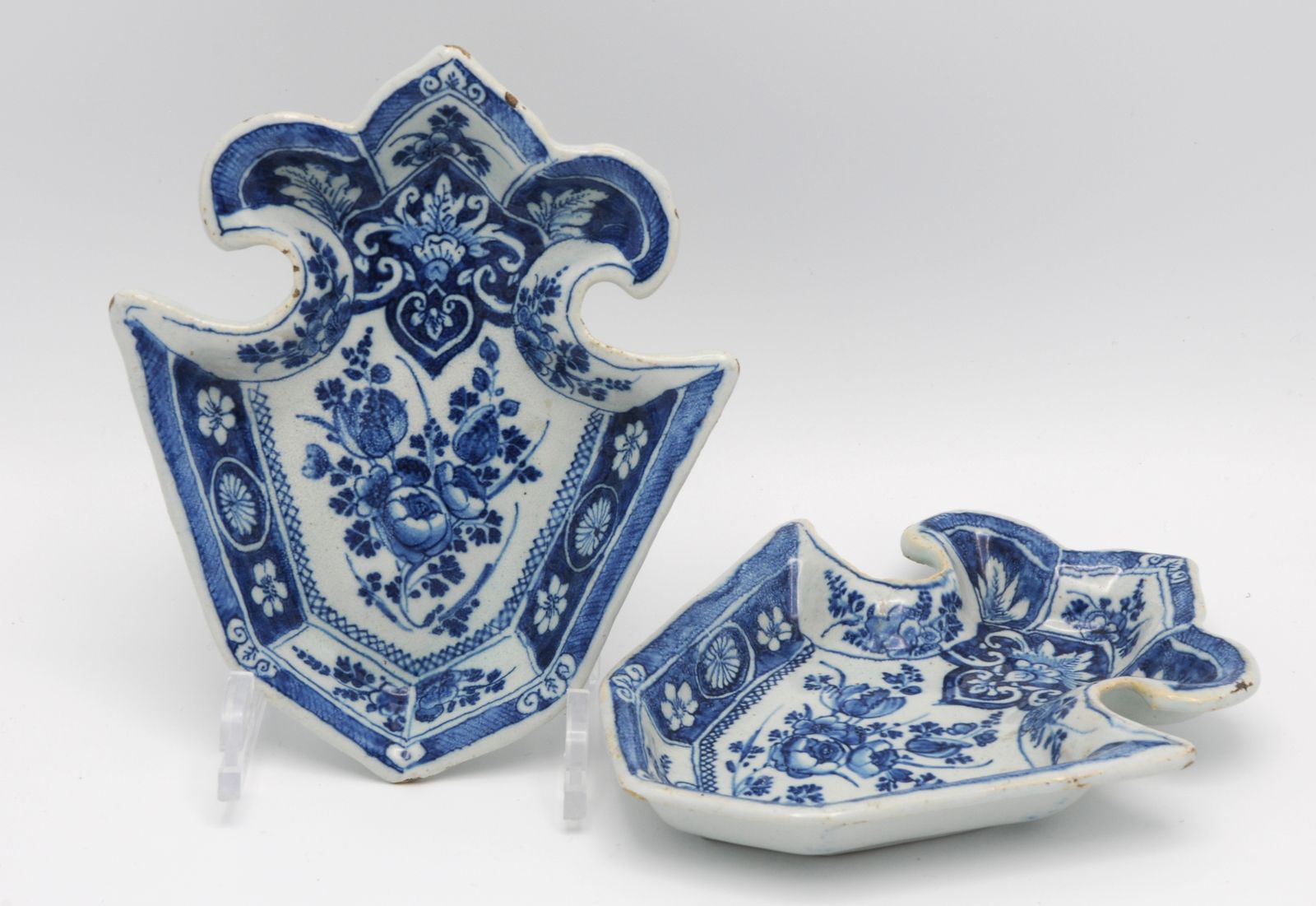
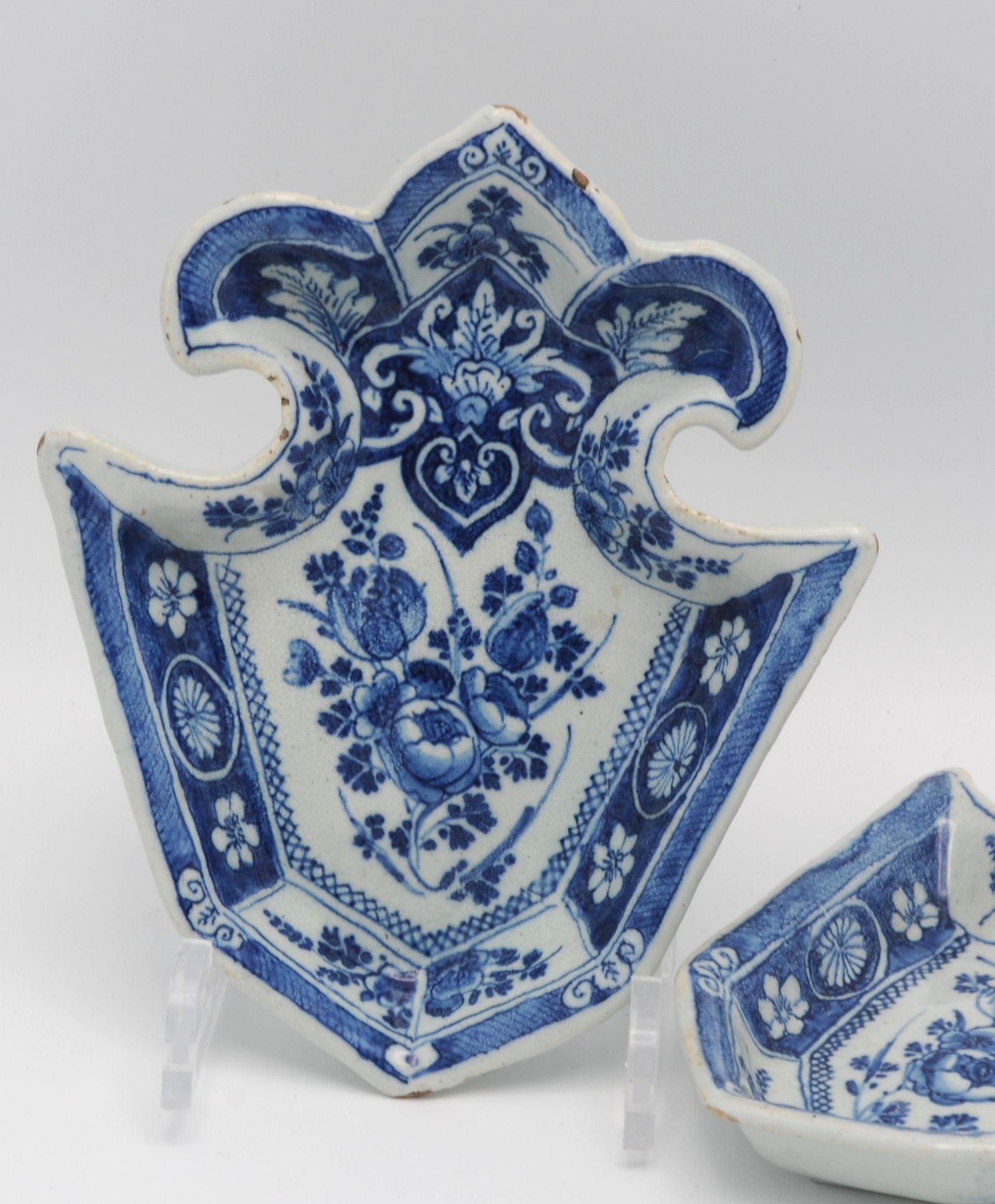
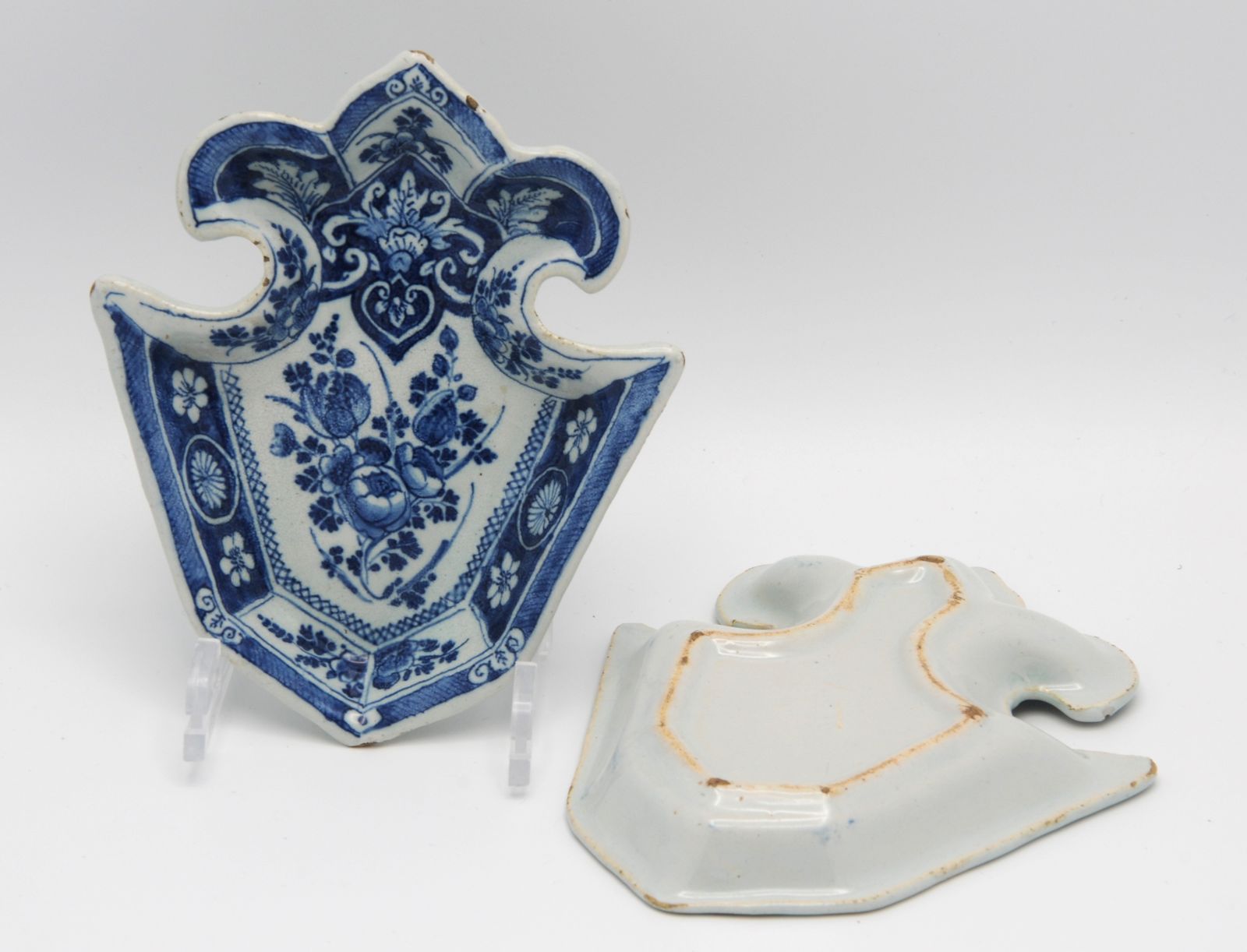
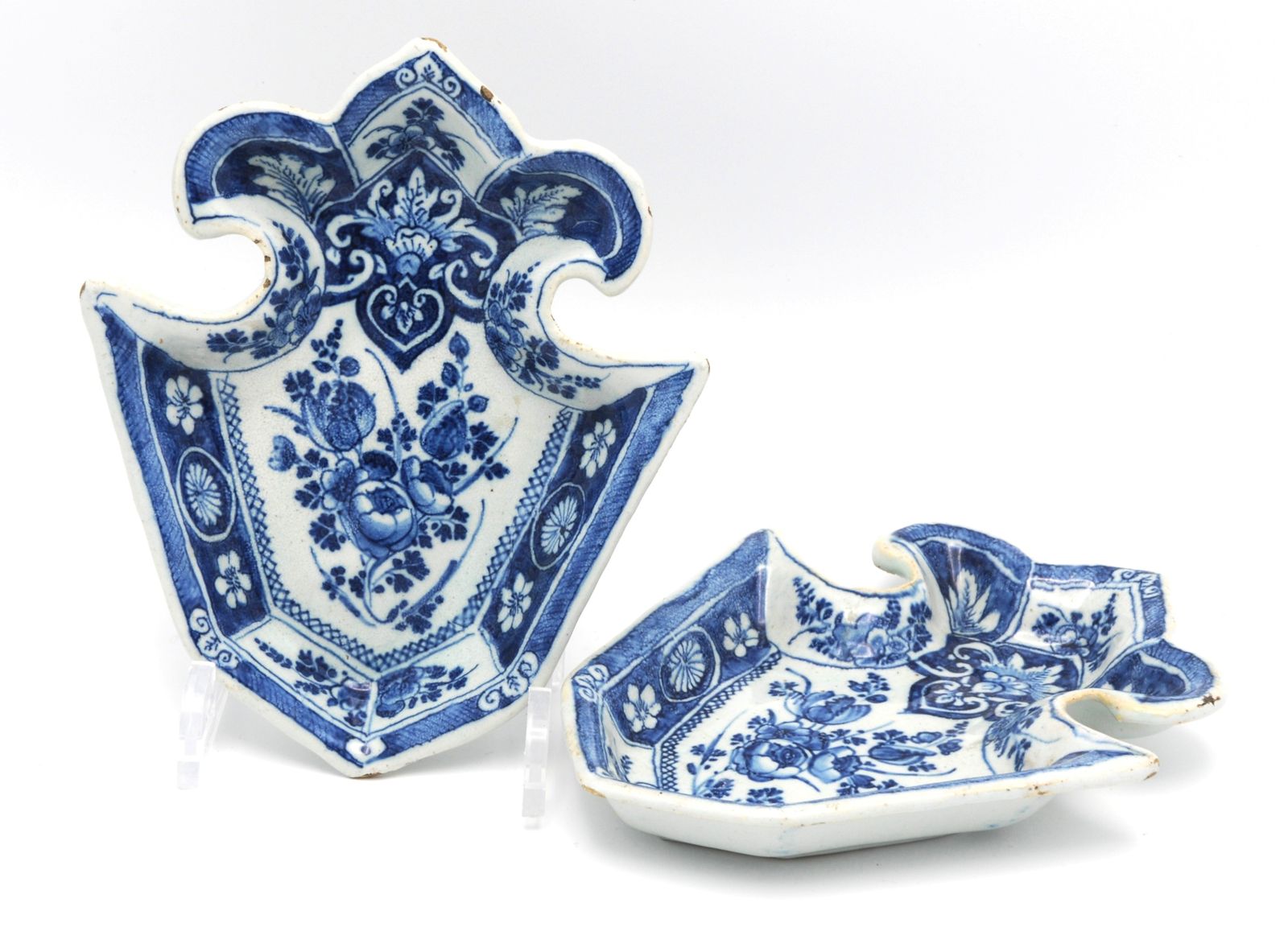
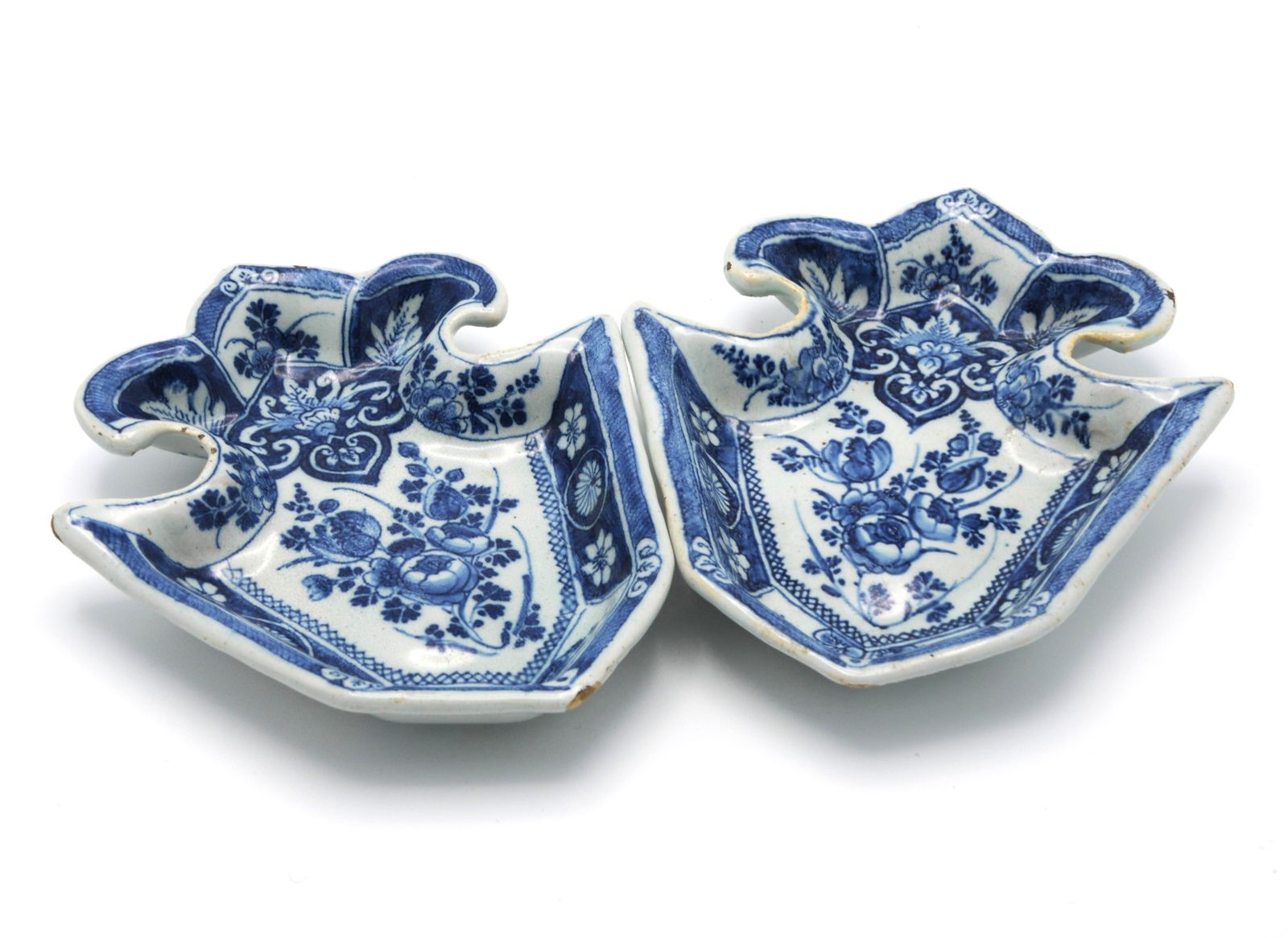
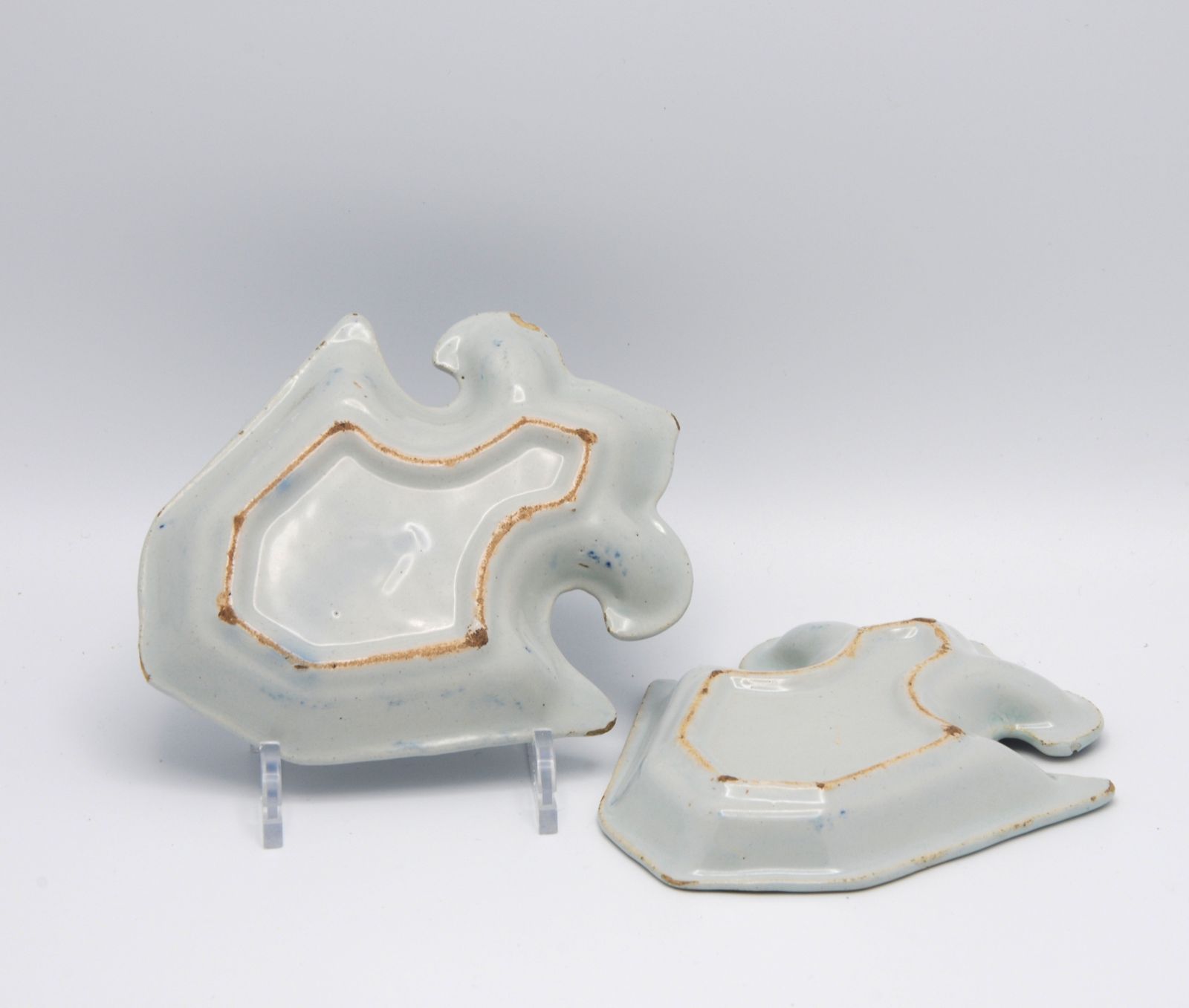
Pair of Dutch Delft Fleur-de-Lys Sweetmeat Dishes
Ships from The Netherlands
€ 2250 $ 2521 £ 1907 ¥ 399015 DKK 16819 CHF 2095 NOK 24110 CA$ 3587 HK$ 19786

Message the seller
Just Love Antiques
- Name
- Pair of Dutch Delft Fleur-de-Lys Sweetmeat Dishes
- Measurements
- Height: 14 cm, Width: 11 cm, Depth: 1 cm
- Reference
- JLOA1001046
- Colors
- Blue
- Condition
- Lightly used, with very light scratches, or minor cosmetic wear, but has no structural issues. Most antique and vintage items fit this condition.
- wear
- Shows signs of wear that are consistent with the item’s age and typical use, such as gentle surface marks or patina, without compromising its overall appearance or functionality.
- Materials
- Delft Earthenware
- Styles
- Baroque
- Periods
- Antique1690 - 1710 17th Century 18th Century Antique
- Origins
- The Netherlands
A pair of 17th century Dutch Delft sweetmeat dishes in finely modelled fleur-de-lys form, painted in underglaze blue. These early Delft faience dishes belong to the tradition of Dutch Delftware tableware produced in the late 17th century for refined domestic dining and dessert presentation.
The dishes are associated with Delft sweetmeat services (confituur-starren), specialised composite sets used for serving preserved fruits, candied sweets, dried fruits, marmalades, and other sugar-based delicacies during dessert or tea service in the Dutch Republic. These Delft sweetmeat dishes reflect the growing importance of sugar in 17th century Europe following the expansion of cane sugar imports from colonial production centres.
The fleur-de-lys shaped form highlights the sculptural character of early Delft tableware, where Delft potters adapted European and Asian porcelain models into highly decorative faience forms. Delft blue and white dishes such as these were designed not only for function but also for visual presentation, often arranged in symmetrical compositions around a central star-shaped dish within a larger Delft sweetmeat service.
Rather than isolated serving pieces, these 17th century Delft dishes formed part of larger coordinated Delftware services, illustrating the evolution of Dutch Delft ceramics from utilitarian earthenware toward highly decorative table objects associated with status, taste, and domestic display.
Ask the seller
Related content