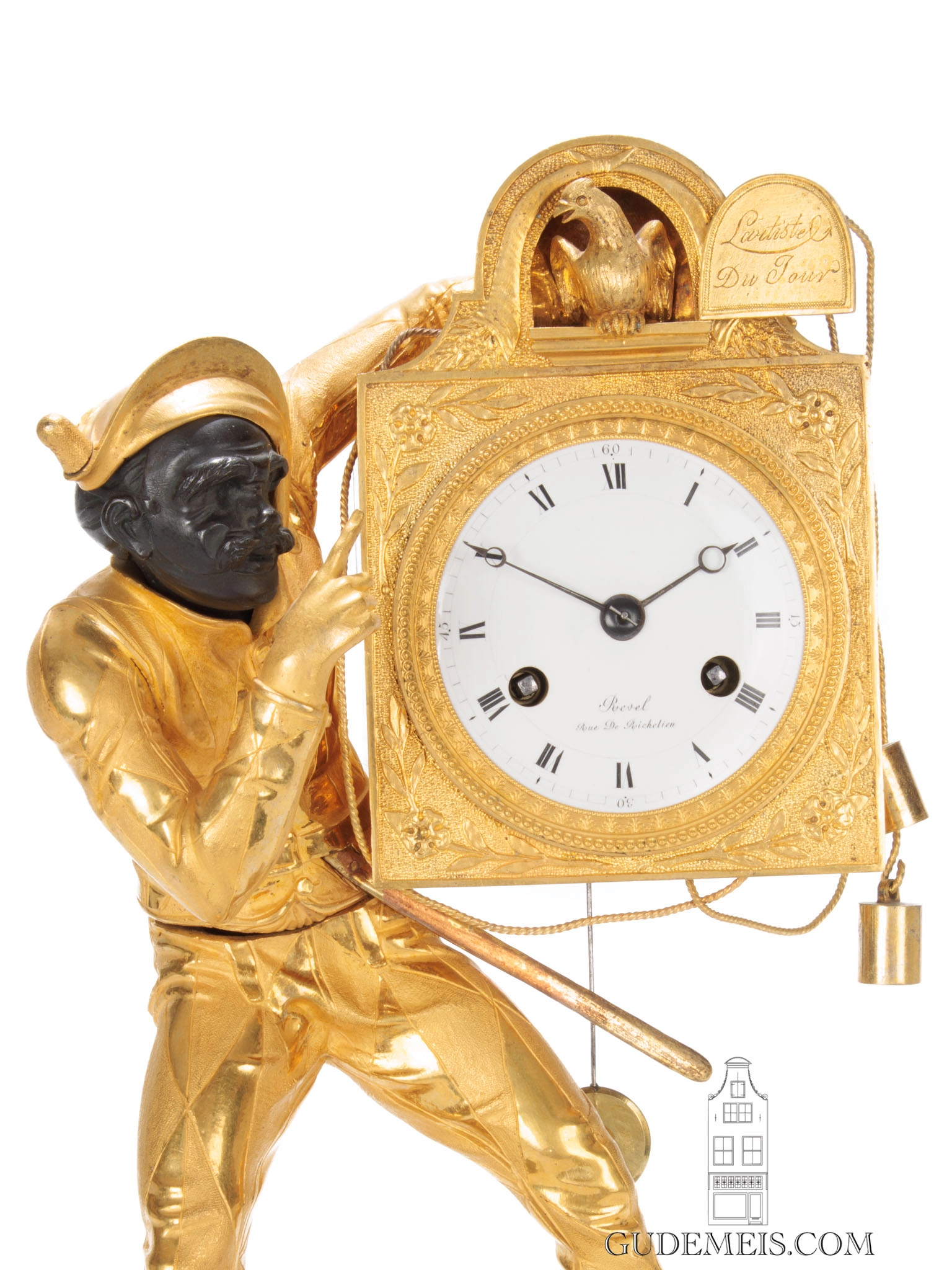
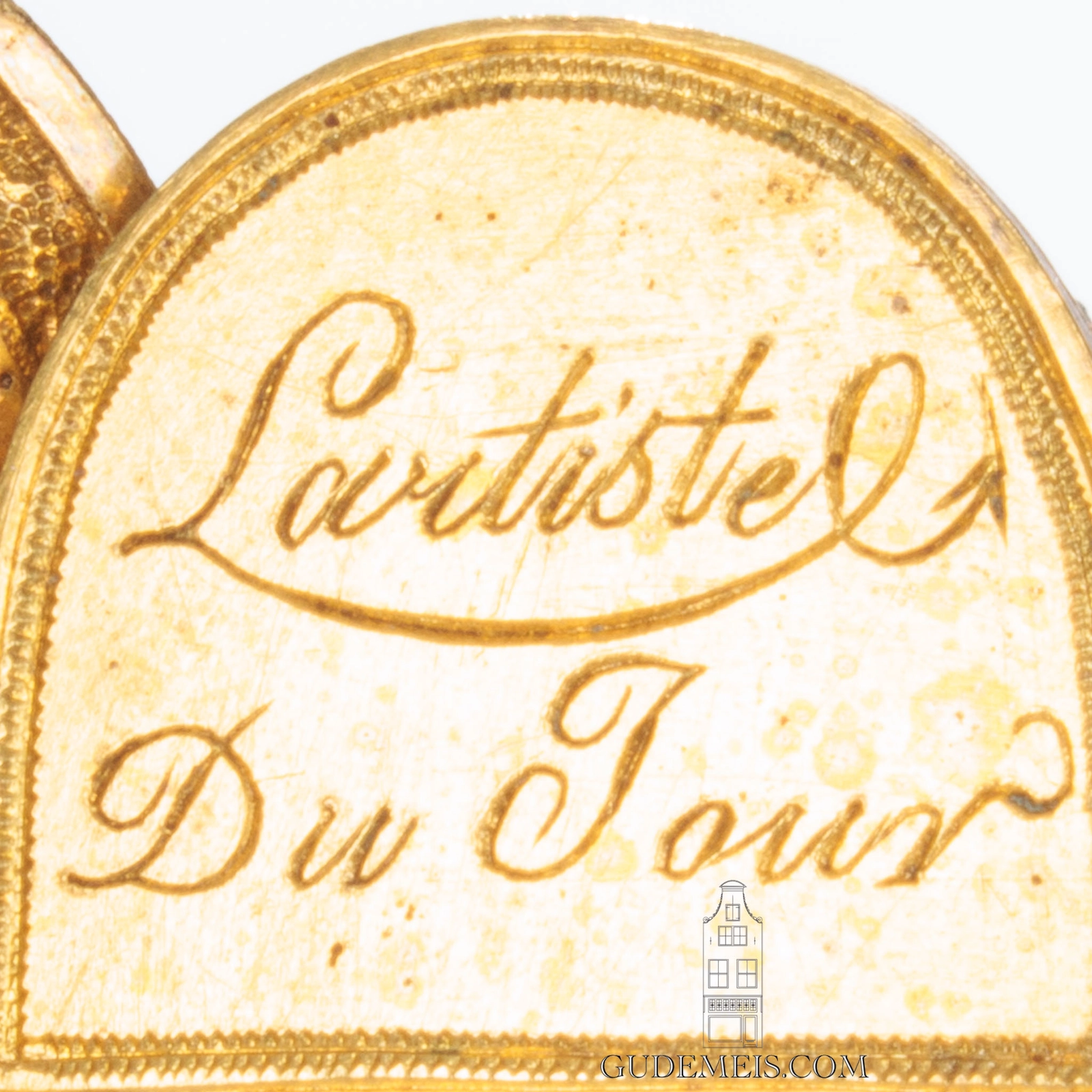
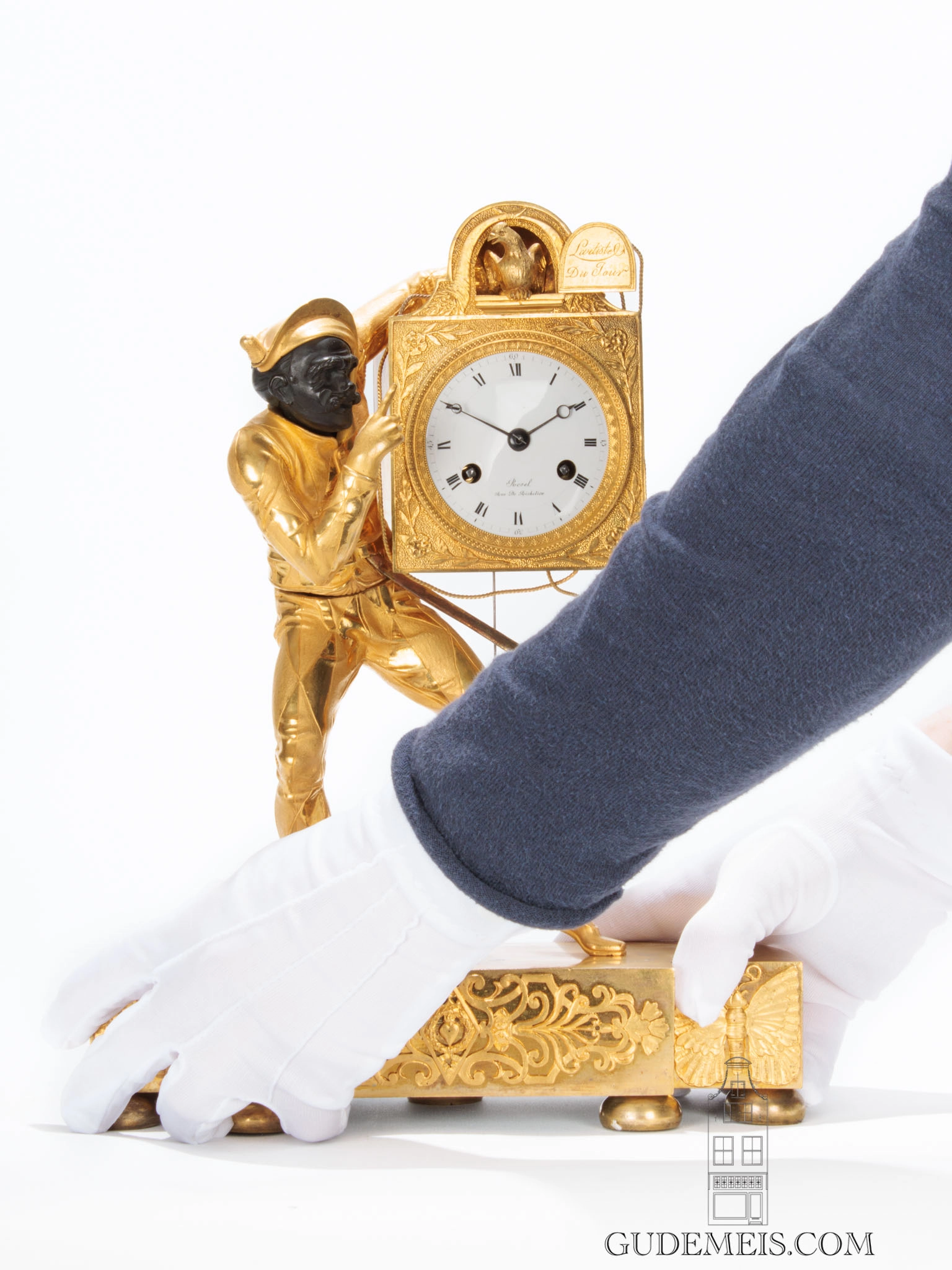
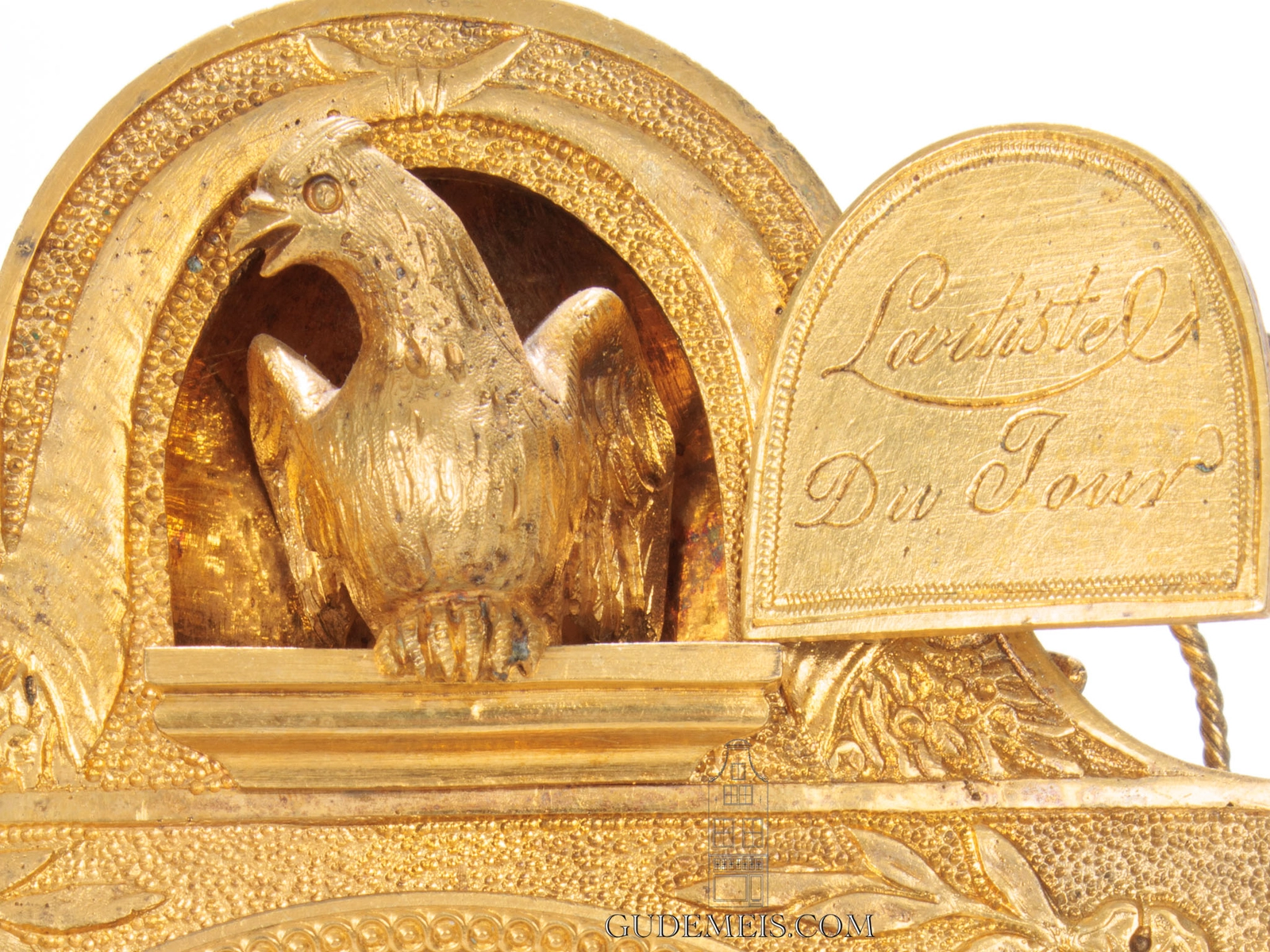
A French Empire ormolu mantel clock 'Ars Amatoria', circa 1800
€ 11000 $ 12678 £ 9598 ¥ 2023340 DKK 82194 CHF 10134 NOK 123514 CA$ 17633 HK$ 99358
Ships from The Netherlands
€ 19000 $ 21898 £ 16578 ¥ 3494860 DKK 141972 CHF 17505 NOK 213342 CA$ 30457 HK$ 171618
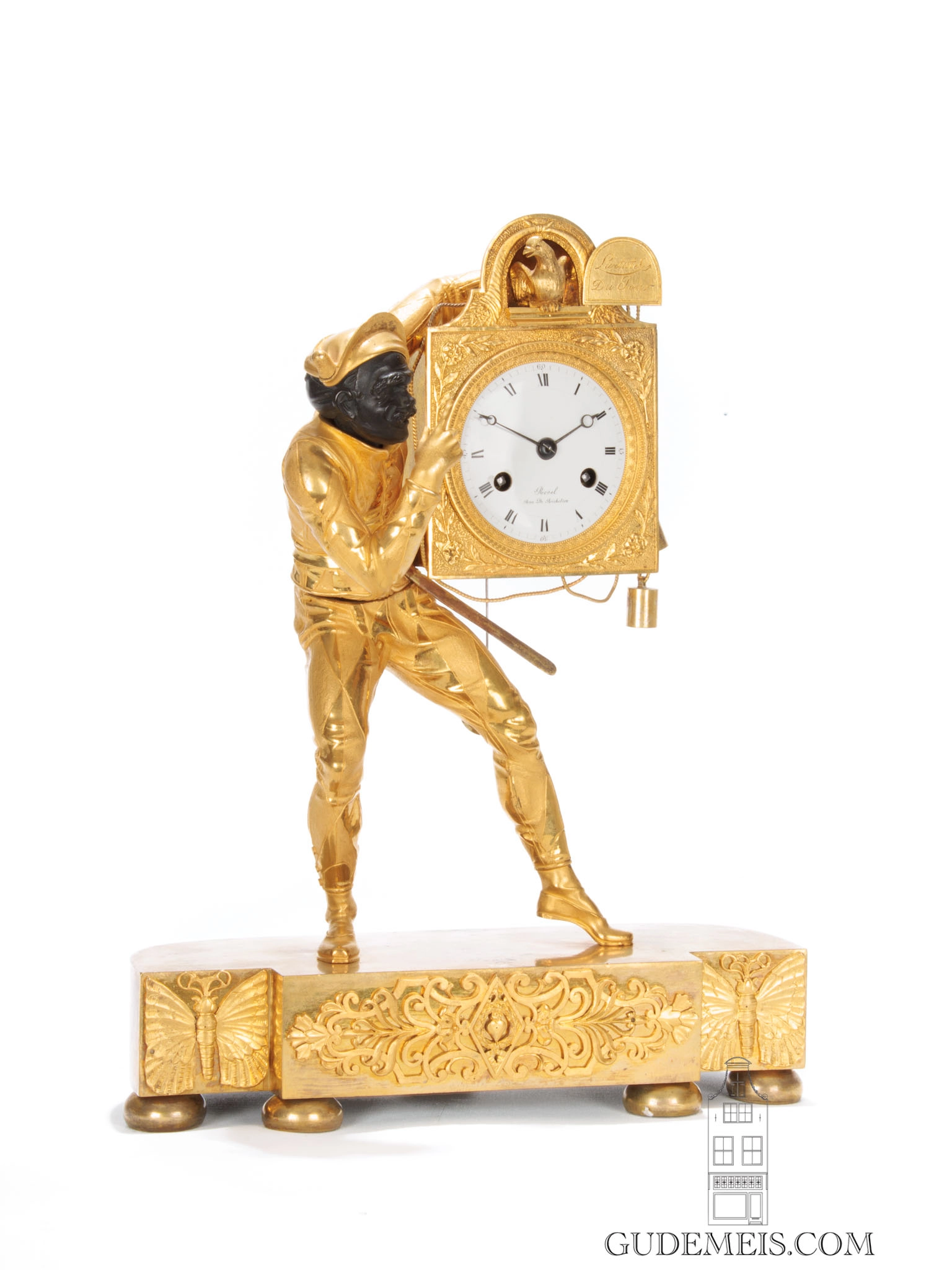
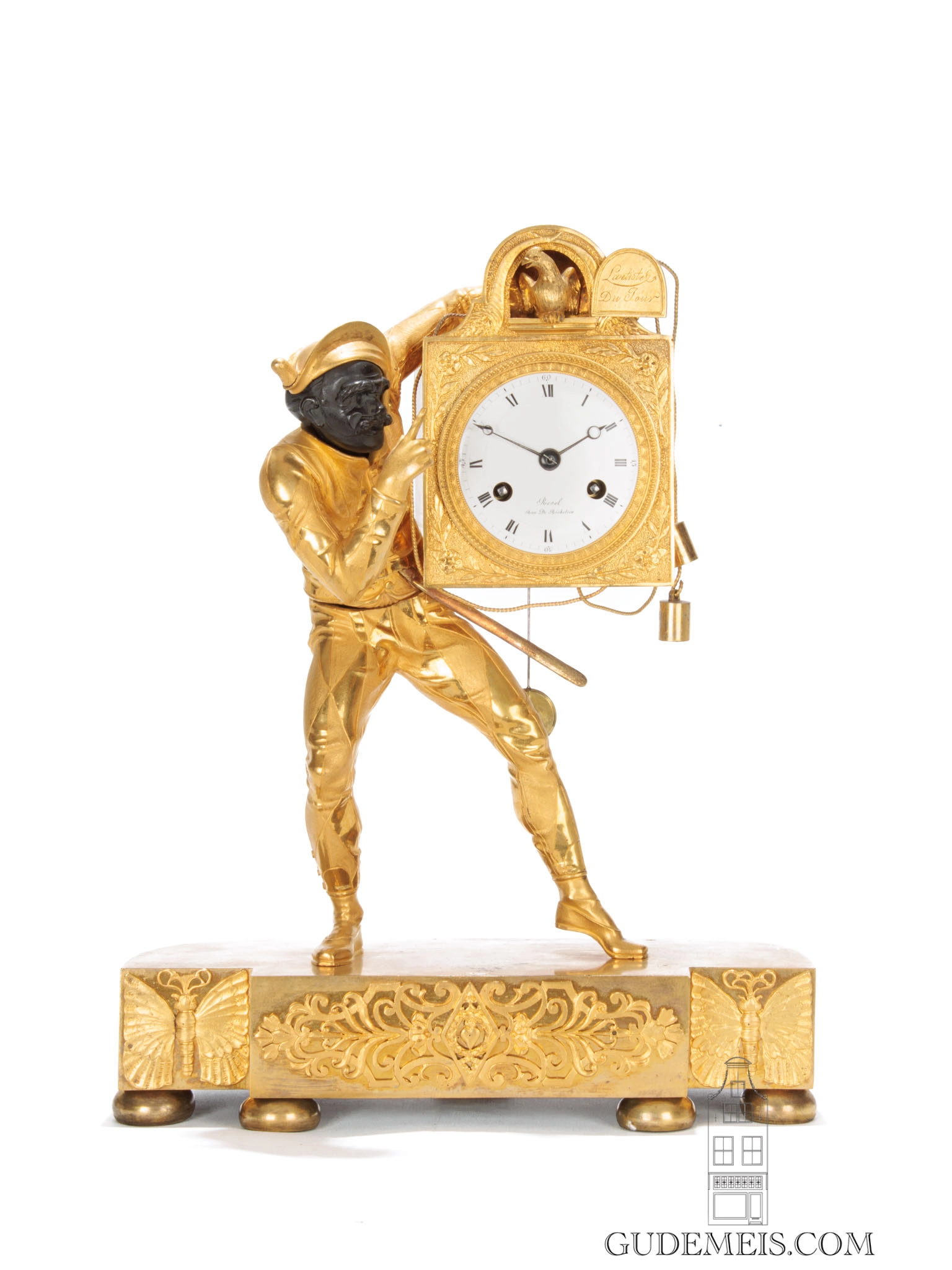
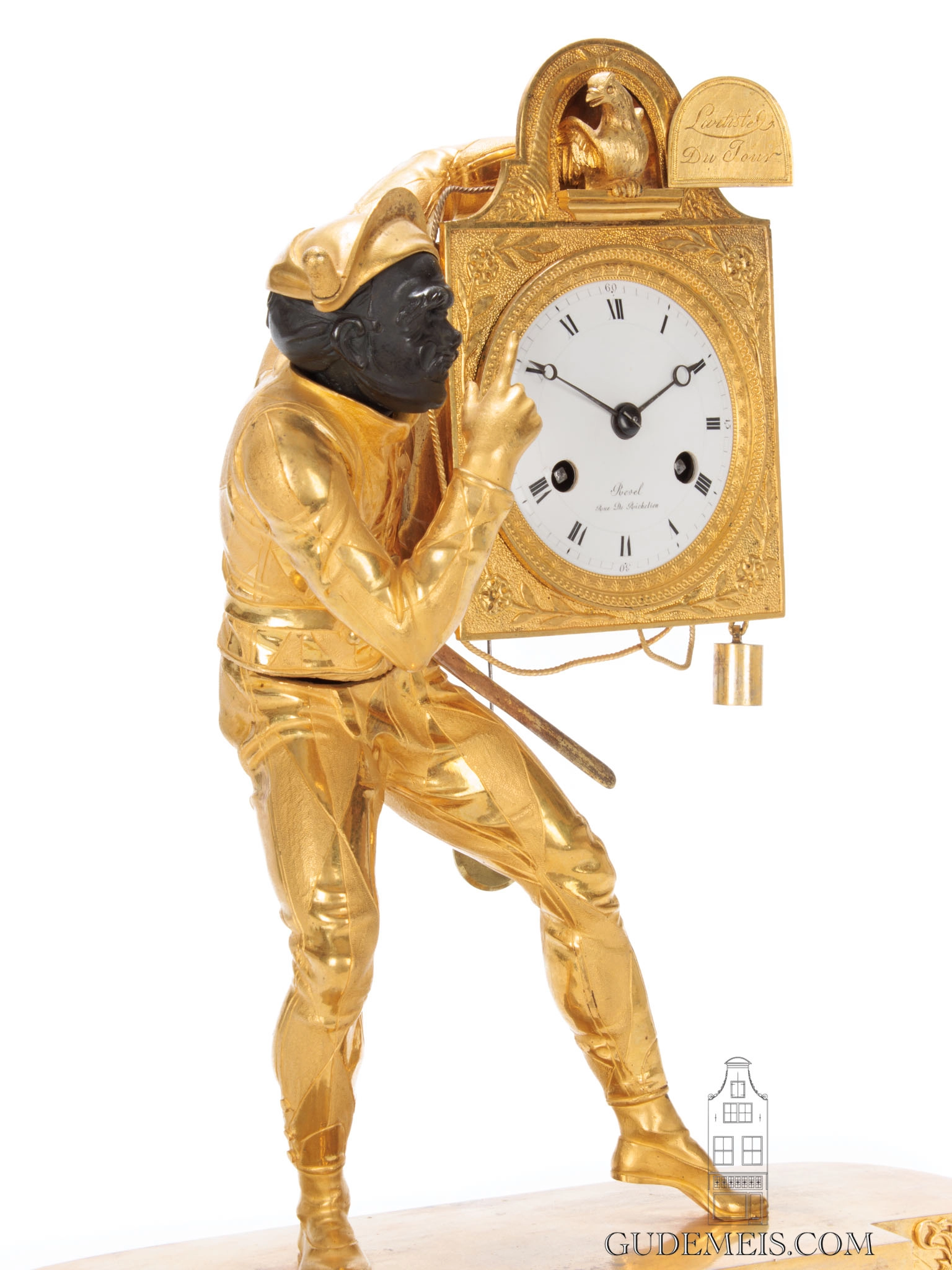
The harlequin was one of the popular characters from the Commedia dell’arte, an early form of professional theatre from Italy that was popular throughout Europe in the 16th to 18th centuries. It consisted of a number of regular characters who were recognisable by the masks worn by the actors. Generally, these followed a script on which there was improvisation. The harlequin as a character was acrobatic and mischievous. He was poor and therefore wore clothes made of different pieces of fabric. To some characters, the harlequin was invisible, but not to the audience. This allowed him to comment satirically on the other actors.
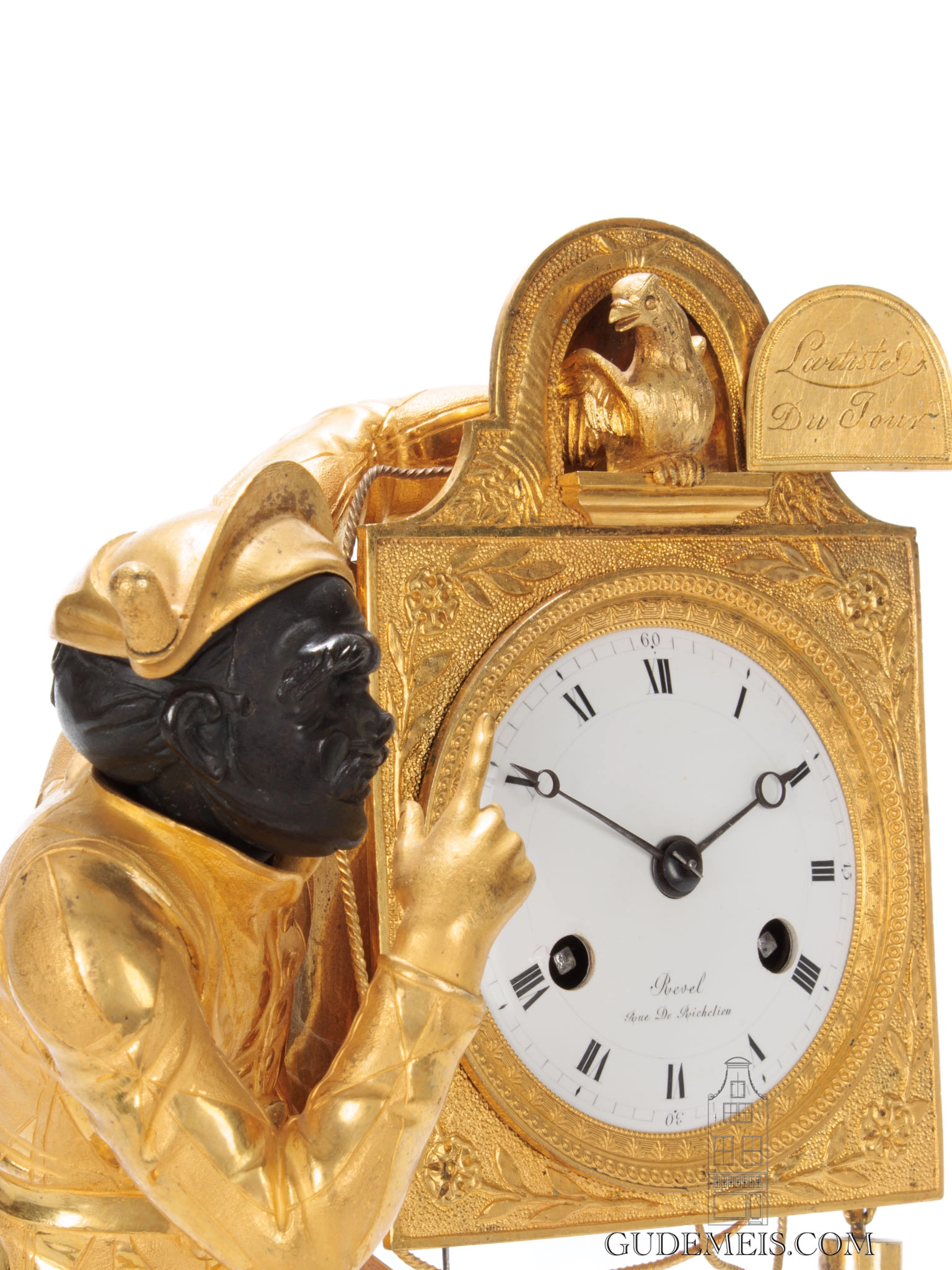
This rare model clock can be attributed to the famous bronzier Pierre-Philippe Thomire (1751 – 1843). This attribution is based on the fact that several versions are known that are signed by him. The beautiful finish of the gilding is apparent in the difference between the chased and matted parts. But also the realistic and dynamic pose of the harlequin shows the great artistry of Thomire. There are clocks of this fine model in the Palazzo Riccardi in Florence and the Quirinal Palace in Rome.
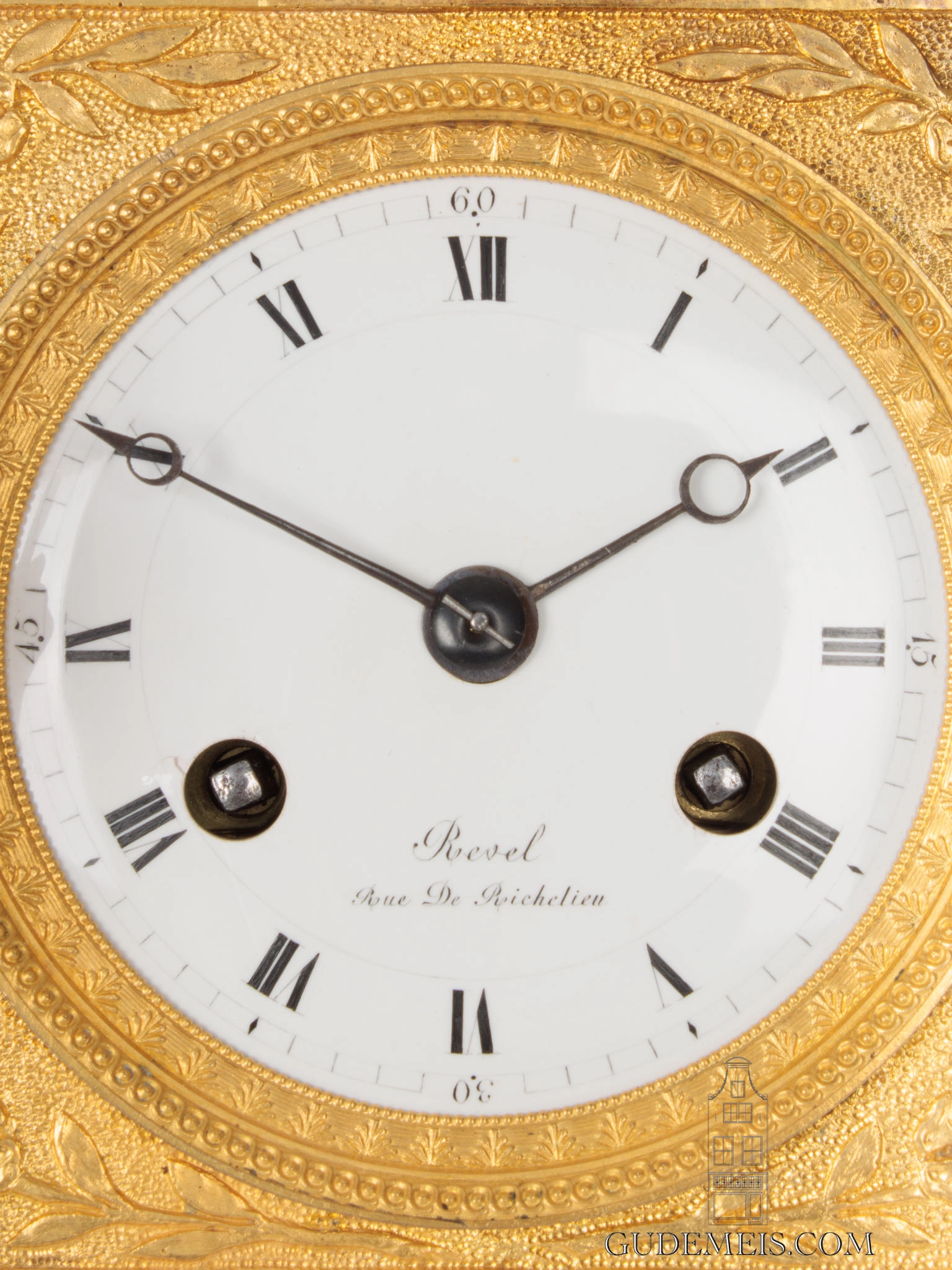
The enamel dial has Roman numerals and is signed Revel Rue de Richelieu. The Breguet hands are made of blued steel.
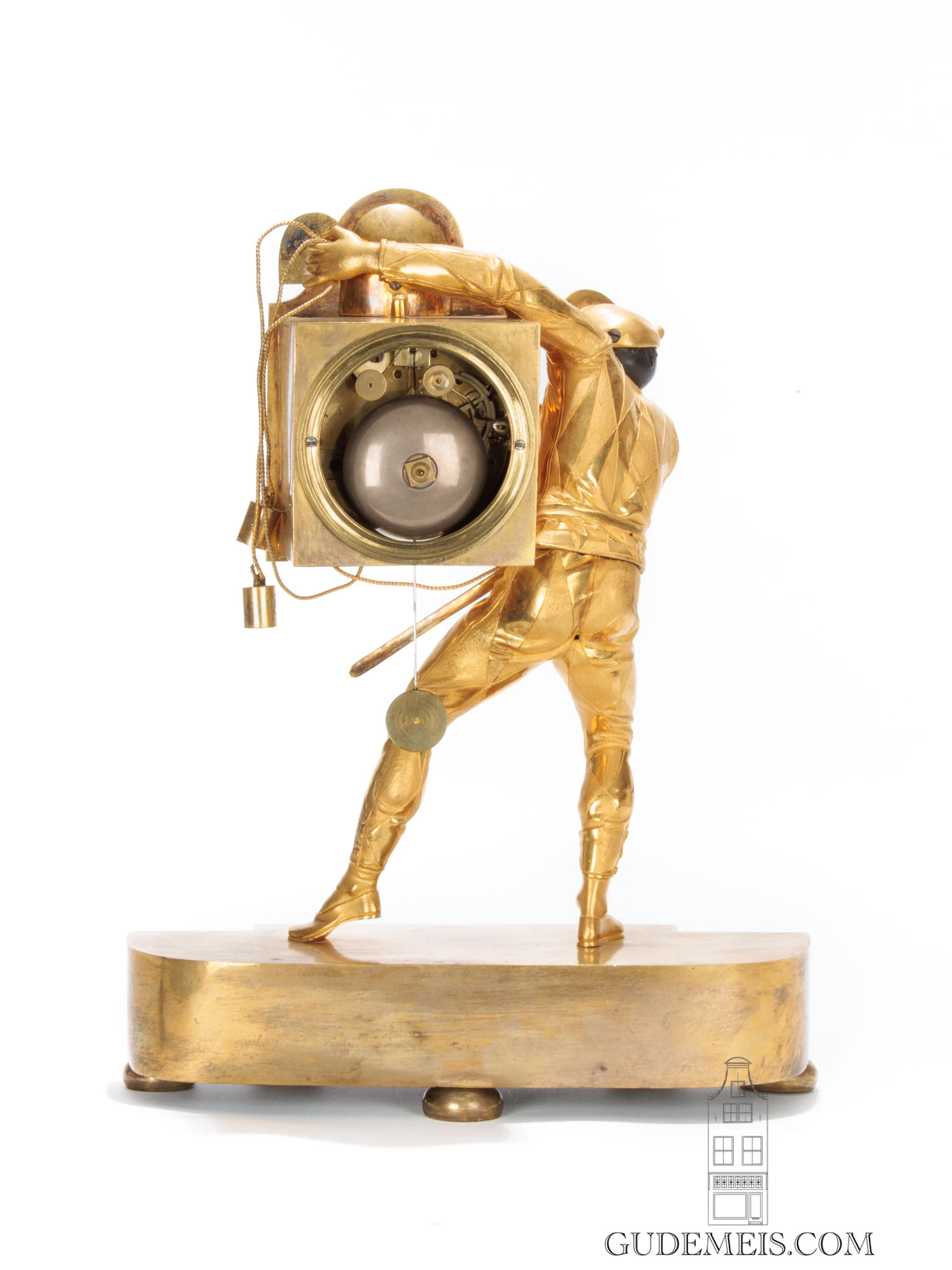
The movement has a duration of eight days and is regulated by anchor escapement in combination with a silk thread suspended pendulum. The clock has half-hour striking on a bell by means of a countwheel.
Related content
A French Empire ormolu mantel clock 'Ars Amatoria', circa 1800
€ 11000 $ 12678 £ 9598 ¥ 2023340 DKK 82194 CHF 10134 NOK 123514 CA$ 17633 HK$ 99358
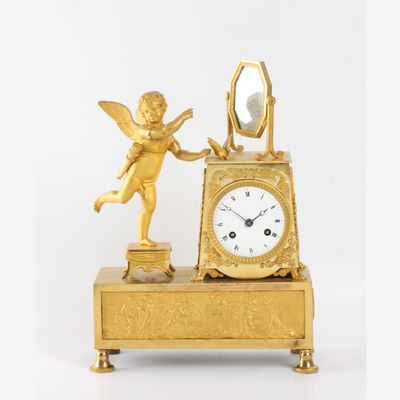
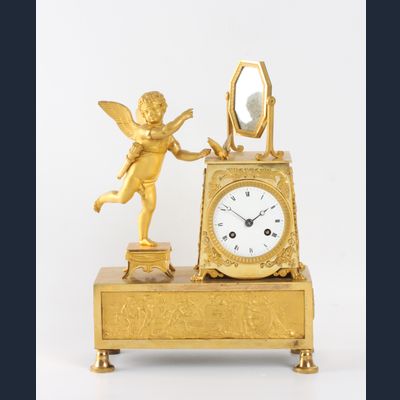
A French Empire ormolu sculptural mantel clock, circa 1810
€ 7500 $ 8644 £ 6544 ¥ 1379550 DKK 56042 CHF 6910 NOK 84214 CA$ 12022 HK$ 67744
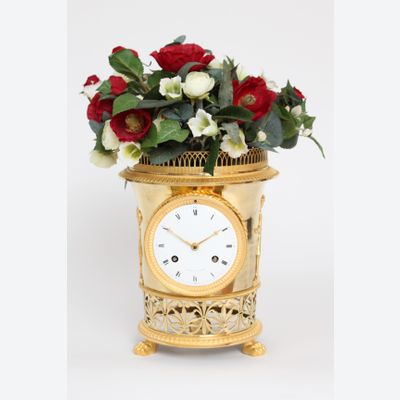
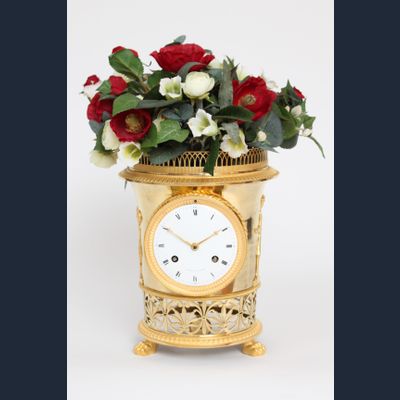
A fine French Empire ormolu urn mantel clock, Angevin A Paris, circa 1800
€ 12500 $ 14406 £ 10907 ¥ 2299250 DKK 93402 CHF 11516 NOK 140356 CA$ 20038 HK$ 112906
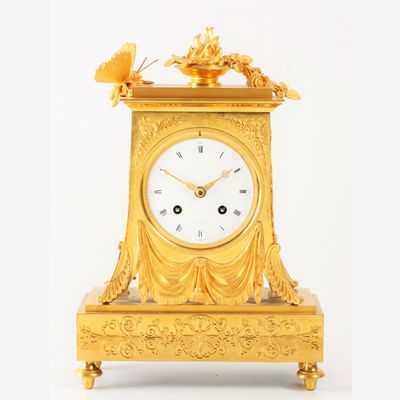
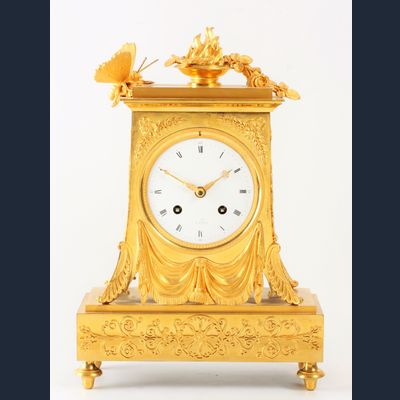
A lovely French Empire ormolu borne mantel clock with butterfly, circa 1800
€ 10250 $ 11813 £ 8943 ¥ 1885385 DKK 76590 CHF 9443 NOK 115092 CA$ 16431 HK$ 92583
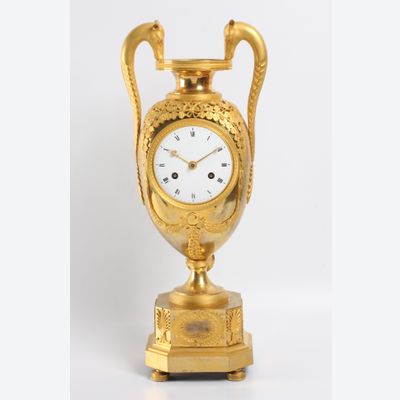
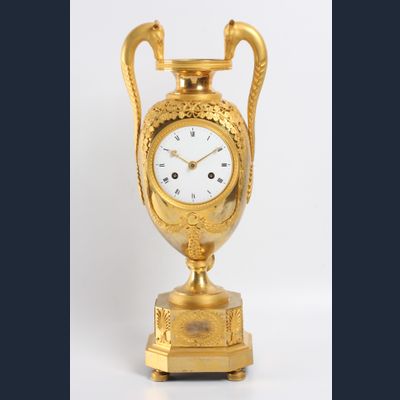
A large French Empire ormolu urn mantel clock with mythical animals, circa 1800
€ 9250 $ 10661 £ 8071 ¥ 1701445 DKK 69118 CHF 8522 NOK 103864 CA$ 14828 HK$ 83551
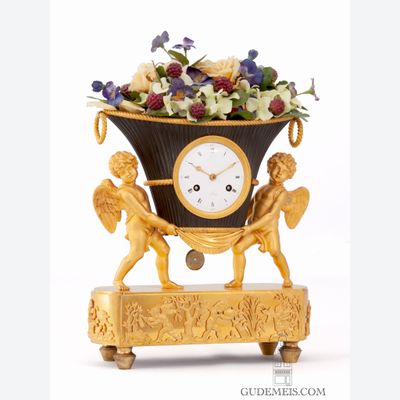
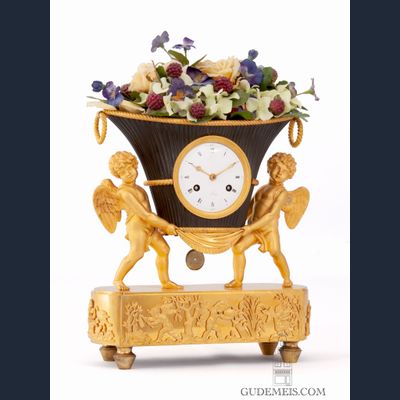
A French Empire ormolu and bronze mantel clock, putti with flower urn, circa 1800
€ 9500 $ 10949 £ 8289 ¥ 1747430 DKK 70986 CHF 8752 NOK 106671 CA$ 15228 HK$ 85809
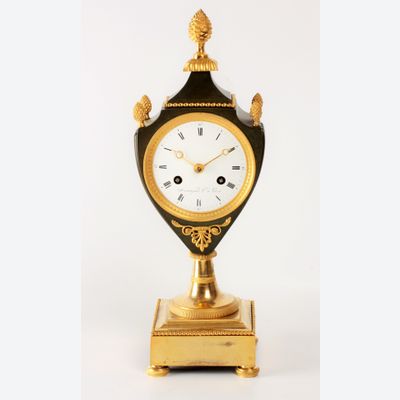
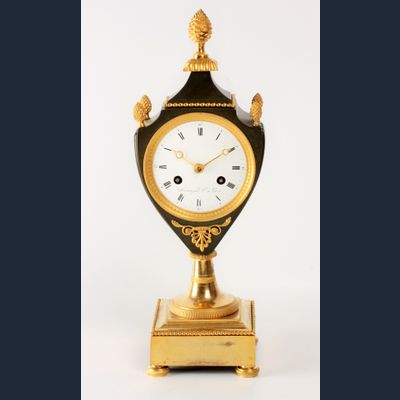
A fine French Empire ormolu and bronze urn mantel clock by Armingaud L.né à Paris, circa 1800
€ 6500 $ 7491 £ 5671 ¥ 1195610 DKK 48569 CHF 5988 NOK 72985 CA$ 10420 HK$ 58711
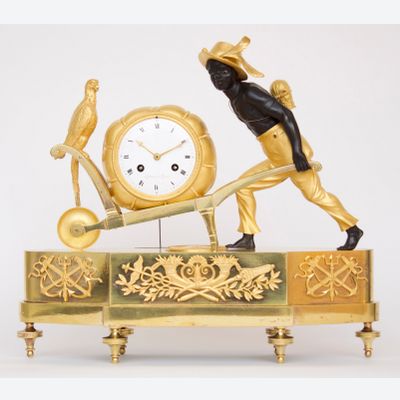
A rare French Empire ormolu and bronze ‘au bon sauvage’ mantel clock Lesieur à Paris, circa 1800
€ 45000 $ 51862 £ 39264 ¥ 8277300 DKK 336249 CHF 41458 NOK 505282 CA$ 72135 HK$ 406462
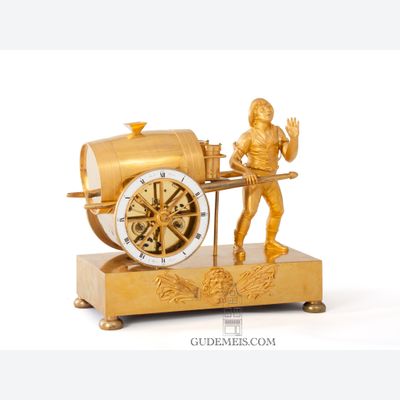
A French Empire gilt bronze mantel clock water seller, circa 1810
€ 17500 $ 20169 £ 15269 ¥ 3218950 DKK 130764 CHF 16123 NOK 196499 CA$ 28052 HK$ 158069
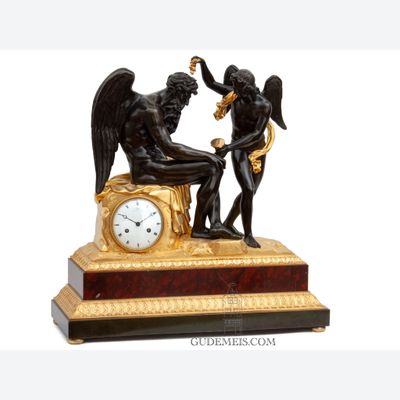
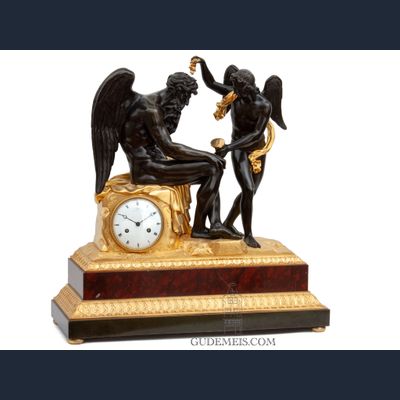
An imposing French Empire sculptural mantel clock, Claude Galle, circa 1810.
€ 42000 $ 48405 £ 36646 ¥ 7725480 DKK 313832 CHF 38695 NOK 471597 CA$ 67326 HK$ 379365
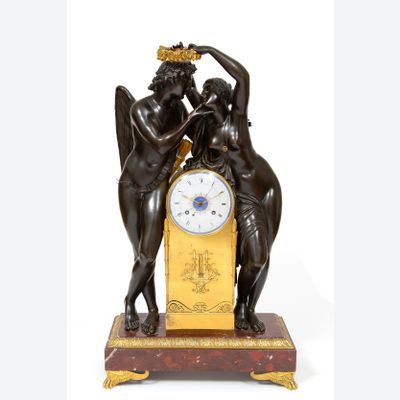
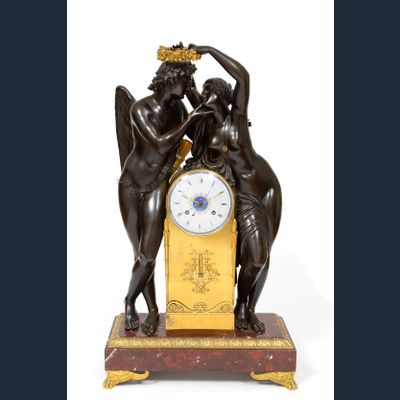
An important French ‘Amor and Psyche’ mantel clock, design by Claude Michallon, circa 1800
Price on request Price on request Price on request Price on request Price on request Price on request Price on request Price on request Price on request
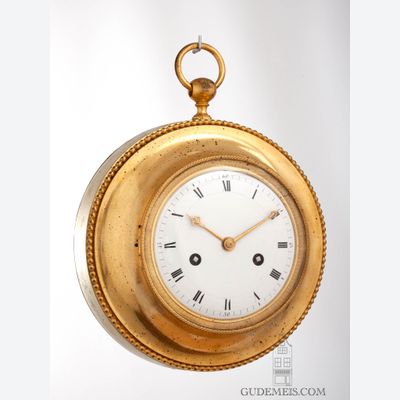
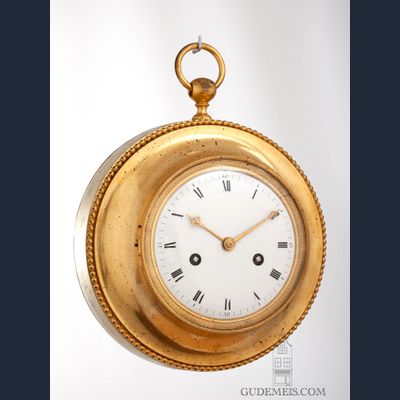
A French Empire ormolu annular striking cartel wall clock, circa 1800.
€ 9250 $ 10661 £ 8071 ¥ 1701445 DKK 69118 CHF 8522 NOK 103864 CA$ 14828 HK$ 83551
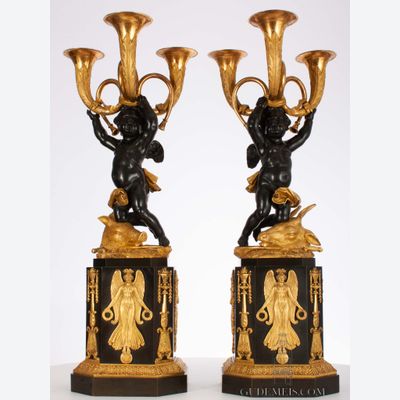
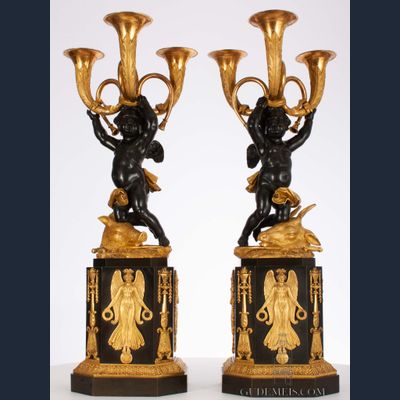
An important pair French Empire ormolu and bronze sculptural candelabra, circa 1800
€ 45000 $ 51862 £ 39264 ¥ 8277300 DKK 336249 CHF 41458 NOK 505282 CA$ 72135 HK$ 406462


A lovely French Empire porcelain urn mantel clock, circa 1800
€ 13500 $ 15559 £ 11779 ¥ 2483190 DKK 100875 CHF 12438 NOK 151585 CA$ 21640 HK$ 121939
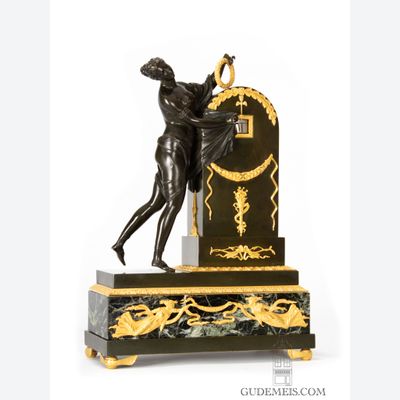
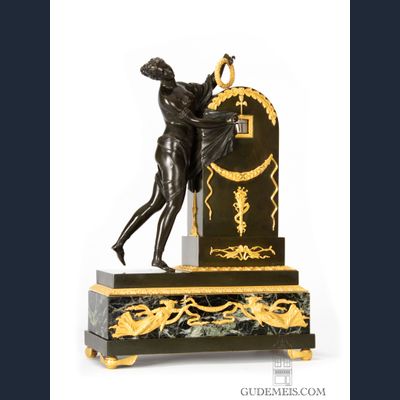
A fine French Empire mantel clock oubli du temps by Galle, circa 1810.
€ 21000 $ 24202 £ 18323 ¥ 3862740 DKK 156916 CHF 19347 NOK 235798 CA$ 33663 HK$ 189682
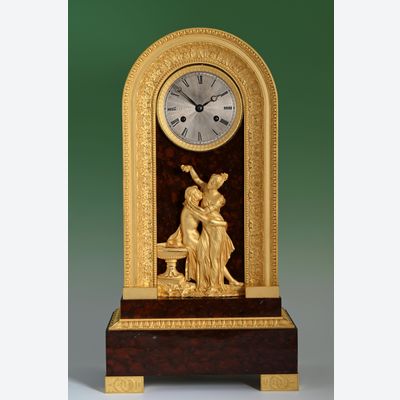
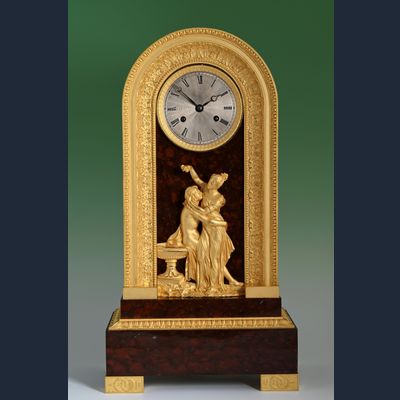
A French Empire ormolu pendule
€ 4750 $ 5474 £ 4145 ¥ 873715 DKK 35493 CHF 4376 NOK 53335 CA$ 7614 HK$ 42904
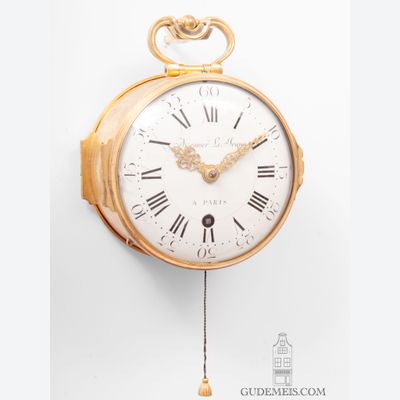
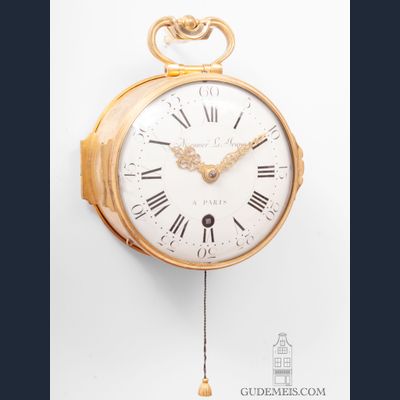
A rare French Louis XVI quarter repeating wall clock, Meunier Le Jeune, circa 1770.
€ 15000 $ 17288 £ 13088 ¥ 2759100 DKK 112083 CHF 13820 NOK 168428 CA$ 24045 HK$ 135488
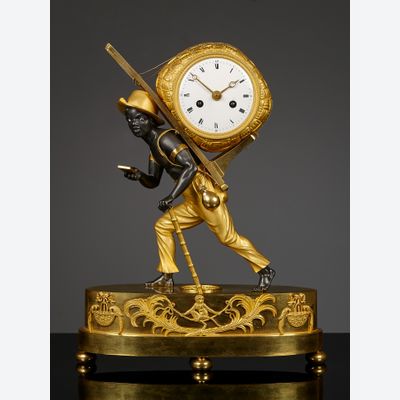
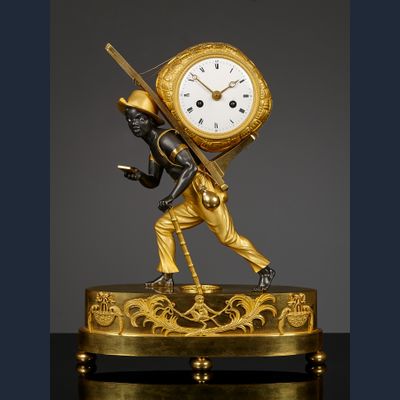
French Empire pendule, Le Portefaix
Price on request Price on request Price on request Price on request Price on request Price on request Price on request Price on request Price on request
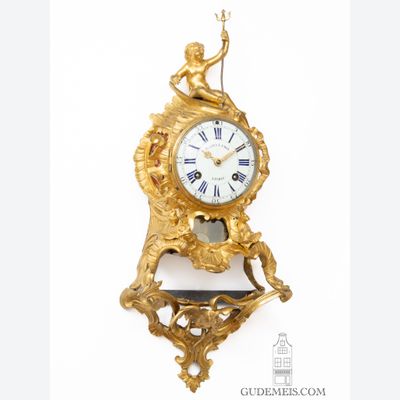
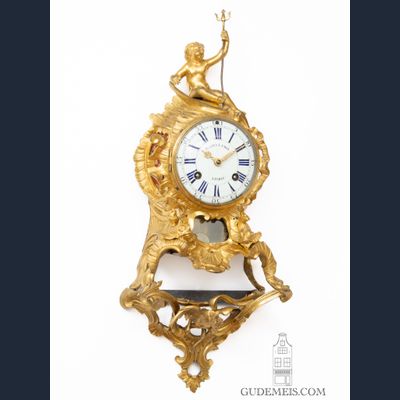
A very rare small French Louis XV ormolu bracket clock, Leroy A Paris, circa 1745
€ 32000 $ 36880 £ 27921 ¥ 5886080 DKK 239110 CHF 29482 NOK 359312 CA$ 51296 HK$ 289040
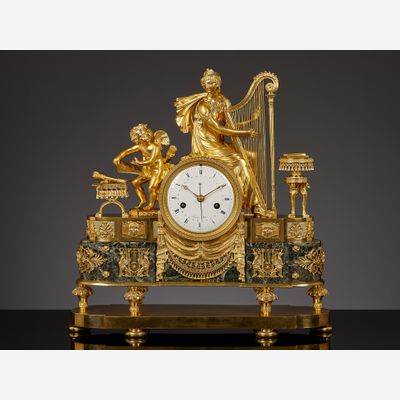
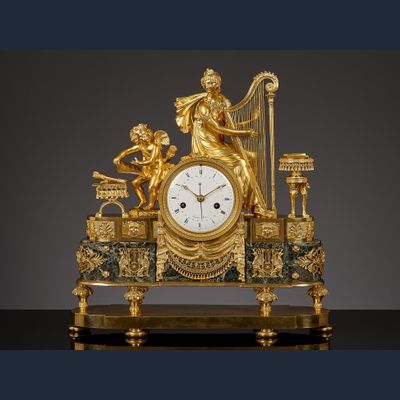
French Empire mantel clock, Laurent
Price on request Price on request Price on request Price on request Price on request Price on request Price on request Price on request Price on request
A French Empire ormolu mantel clock 'Ars Amatoria', circa 1800
€ 11000 $ 12678 £ 9598 ¥ 2023340 DKK 82194 CHF 10134 NOK 123514 CA$ 17633 HK$ 99358
A fine French Empire mantel clock oubli du temps by Galle, circa 1810.
€ 21000 $ 24202 £ 18323 ¥ 3862740 DKK 156916 CHF 19347 NOK 235798 CA$ 33663 HK$ 189682
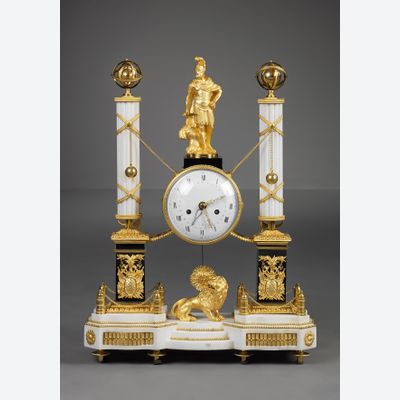
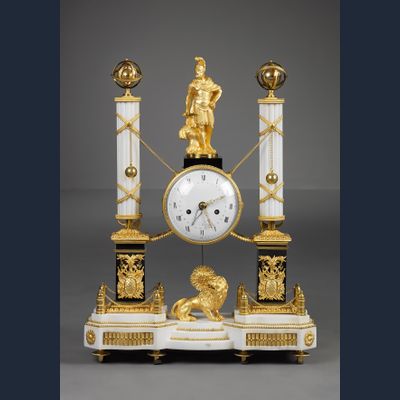
French Louis XVI Portico Clock
Price on request Price on request Price on request Price on request Price on request Price on request Price on request Price on request Price on request
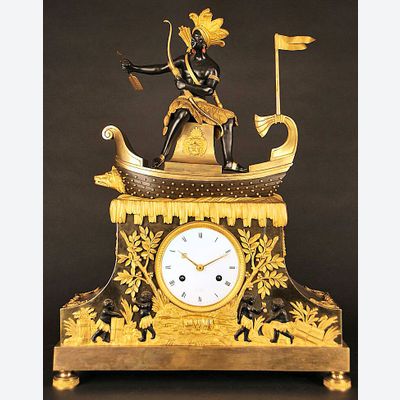
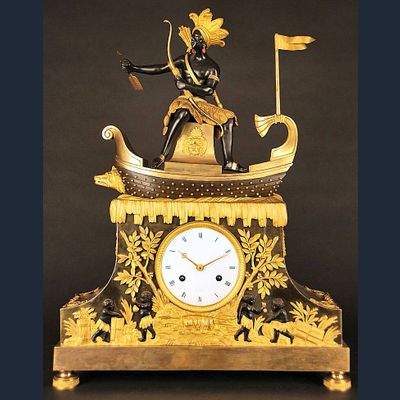
A French mantel clock, the 'Amerindian hunter' à Paris, circa 1800.
Price on request Price on request Price on request Price on request Price on request Price on request Price on request Price on request Price on request
A lovely French Empire ormolu borne mantel clock with butterfly, circa 1800
€ 10250 $ 11813 £ 8943 ¥ 1885385 DKK 76590 CHF 9443 NOK 115092 CA$ 16431 HK$ 92583
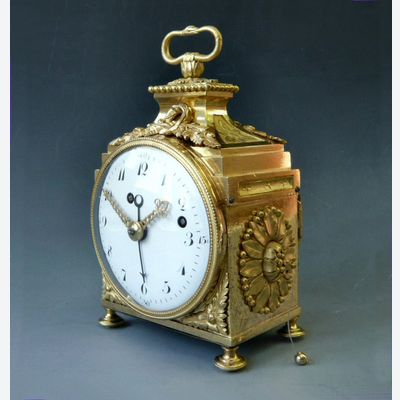
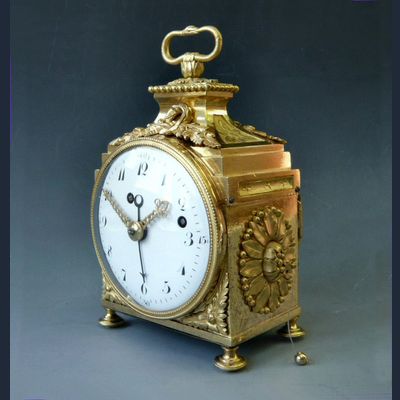
A Louis XVI pendule d'officier, a Swiss travelling clock made around 1780-90.
Price on request Price on request Price on request Price on request Price on request Price on request Price on request Price on request Price on request
A large French Empire ormolu urn mantel clock with mythical animals, circa 1800
€ 9250 $ 10661 £ 8071 ¥ 1701445 DKK 69118 CHF 8522 NOK 103864 CA$ 14828 HK$ 83551
A French Empire ormolu and bronze mantel clock, putti with flower urn, circa 1800
€ 9500 $ 10949 £ 8289 ¥ 1747430 DKK 70986 CHF 8752 NOK 106671 CA$ 15228 HK$ 85809
A French Empire ormolu sculptural mantel clock, circa 1810
€ 7500 $ 8644 £ 6544 ¥ 1379550 DKK 56042 CHF 6910 NOK 84214 CA$ 12022 HK$ 67744
A fine French Empire ormolu urn mantel clock, Angevin A Paris, circa 1800
€ 12500 $ 14406 £ 10907 ¥ 2299250 DKK 93402 CHF 11516 NOK 140356 CA$ 20038 HK$ 112906