Dani Pascariu
a year ago
Great store, good prices (Netherlands)
Ships from The Netherlands
Price on request Price on request Price on request Price on request Price on request Price on request Price on request Price on request Price on request

Message the seller
Kollenburg Antiquairs BV
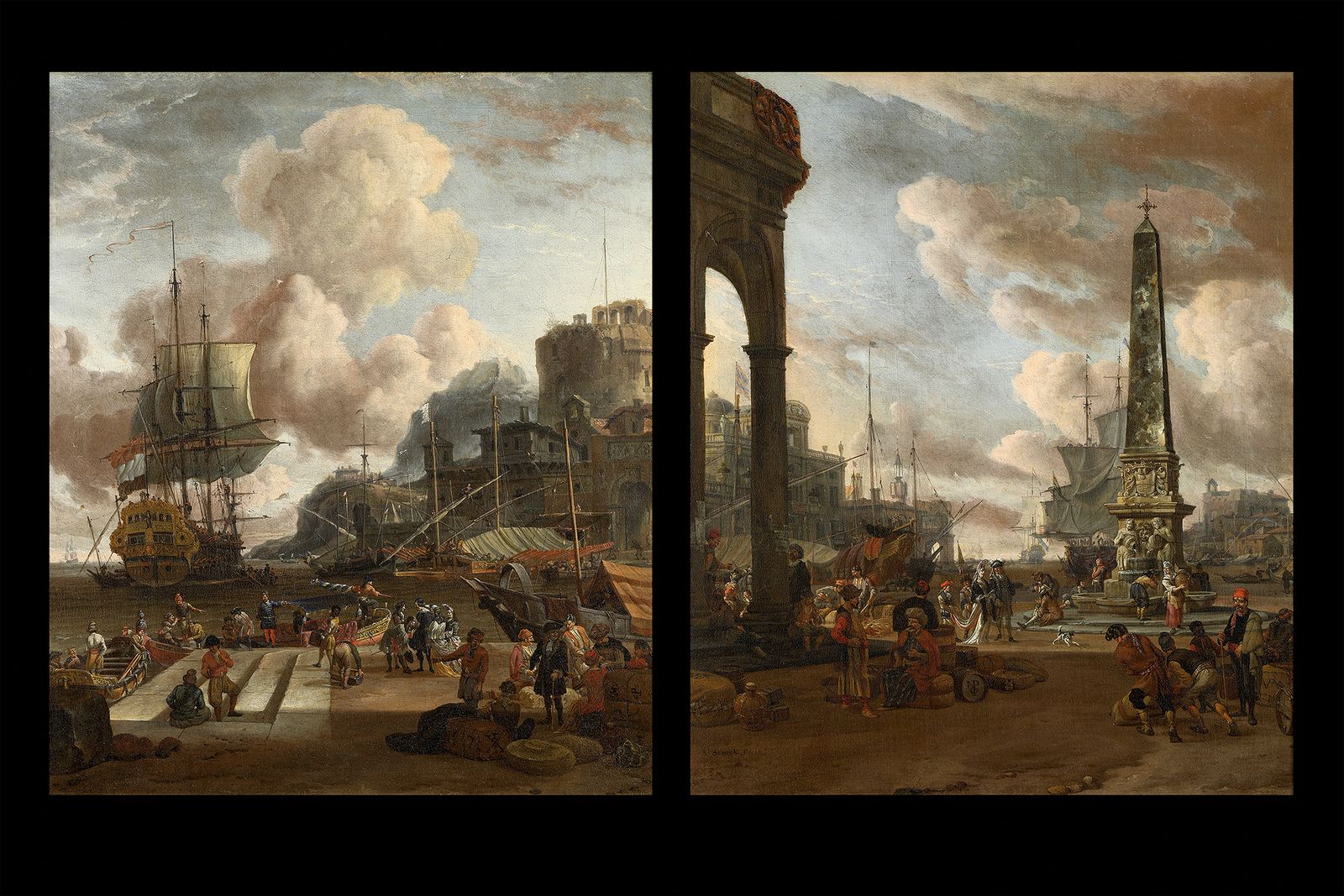
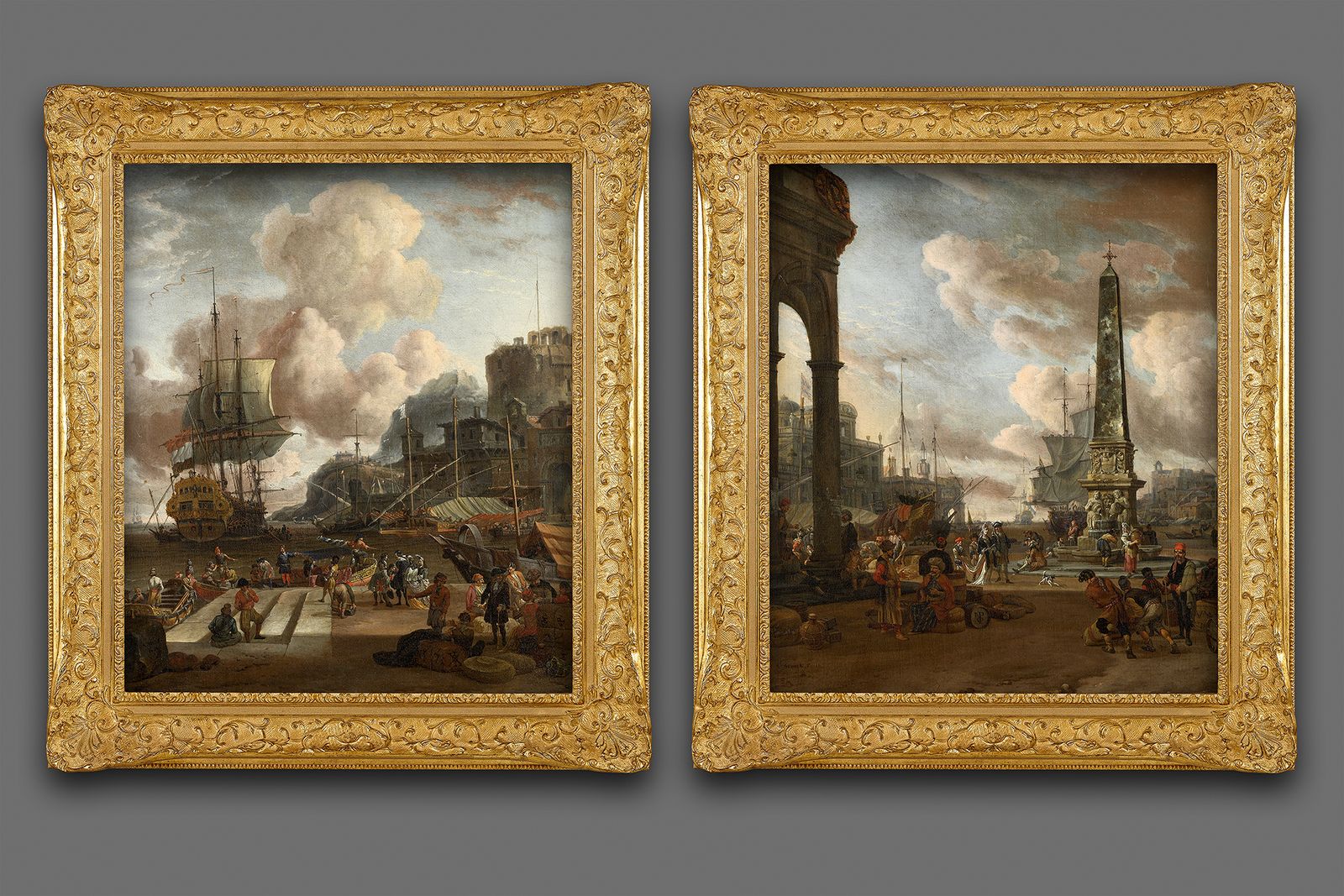
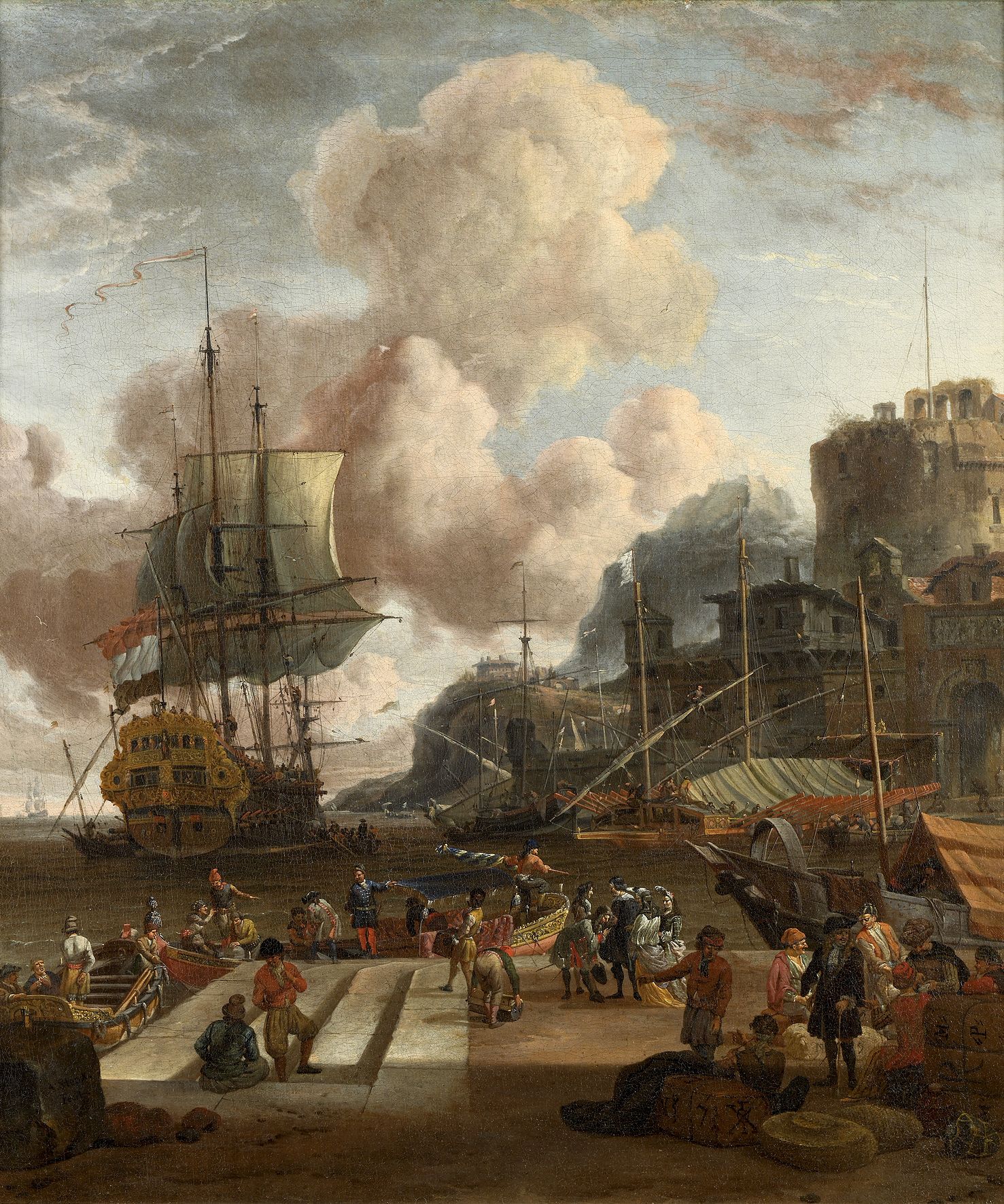
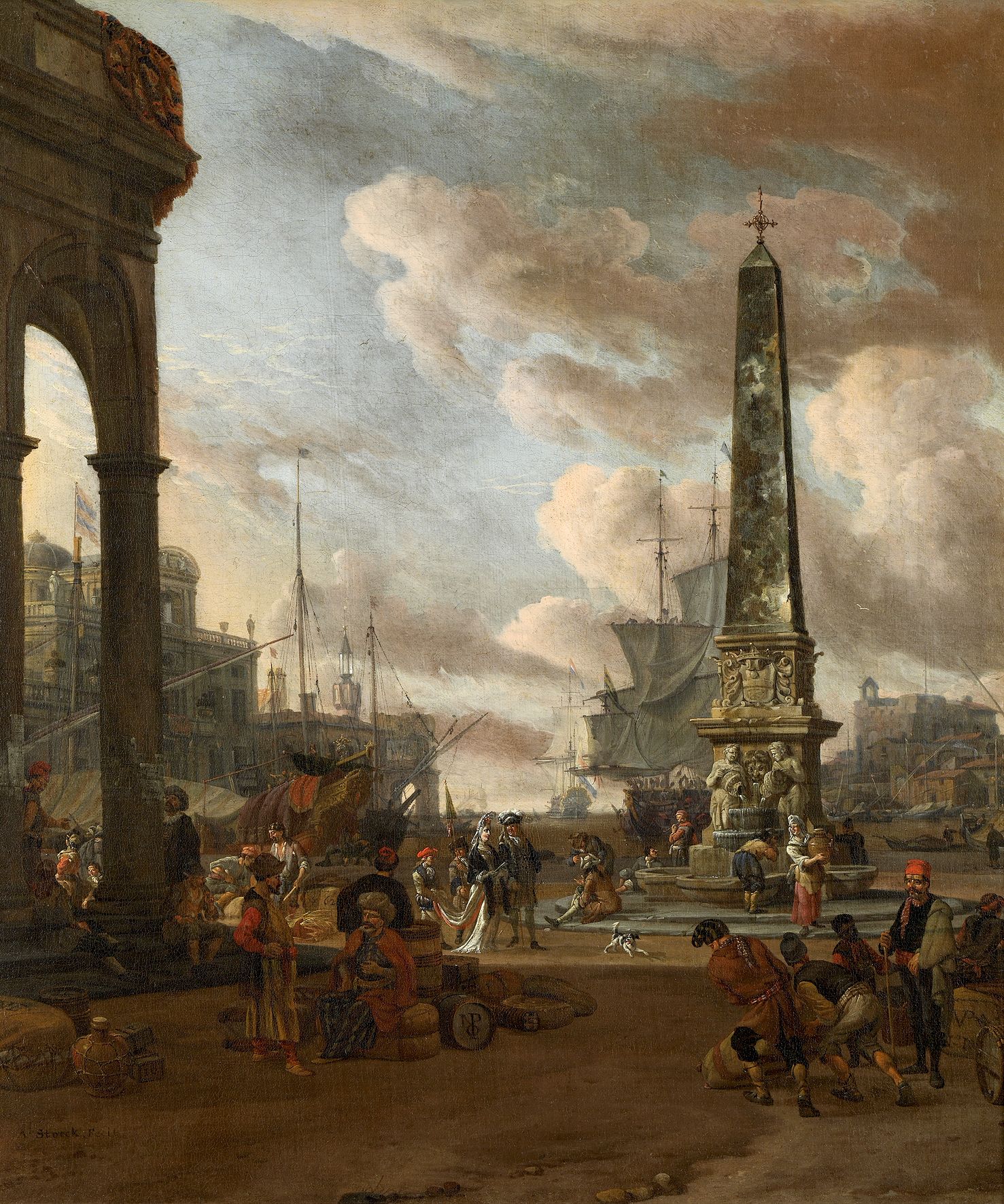
A Dutch merchant ship lies at anchor in the roadstead. The merchant has just been brought ashore. Large bales are being stacked on the quay. The other painting features a large obelisk, with various merchants strolling along the quayside.
These two Mediterranean harbor scenes were painted by the Amsterdam artist Abraham Storck, who specialized in seascapes—particularly those depicting the IJ off Amsterdam—and imaginary harbor scenes set in southern lands. Like this pair of pendant paintings, many of his works were executed in a vertical format, allowing him to depict the large ships in their entirety. Storck’s southern harbor scenes were highly popular during his lifetime, and not merely for their subject matter; wealthy merchants made their fortunes in Mediterranean shipping, sourcing the salt essential for curing Dutch herring.
Storck was acclaimed in his day for his mastery of the distinctive light found in Italy. Italianate landscapes enjoyed great popularity throughout the seventeenth century. While the first generation of painters—including Cornelis van Poelenburgh, Adam Pijnacker, and Jan Asselijn—actually traveled to Italy, later artists did not; instead, they adopted the beautiful southern light from the works of their predecessors. It is believed that Abraham Storck never traveled to Italy himself, yet he succeeded brilliantly in capturing that Italianate light in his paintings.
The artist paid close attention to detail within these bustling harbors. By placing palaces and fortresses along the sides of his compositions, he created a stage-like, theatrical effect. The architecture of the buildings, the obelisk, and the figures' attire all reinforce the impression of a Mediterranean port. Most of Abraham Storck’s imaginary harbor scenes were created between approximately 1670 and 1695. Based on the figures' clothing, it can be assumed that these two paintings date from the 1690s.