€ 8500 $ 9541 £ 7228 ¥ 1504415 DKK 63526 CHF 7887 NOK 92068 CA$ 13586 HK$ 74871
Ships from The Netherlands
€ 6800 $ 7633 £ 5782 ¥ 1203532 DKK 50820 CHF 6310 NOK 73654 CA$ 10869 HK$ 59897

Message the seller
Toebosch Antiques
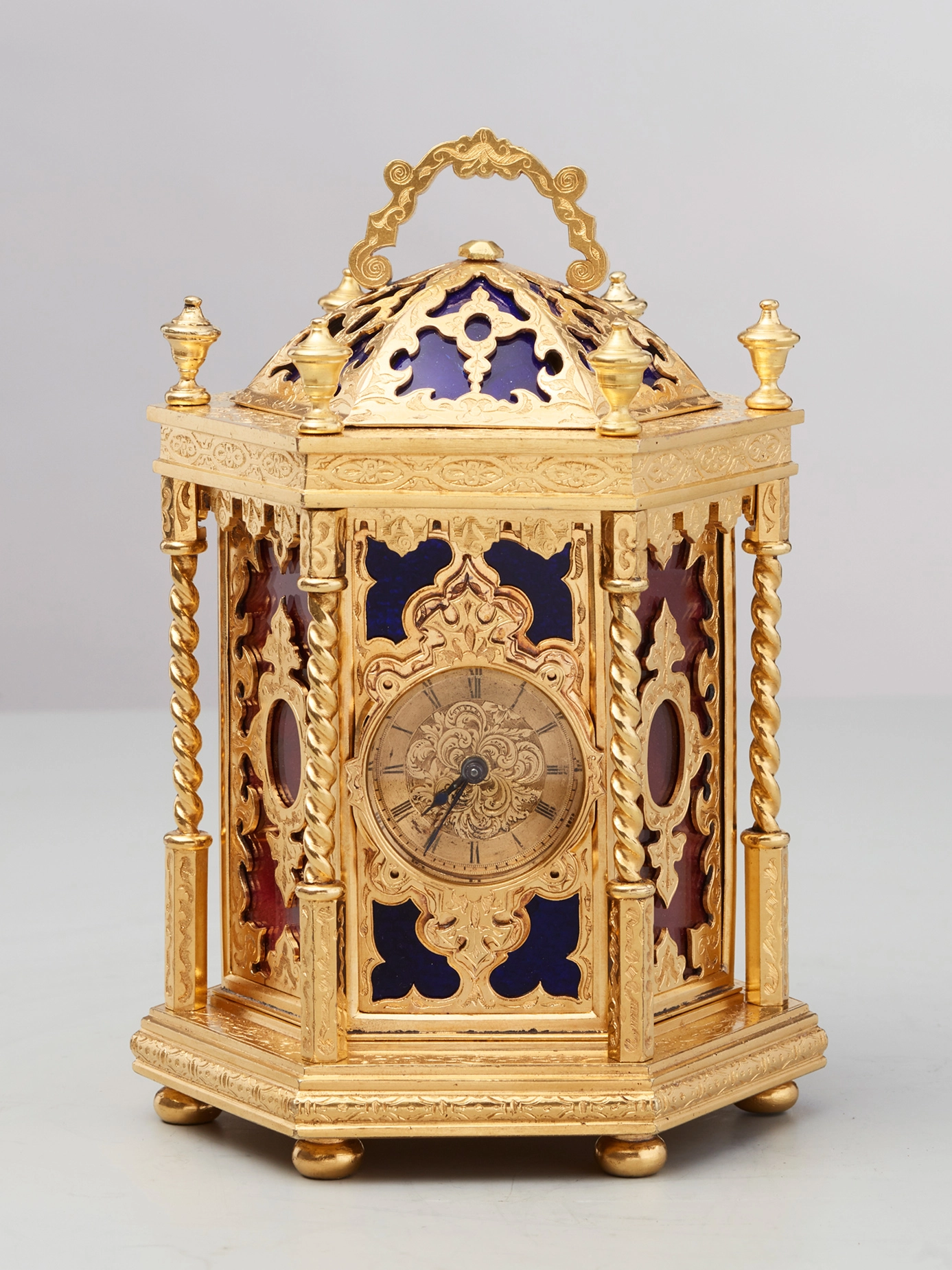
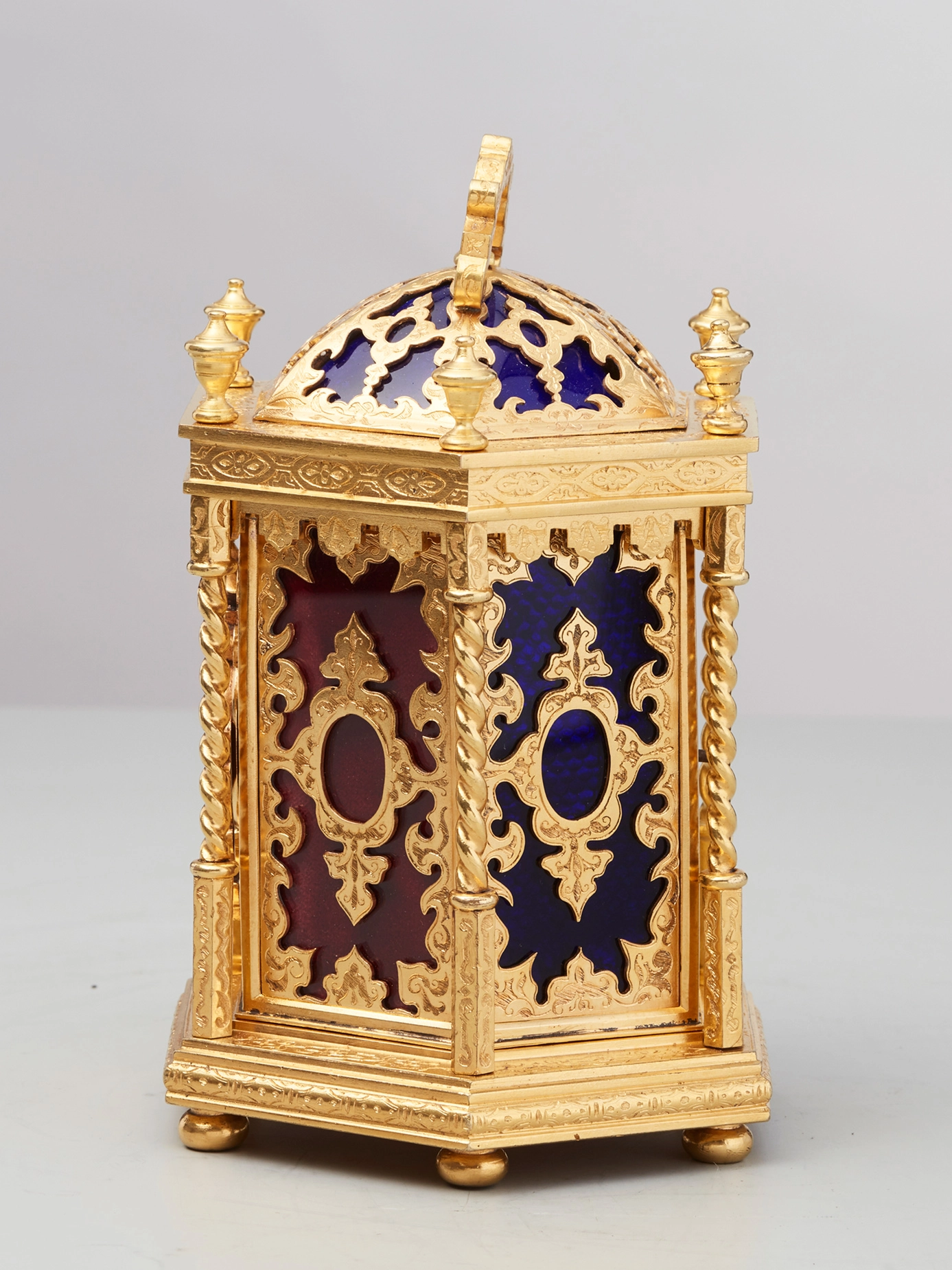
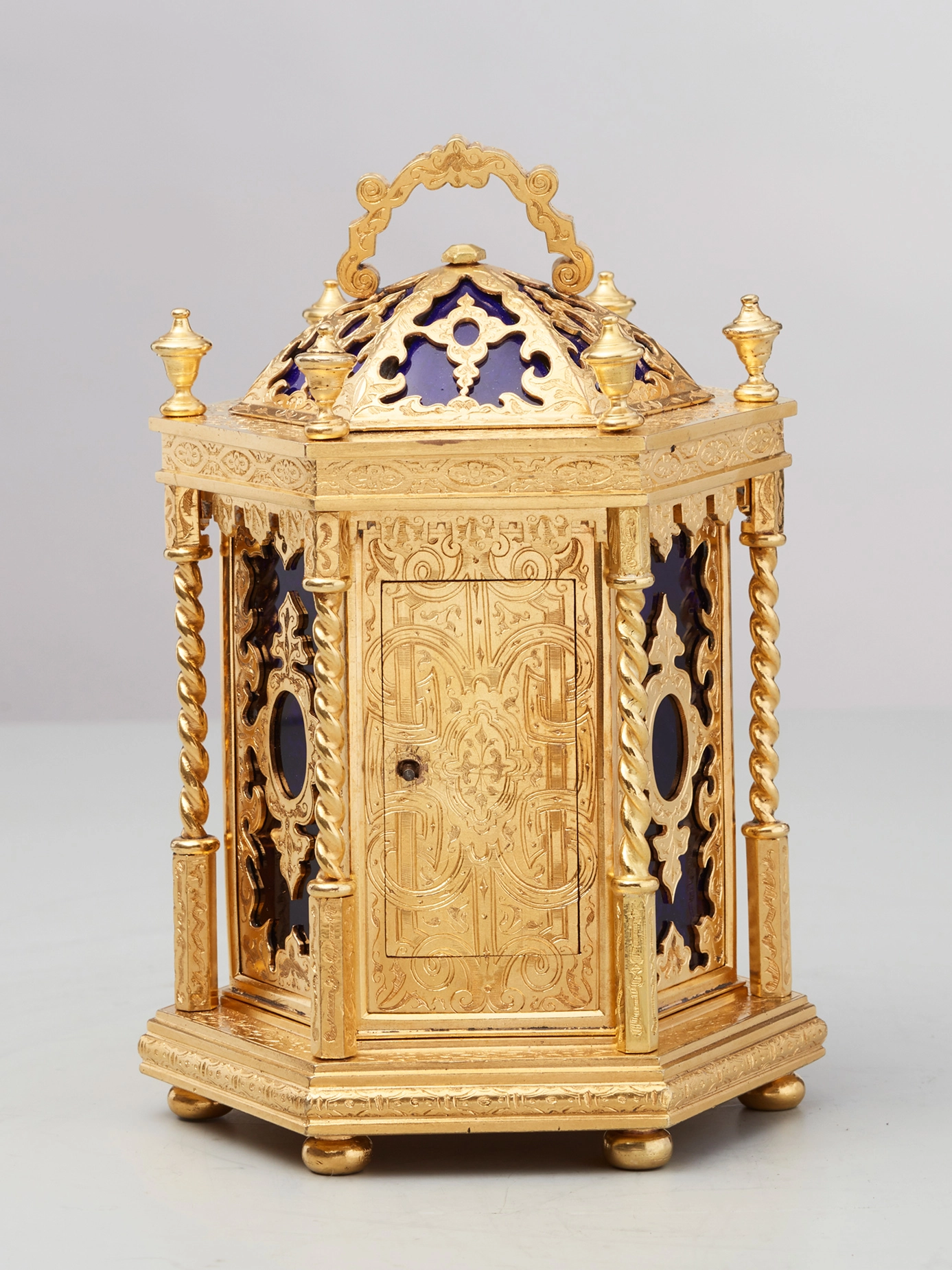
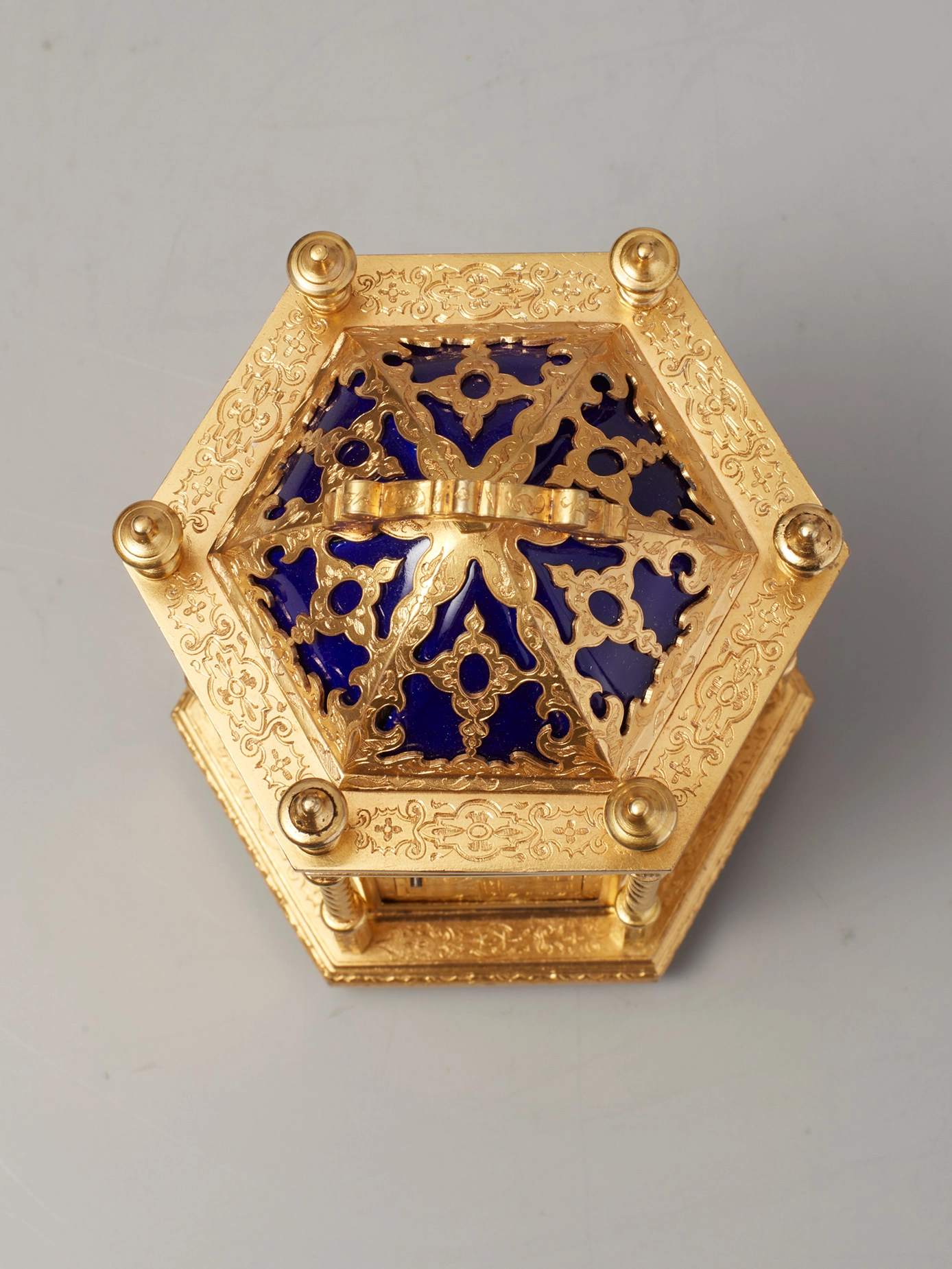
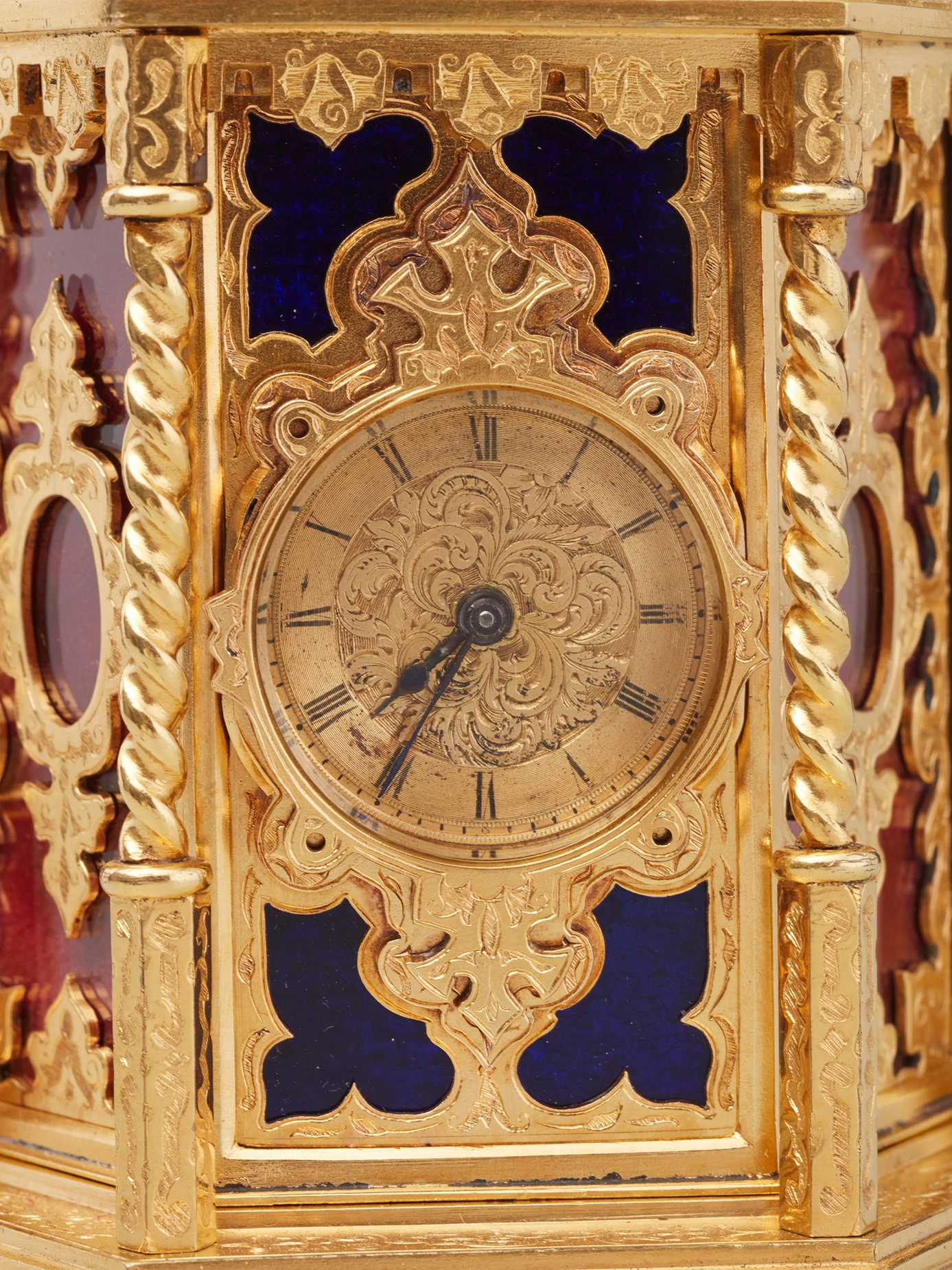
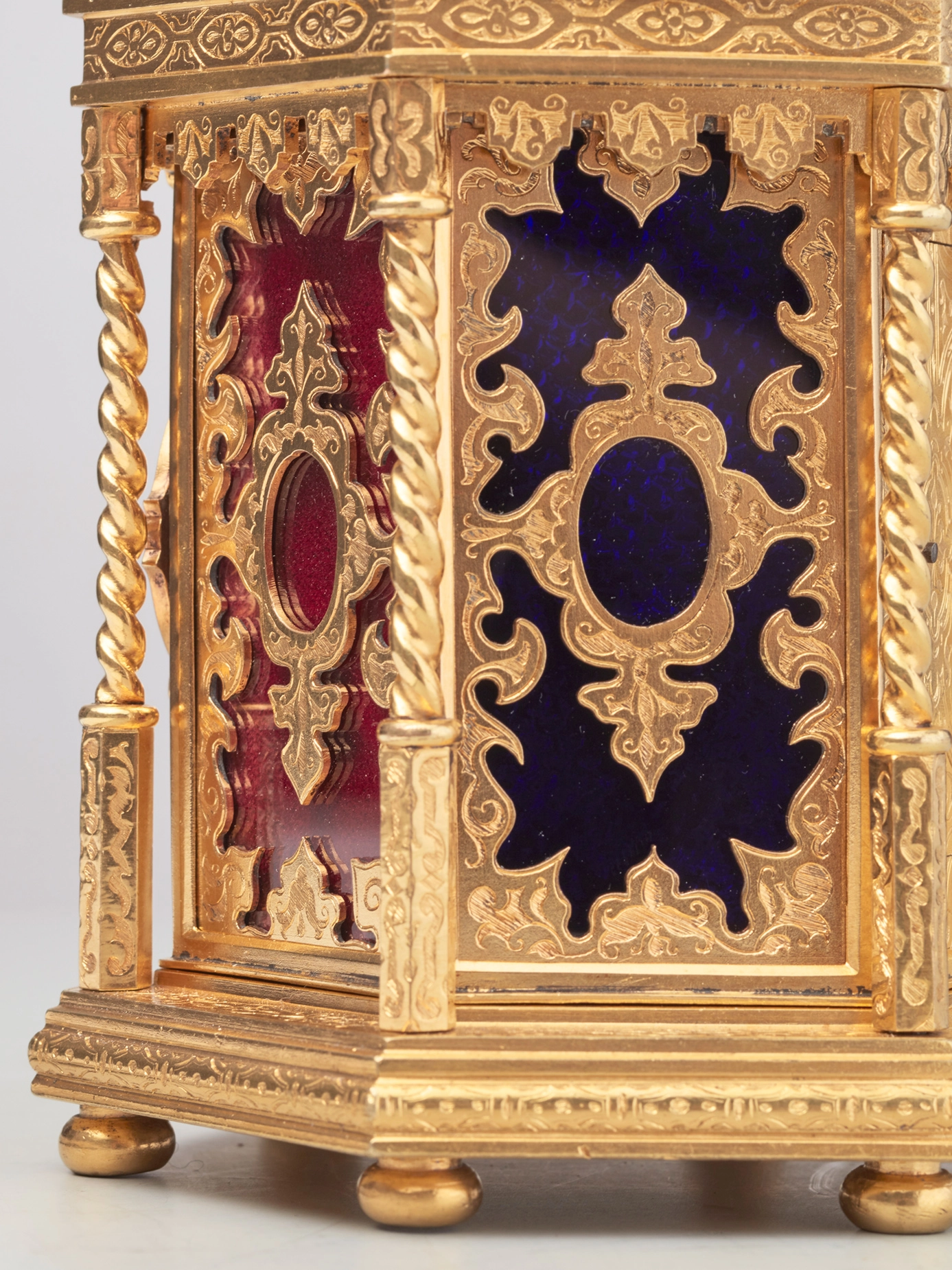
The design of this clock is inspired by medieval images popular at the time it was made.
Gothic Revival was one of the most influential styles of the 19th century. Designs were based on forms and patterns used in the Middle Ages. Serious study was combined with a more fanciful, romantic vision of Medieval chivalry and romance. A wide range buildings were built and furnished in the Gothic Revival style, which flourished from 1830 to 1900. Gothic buildings of the 12th to 16th centuries were a major source of inspiration to 19th-century designers. Architectural elements such as pointed arches, steep-sloping roofs and decorative tracery (ornamental openwork patterns) were applied to a wide range of Gothic Revival objects. Some pieces even look like miniature buildings.
Howell James and Co (1819-1911) were jewellers and silversmiths of Regent Street London. They were noted for their variety and quality of stock, including by designers and students of the South Kensington School. They exhibited in London in 1851; Paris in 1867 and again in London in 1871 and 1872.
€ 8500 $ 9541 £ 7228 ¥ 1504415 DKK 63526 CHF 7887 NOK 92068 CA$ 13586 HK$ 74871
€ 16500 $ 18521 £ 14030 ¥ 2920335 DKK 123314 CHF 15310 NOK 178720 CA$ 26374 HK$ 145339
€ 2400 $ 2694 £ 2041 ¥ 424776 DKK 17937 CHF 2227 NOK 25996 CA$ 3836 HK$ 21140
€ 16500 $ 18521 £ 14030 ¥ 2920335 DKK 123314 CHF 15310 NOK 178720 CA$ 26374 HK$ 145339
€ 28500 $ 31991 £ 24234 ¥ 5044215 DKK 212998 CHF 26445 NOK 308698 CA$ 45554 HK$ 251039
€ 22000 $ 24695 £ 18707 ¥ 3893780 DKK 164419 CHF 20414 NOK 238293 CA$ 35165 HK$ 193785

€ 4500 $ 5051 £ 3826 ¥ 796455 DKK 33631 CHF 4176 NOK 48742 CA$ 7193 HK$ 39638
Related content