Dani Pascariu
a year ago
Great store, good prices (Netherlands)
Ships from The Netherlands
Price on request Price on request Price on request Price on request Price on request Price on request Price on request Price on request Price on request

Message the seller
Kollenburg Antiquairs BV
Movement
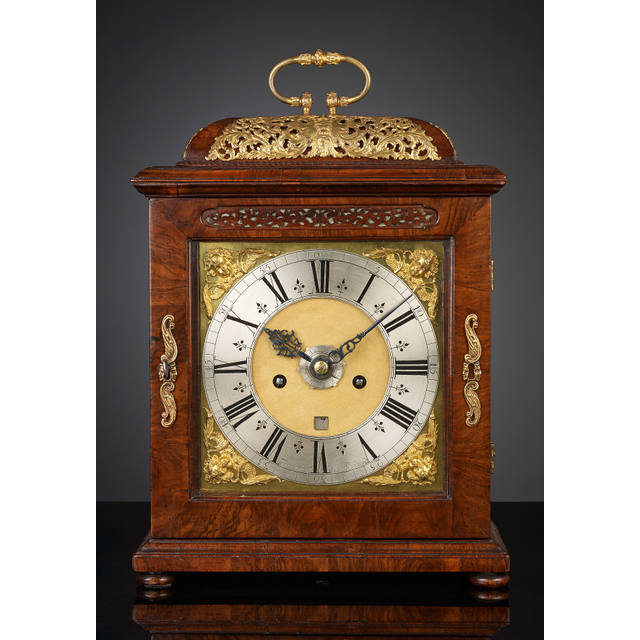
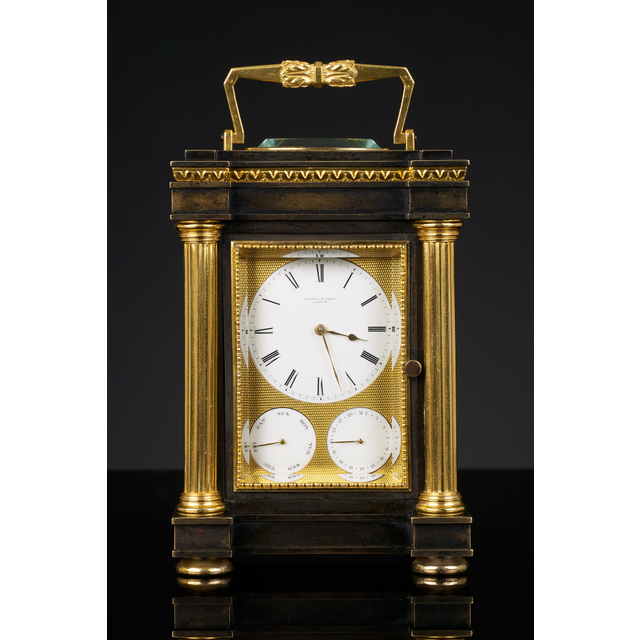
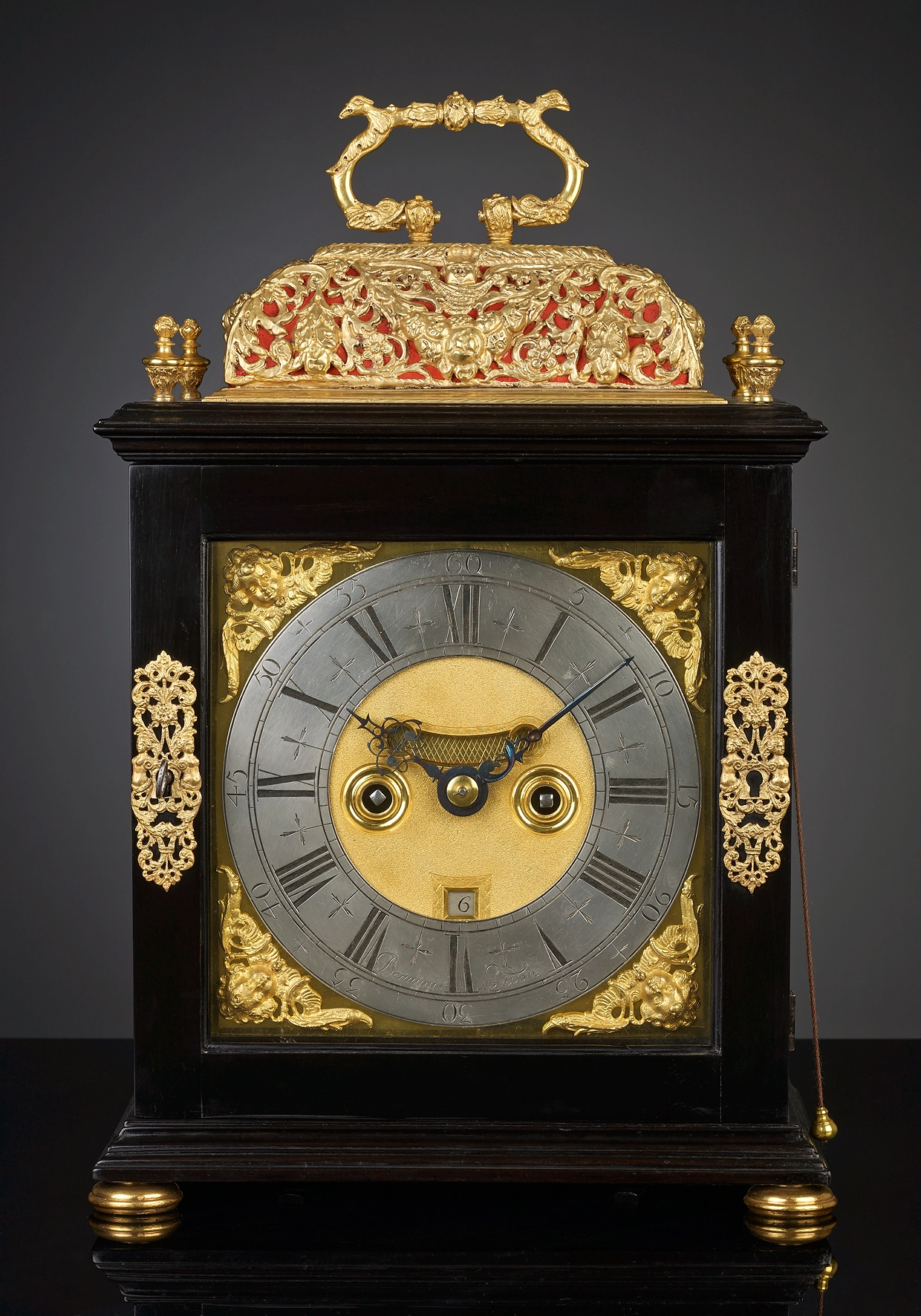
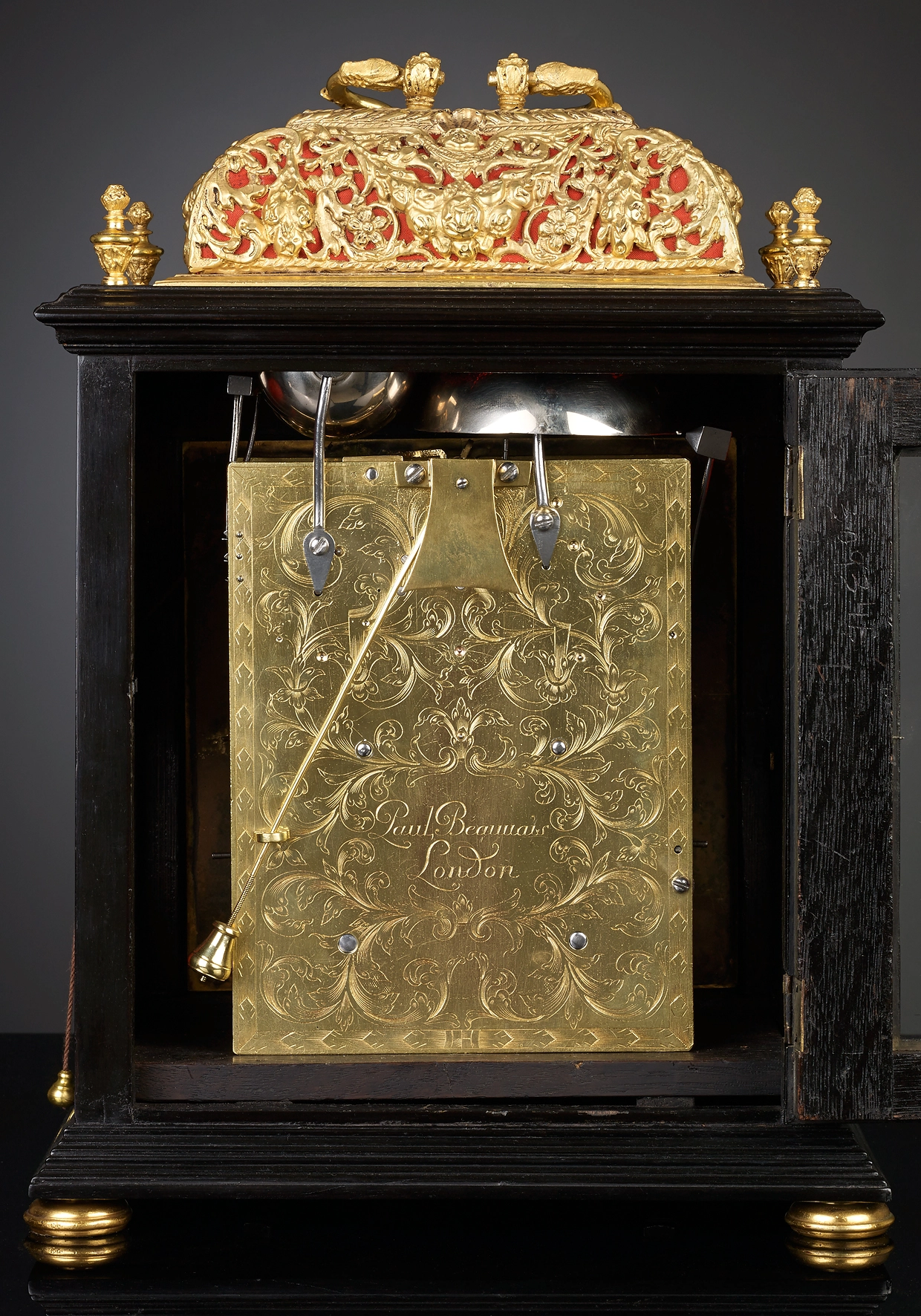
English table clock with VII inch gold-plated brass dial. The silver-plated chapter signed on the bottom: ‘Beauvais London’. Within the chapter ring on a matted plate is a recess for a false pendulum. The hands of blued steel, the two winding holes with twisted decorative rings and a calendar aperture above the VI. Chapter ring surrounded by four gilt corner pieces with cherub spandrels. The seven day spring-driven double-fusee brass movement consists of going and striking trains. The going train has verge escapement with short pendulum and knife-edge suspension. On the right, a pull repeater to release the strike and/ or quarter strike trains. The engraved back plate signed in a cartouche: ‘Paul Beauvais London’.
Case
Simple rectangular case with an oak frame veneered with ebony. The case rests on a flared and profiled plinth supported by four flattened gilt brass feet. On both sides of the door has a key plate shaped as an ornamented cartouche; only the left key plate features a lock behind it. There is also a profiled plinth at the top of the door. The clock is topped by an openwork gilt copper sarcophagus-shaped hood, the so-called basket top. At the corners of the profiled plinth are four gilded bronze pinnacles. The case is surmounted by a handle on basket top for carrying.
Paul Beauvais
Little is known about the clockmaker Paul Beauvais. He worked in Saint-Martin-in-the-Fields until 1730. Paul was presumably a son of the Huguenot Simon Beauvais (? -1730).