€ 8500 $ 9827 £ 7369 ¥ 1551845 DKK 63502 CHF 7688 NOK 94966 CA$ 13415 HK$ 76840
Ships from The Netherlands
€ 12500 $ 14451 £ 10837 ¥ 2282125 DKK 93385 CHF 11306 NOK 139656 CA$ 19728 HK$ 113000
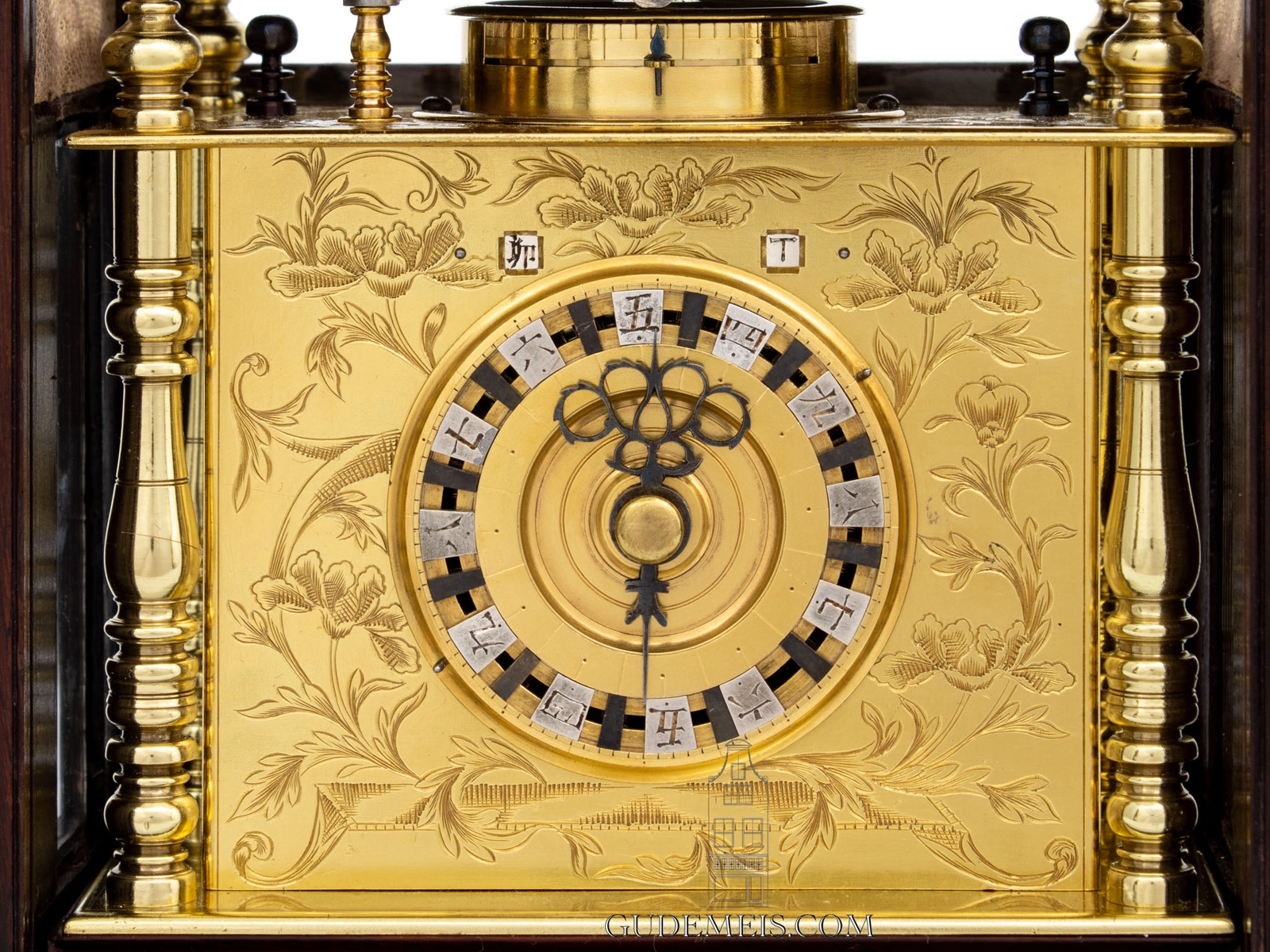
Until 1873 Japanese timekeeping differed from ours in the West. The day that started with sunrise and ended with sunset was divided in six equal parts. Just as the night that was started at sunset and ended with sunrise. That meant that the day ‘hours’ lasted longer in the summer and were shorter in the winter. And vice versa for the night hours. This so-called temporal timekeeping might appear unlogical to us. But in a society that depends on daylight for its living and working it is practical. One would get up at sunrise, worked with daylight and went to bed when the sun got under. Mechanical clocks were already introduced in the second half of the 16th century by Portugese Jezuit monks. These clocks were mostly from English and Dutch make since the Portugese didn’t have their own clockmaking tradition. Using these as examples the Japanese started to create clocks themselves but had to adapt theirs to the seasonal changing duration of the hours. They divised several systems which enabled them to show the correct temporal time. With this table clock the dial revolves once every 24 hours while the silver numerals can be moved to the correct position to indicate the correct time.
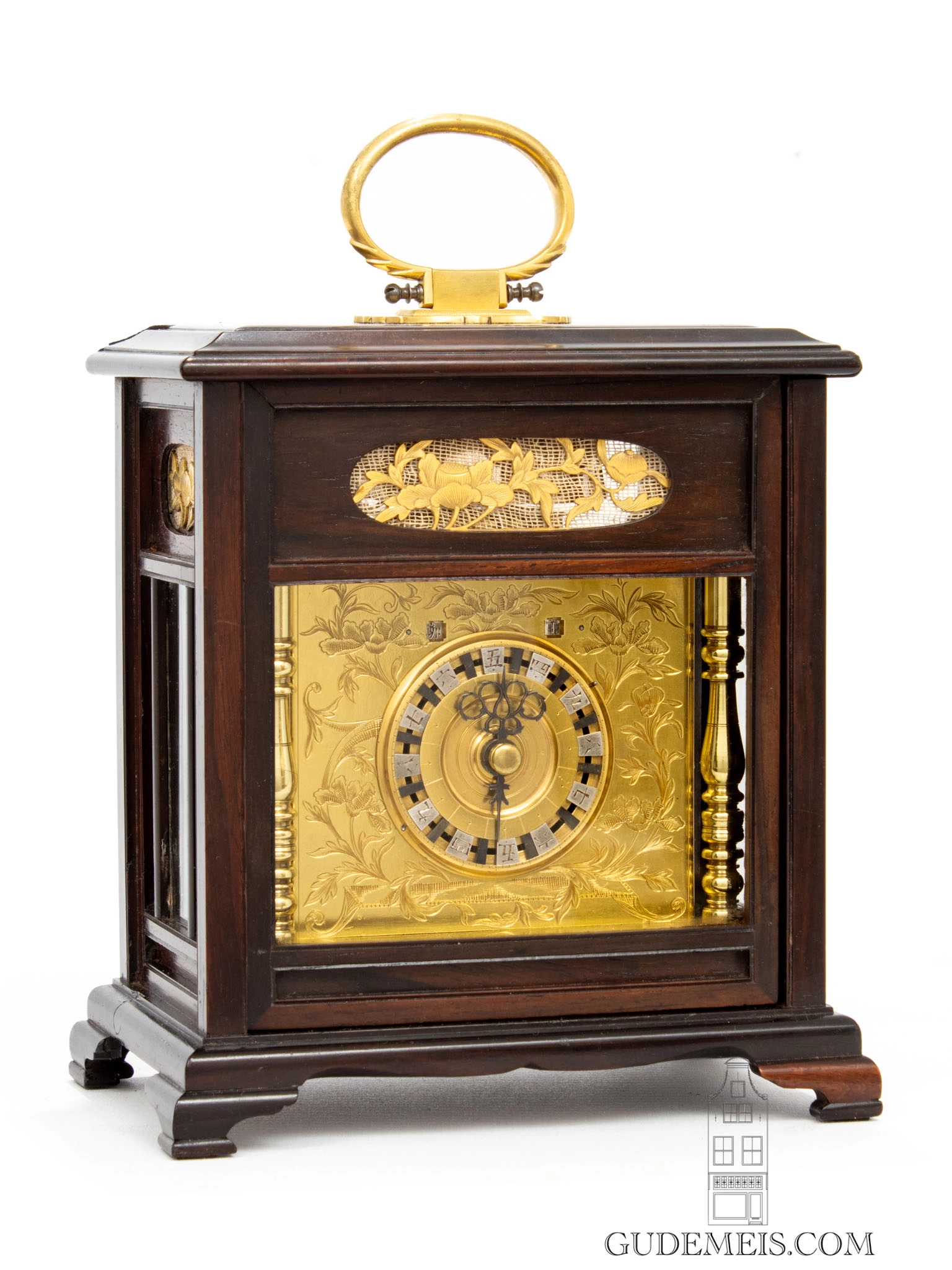
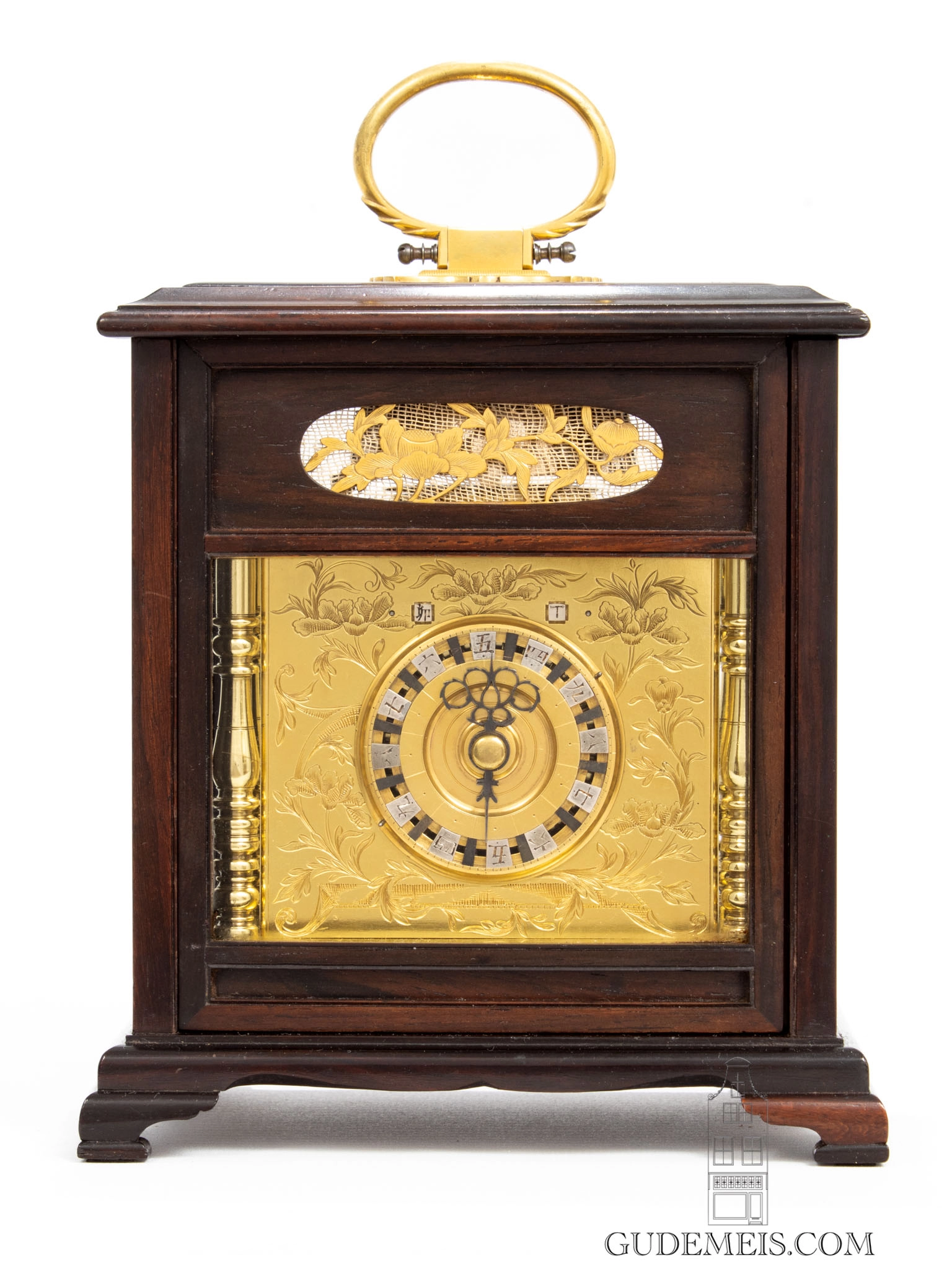
The revolving dial has silver plaques for the toki and blued plaques for the half toki. It revolves across a fixed foliate pierced blued hand. The dial is set in a finely engraved brass dial adorned with chrysanthemums. Above there are two apertures for the calendar.
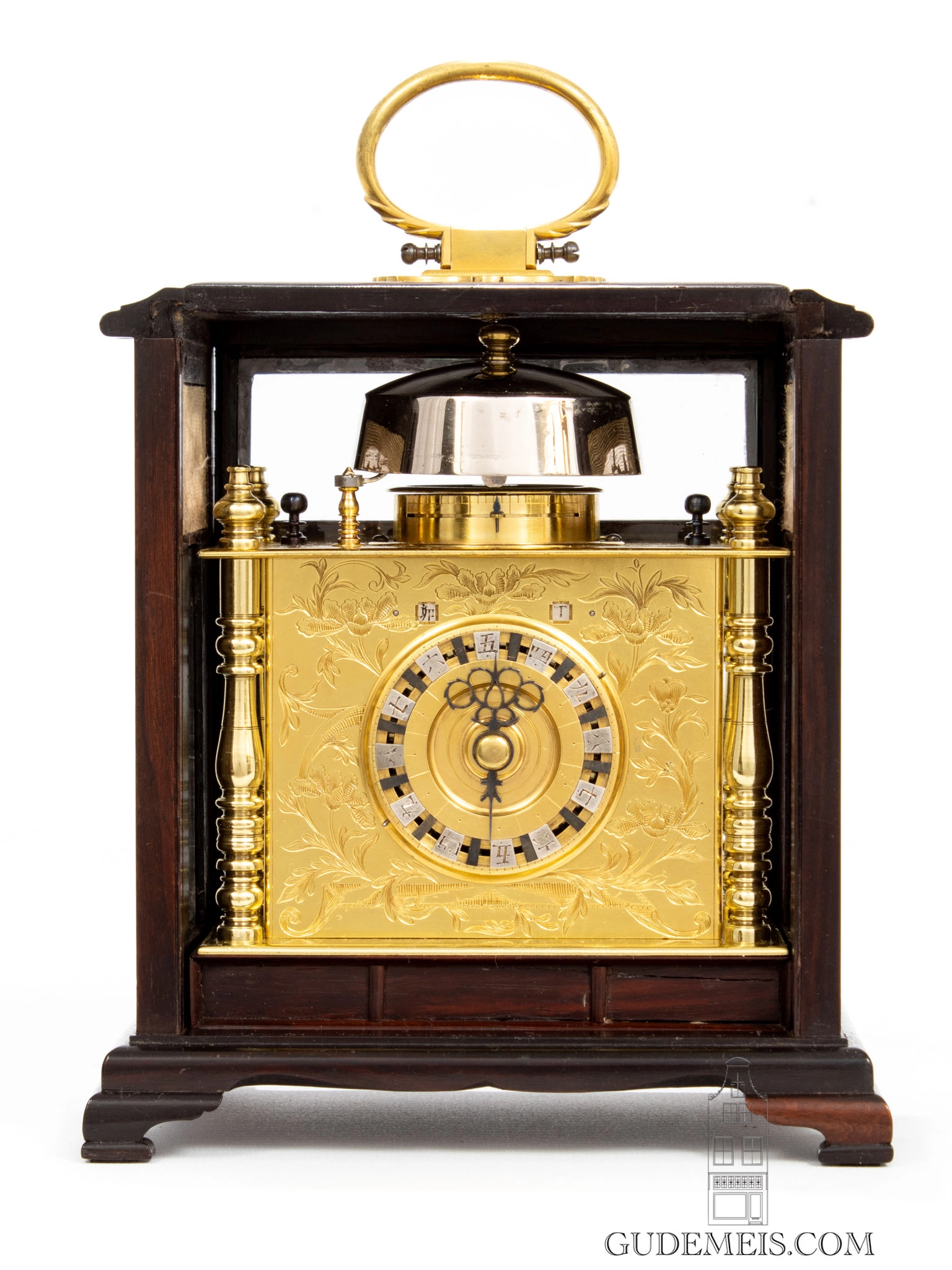
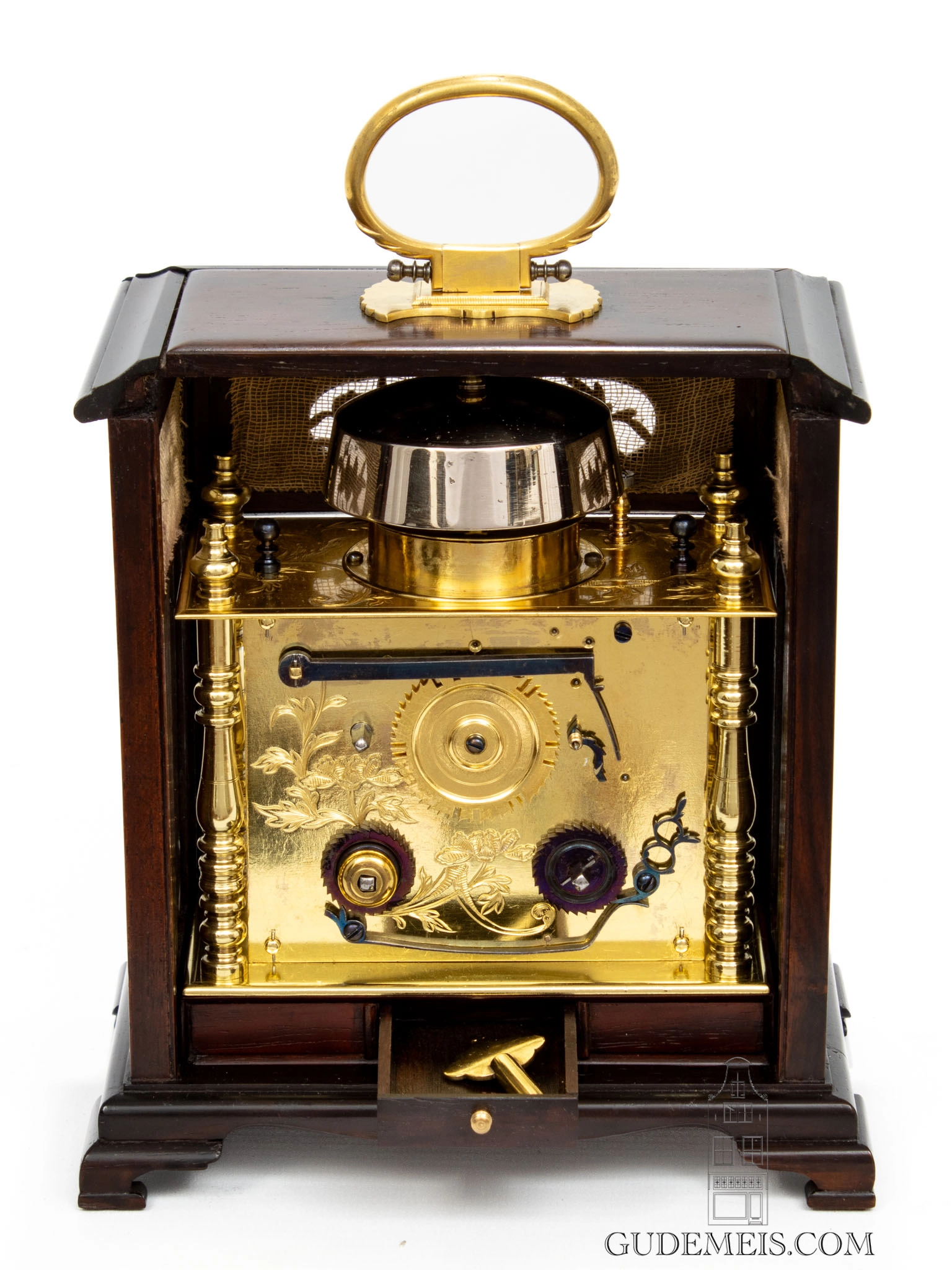
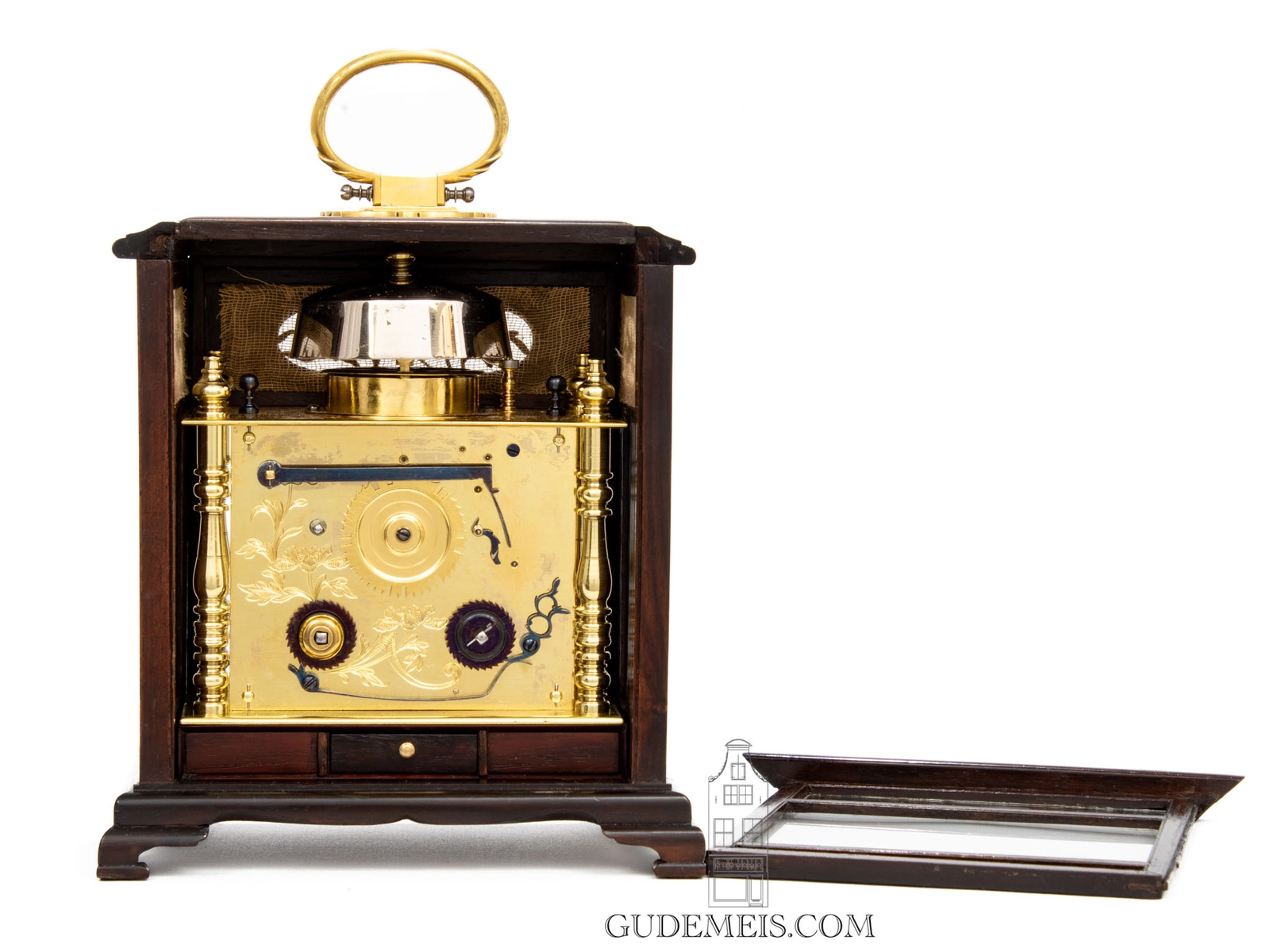
The movement has plates which are connected by finely turned baluster pillars. The going train is driven by a spring barrel in combination with a fusee and chain and is of one day duration. It is being regulated by verge escapement in combination with a balance. The clock has countwheel striking on a bell. Japanese clocks strike the six toki starting with 9 and ending with 4. The half toki’s are indicated with alternating single and double strikes. The top and bottom plate are connected with turned pillars. The whole is mounted on a wooden plinth containing a small drawer in which the winding key is stored.
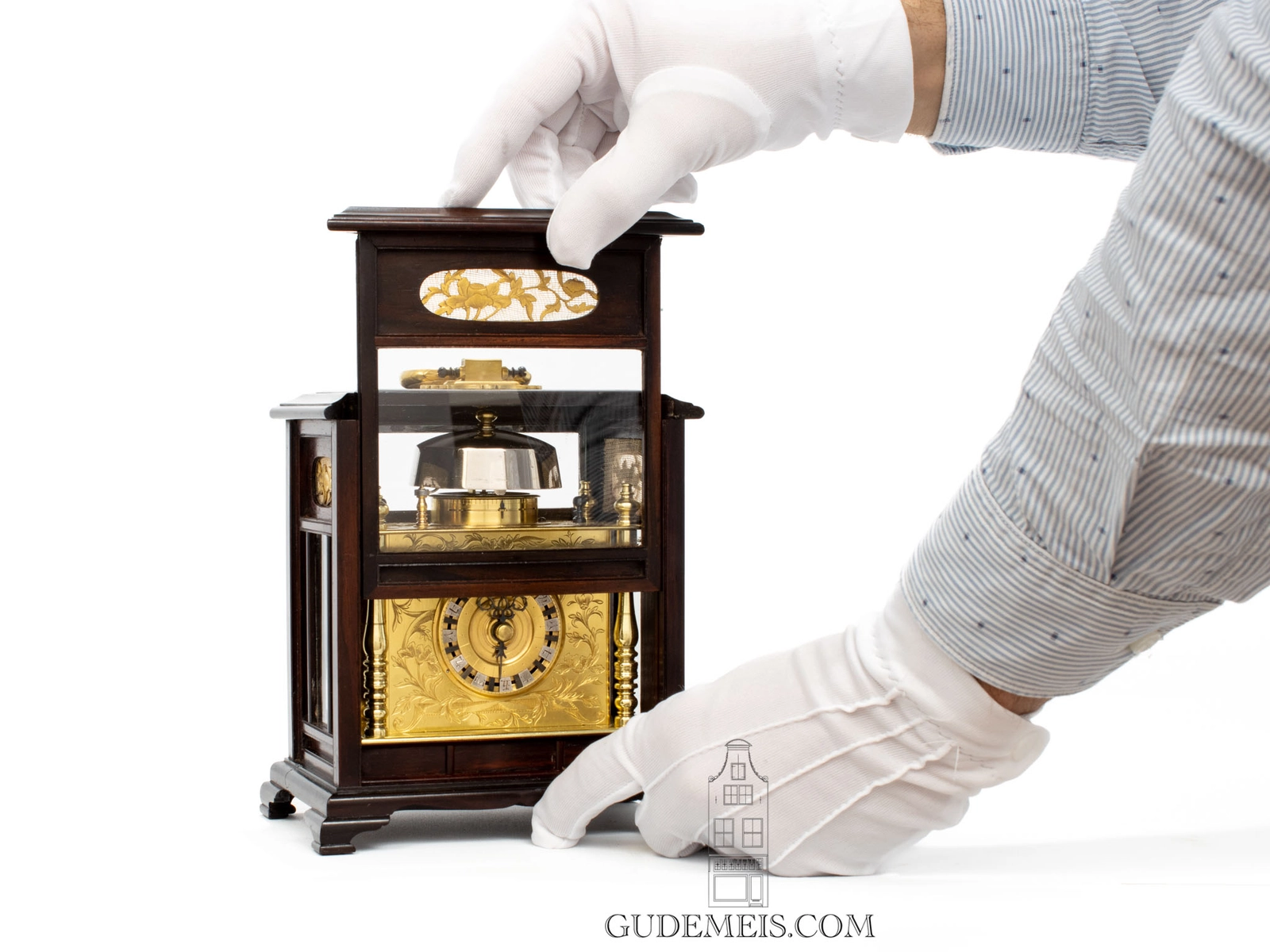
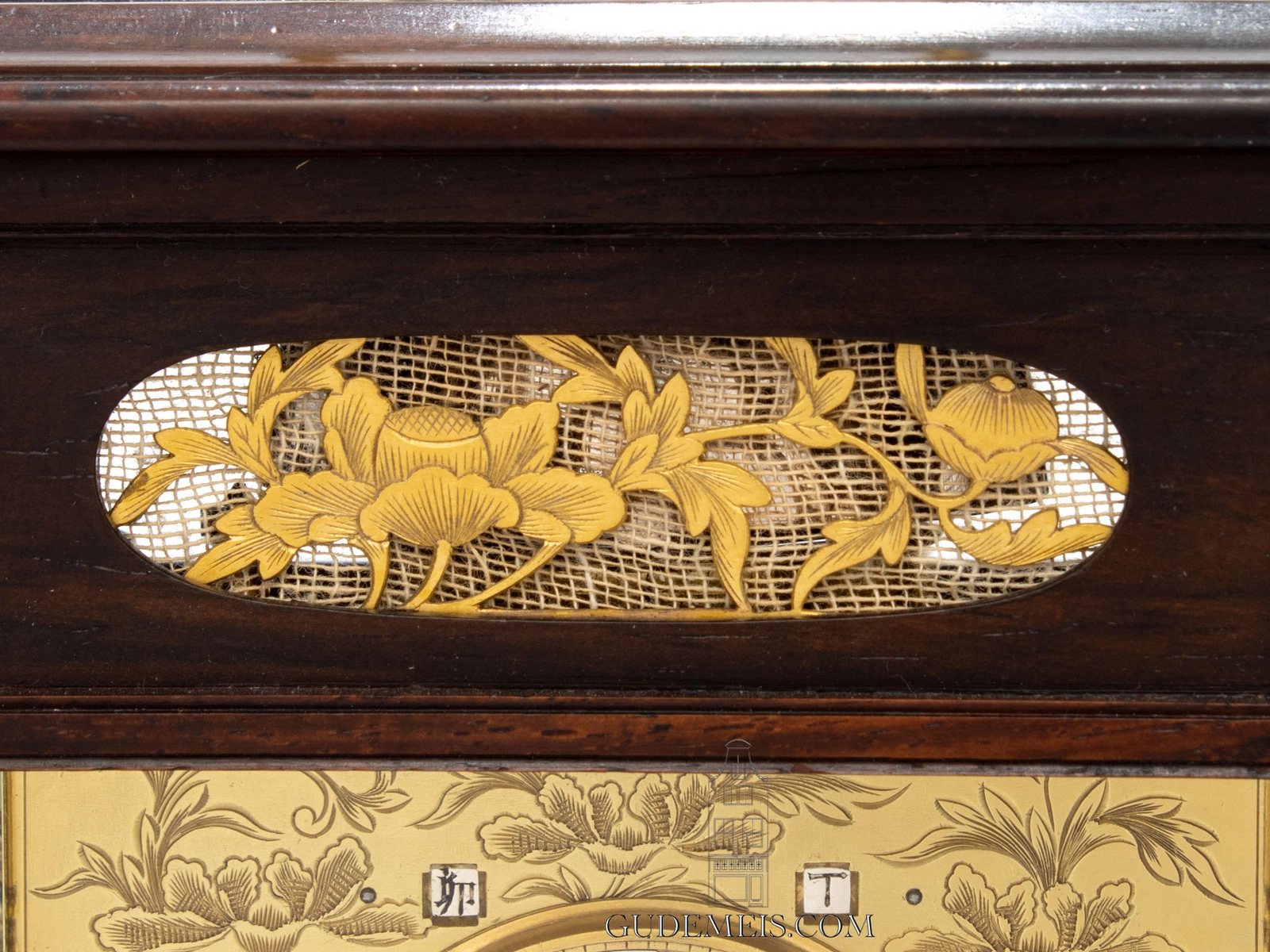
The brass clock with its wooden base is placed in a wisteria wooden case surmounted by a hinged handle and which has finely made mouldings. Both front and back panel can be slid up. All sides have glass panels while the front and sides are adorned with engraved brass frets. The whole is raised on feet.
Located in Amsterdam
The Netherlands