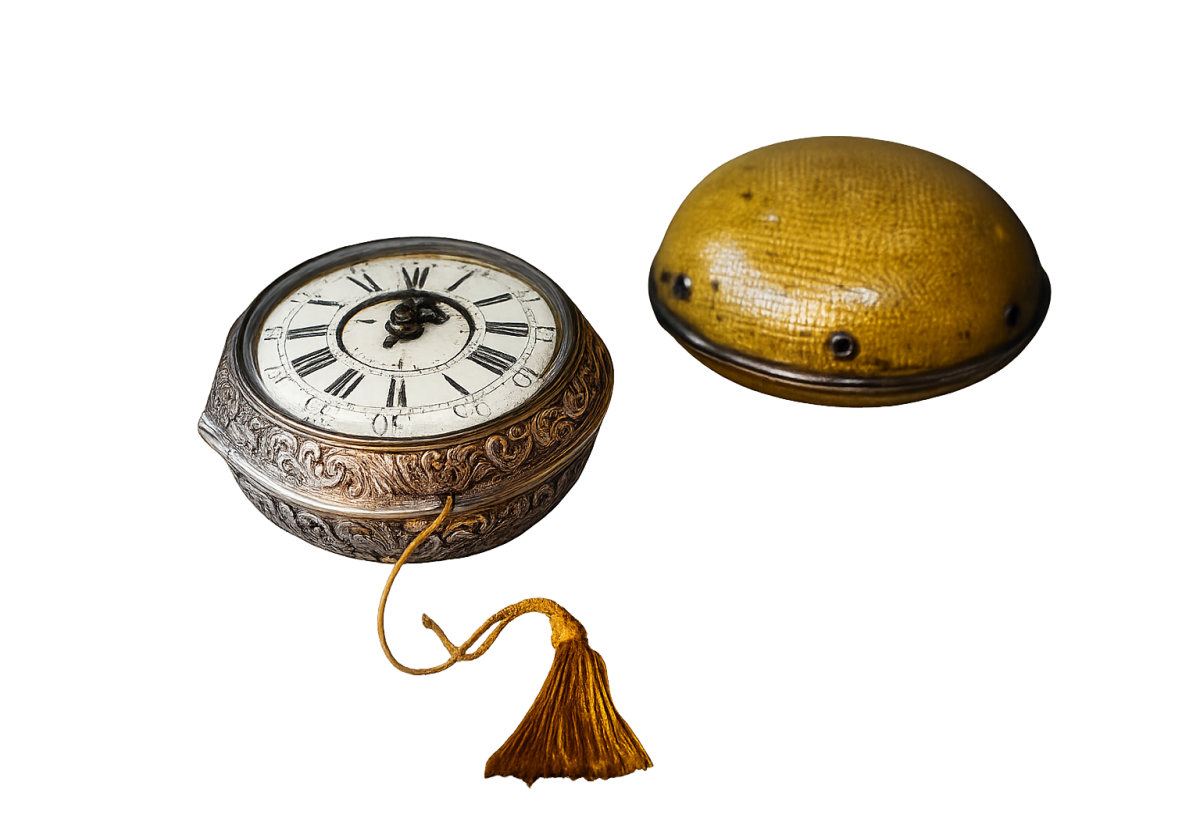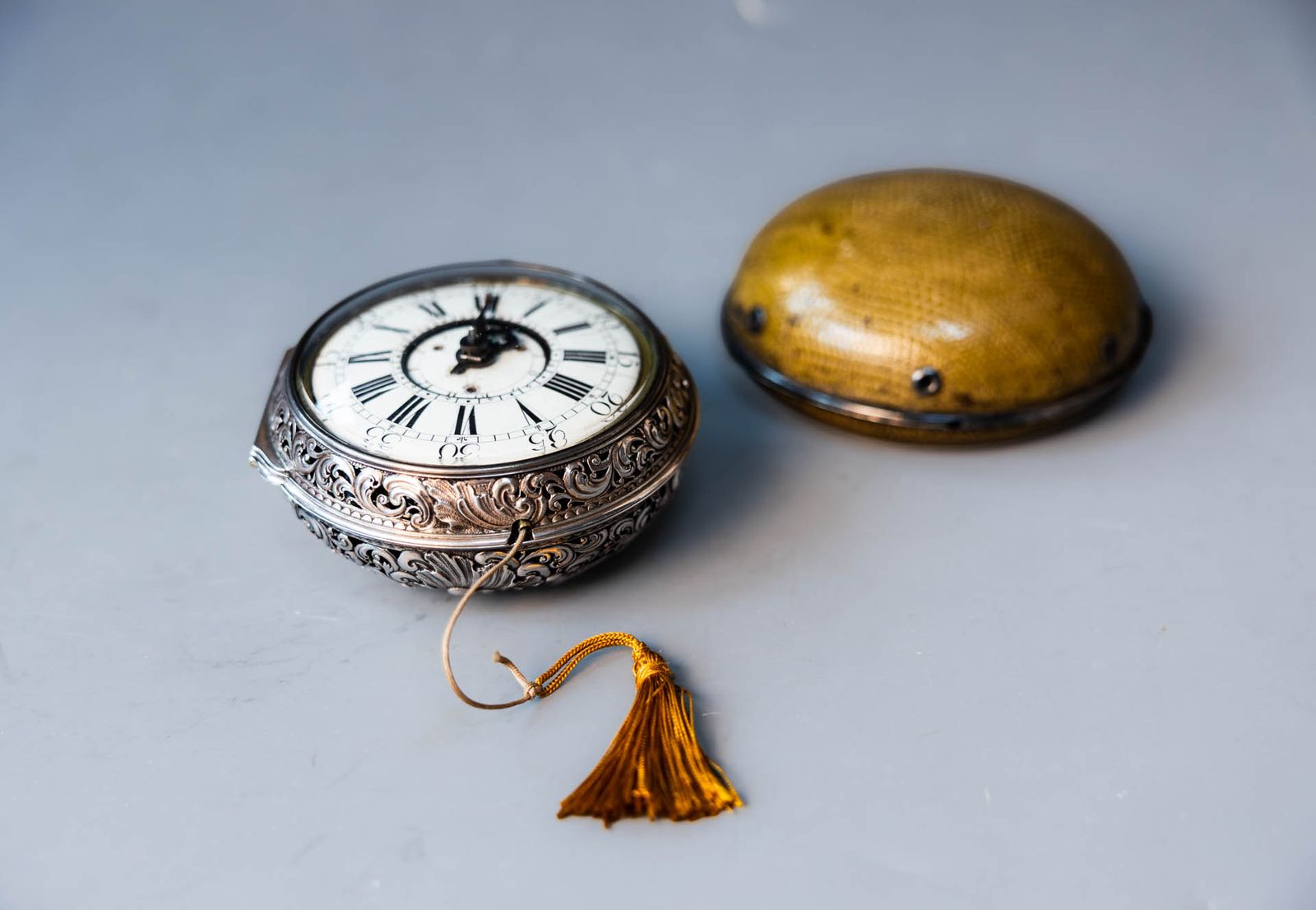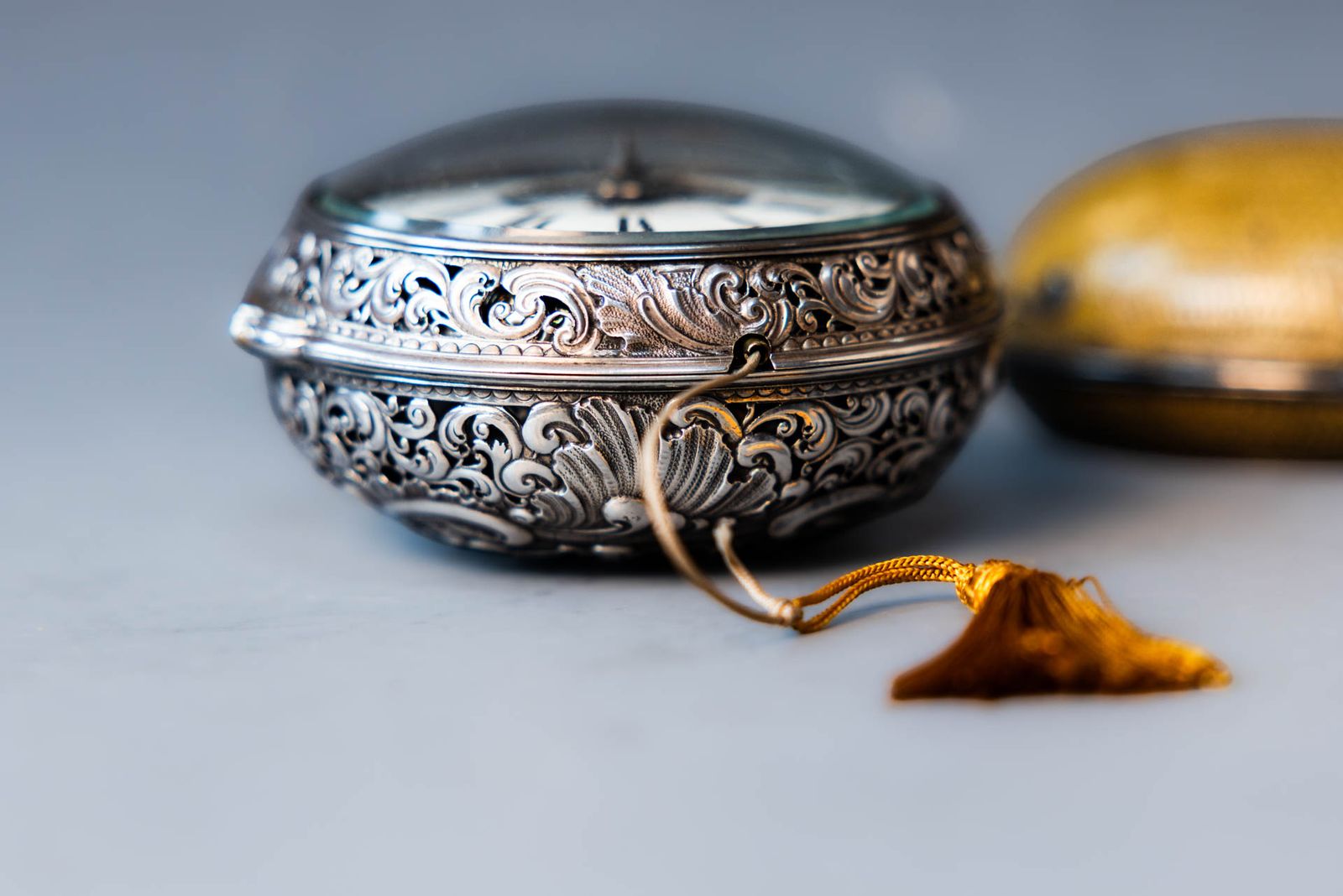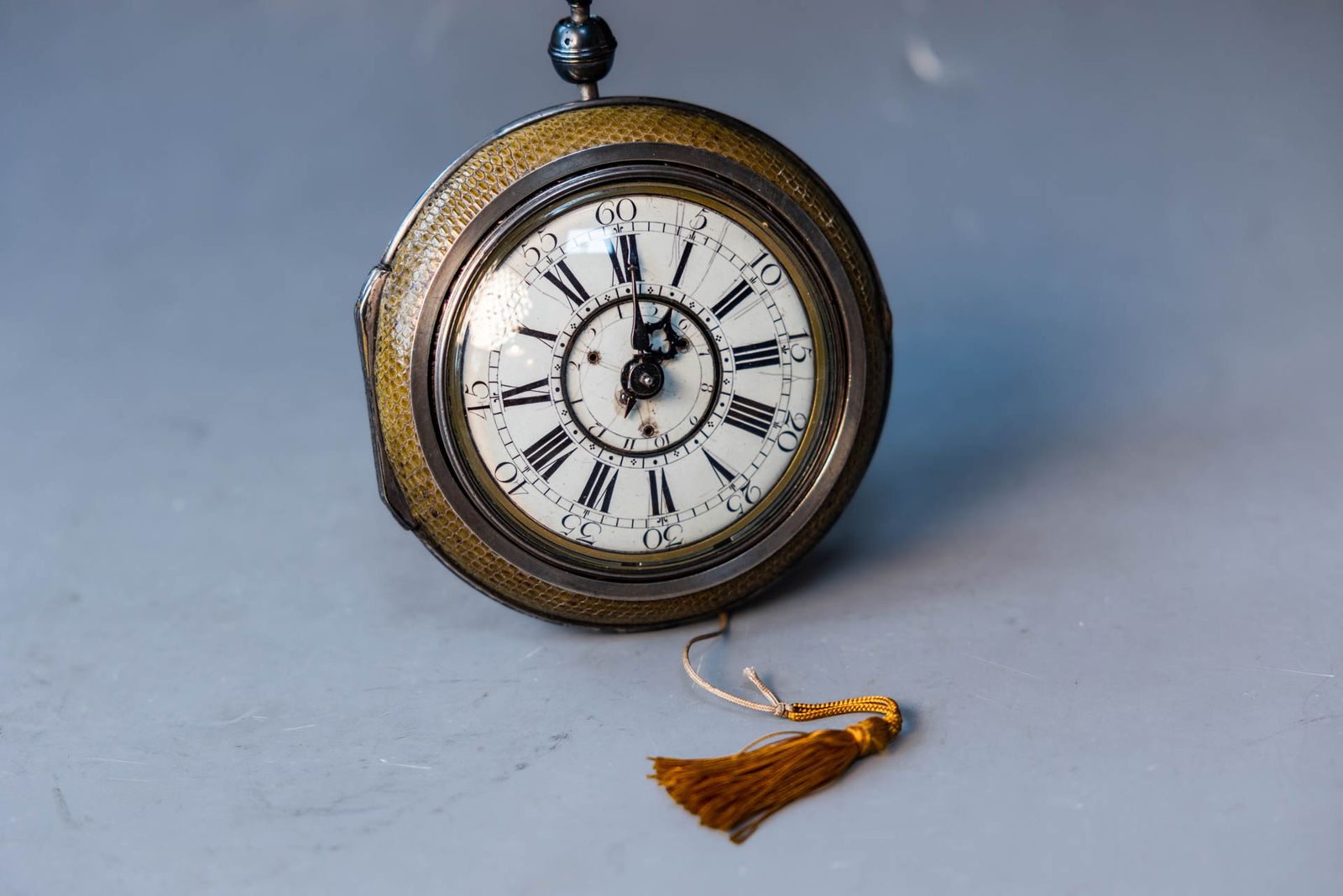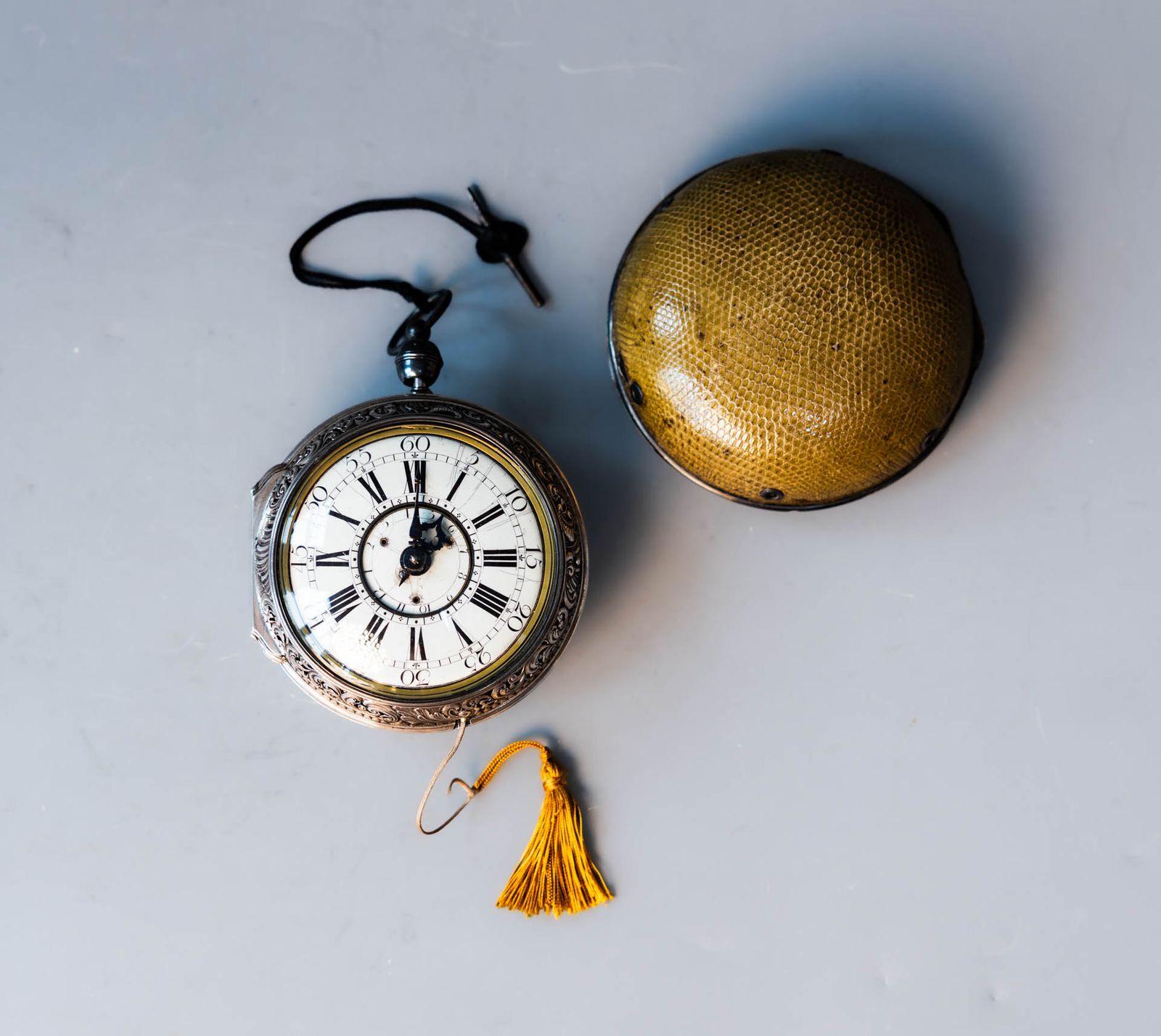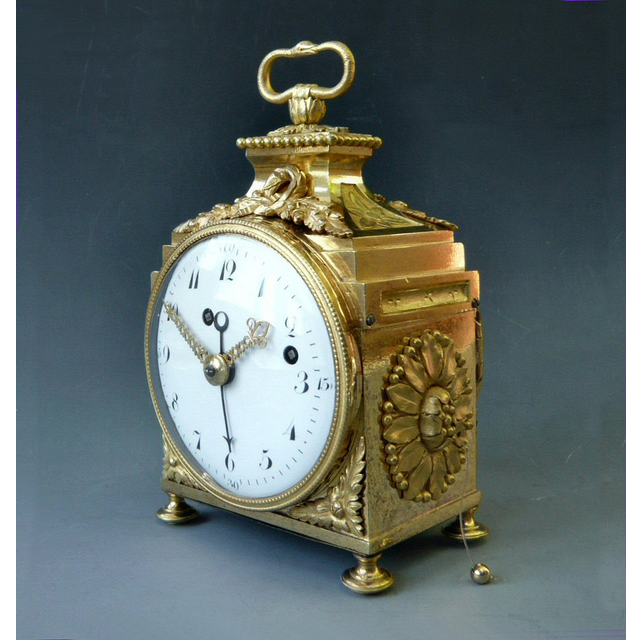
Coach Watch, also known as a Clockwatch, c. 1780. Signed Melly à Paris.

Ships from The Netherlands


Van Dreven Antique Clocks
Premier Seller
Name
Coach Watch, also known as a Clockwatch, c. 1780. Signed Melly à Paris.
Reference
DRVA100382
Origins
France
Description
This timepiece is a "coach watch"—also known as a carriage watch or 'clockwatch'—manufactured around 1780.
It is signed by the maker, Melly à Paris.
This type of timepiece served as a portable travel clock designed to withstand the vibrations of carriage travel, while also functioning as a prestigious status symbol.
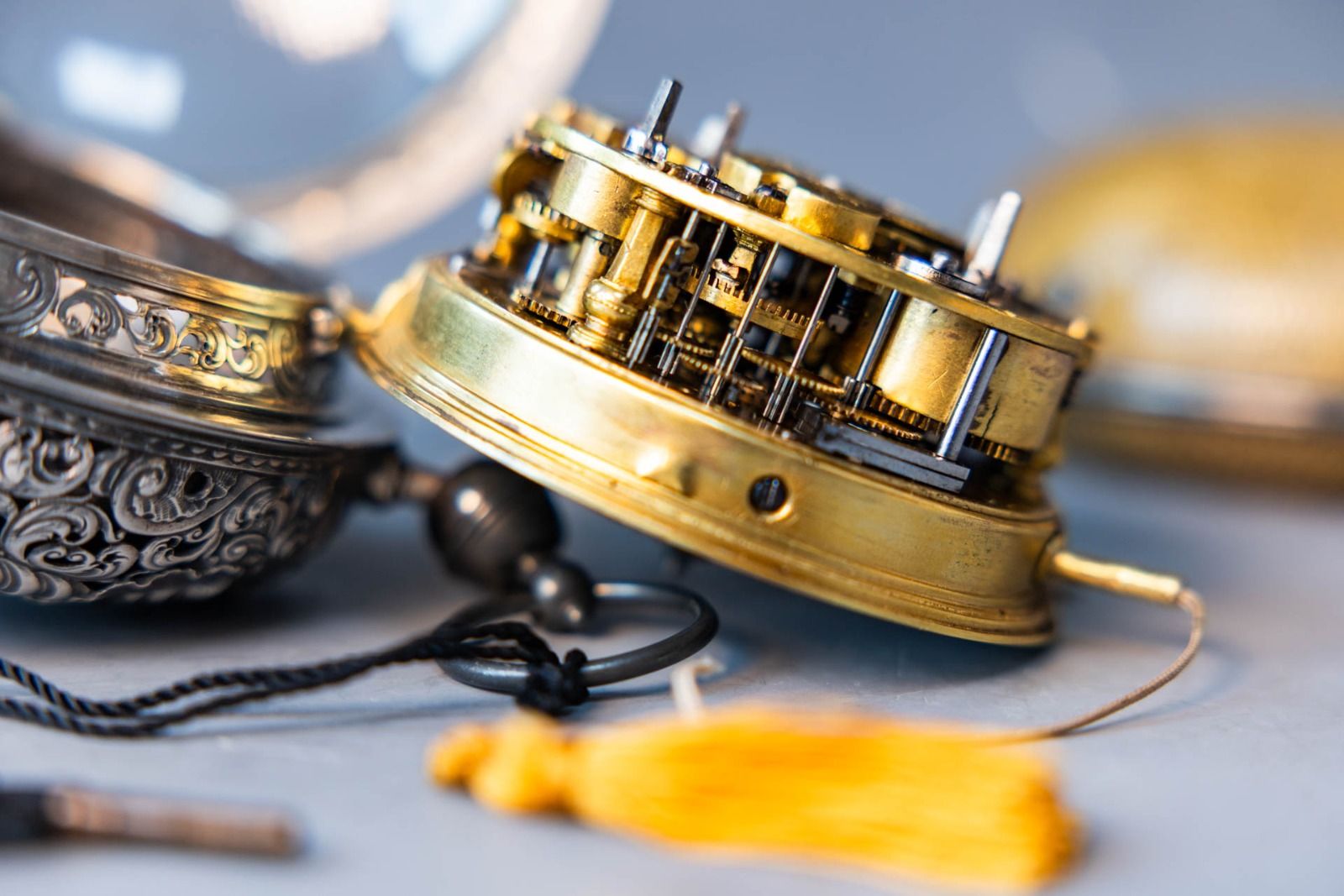
The watch is fitted with a verge escapement, the classic and dominant escapement mechanism of the period.

Striking mechanism: The movement features a complex striking system that automatically sounds the hours and quarters on a bell. Repeating function: In addition to the automatic striking, it includes a repeating mechanism. This allowed the owner to manually trigger the striking of the hours and quarters at any time—"on demand"—making it ideal for hearing the time in the dark.
The watch also incorporates an alarm mechanism.

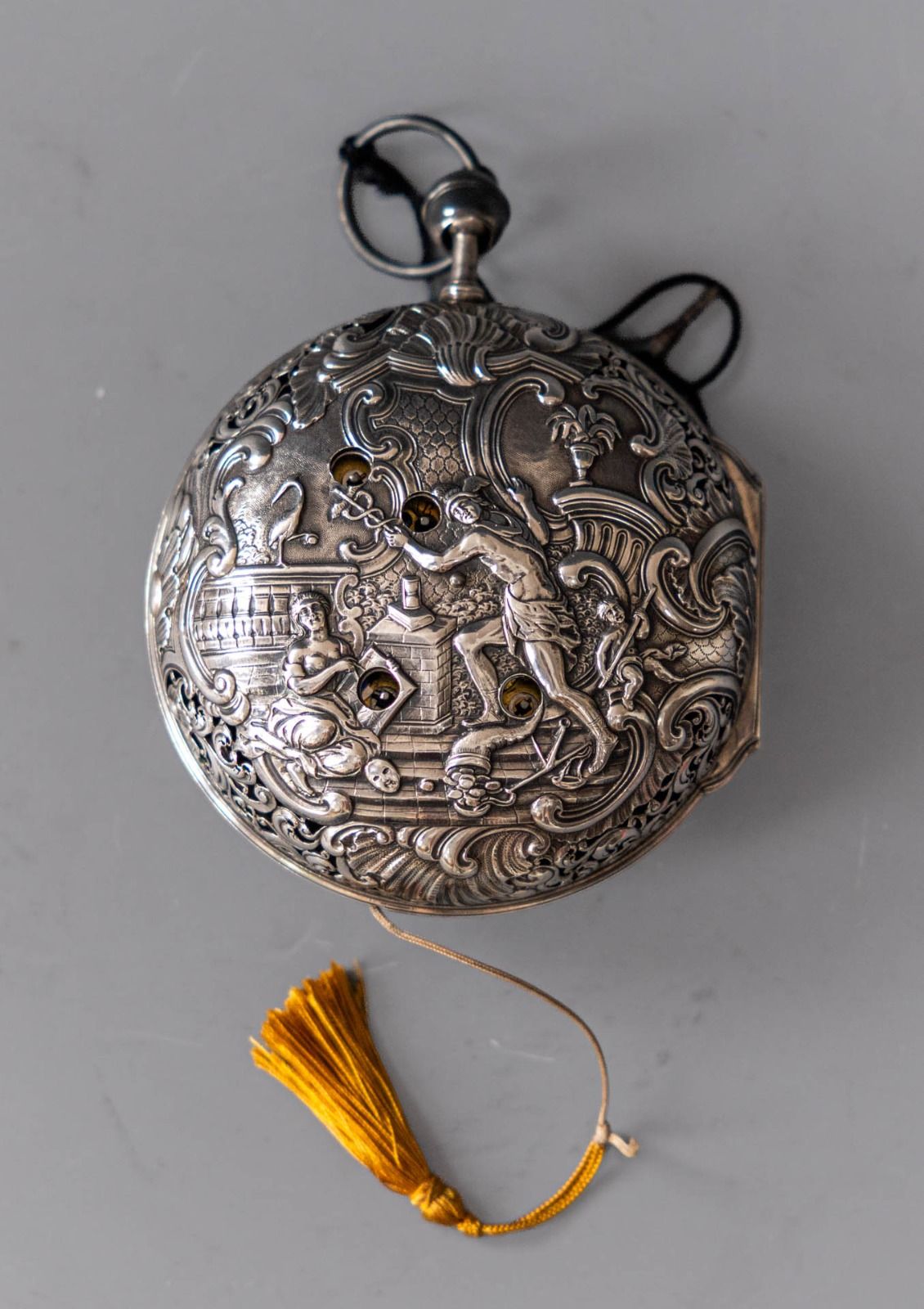
Case: The inner case is made of silver and decorated using the repoussé technique (a method in which the metal is hammered into relief from the inside). The decoration features, among other elements, a detailed depiction of Hermes (the Greek god of trade, travelers, and roads—a highly fitting symbol for a travel watch).

The outer case: To protect the precious silver case and the movement from scratches and knocks during travel, the exterior is covered in shagreen (stingray skin). This material was highly popular for luxury goods in the 18th century due to its unique, granular texture and extreme durability. Dimensions: Outer case diameter: 14 cm (significantly larger than a standard pocket watch, typical of coach watches to ensure readability and accommodate a loud bell). Height/Thickness: 6.5 cm. You can examine similar 18th-century timepieces in the British Museum's online database.

The inner case is crafted from silver and decorated using the repoussé technique (a method in which the metal is hammered into relief from the inside). The decoration features, among other things, a detailed depiction of Hermes (the Greek god of trade, travelers, and roads—a highly fitting symbol for a travel watch). The outer case: To protect the precious silver case and the movement from scratches and knocks during travel, the exterior is covered in shagreen (stingray skin). This material was highly popular for luxury goods in the 18th century due to its unique, granular texture and extreme durability.

Dimensions: Outer case diameter: 14 cm (significantly larger than a standard pocket watch), typical of carriage watches to ensure good readability and accommodate a loud bell. Height/Thickness: 6.5 cm.

You can examine similar 18th-century timepieces in the British Museum's online database.
About the maker, consult Tardy, p. 453.
Price on request.
-----------------------------------------------------

Ask the seller

More from this seller